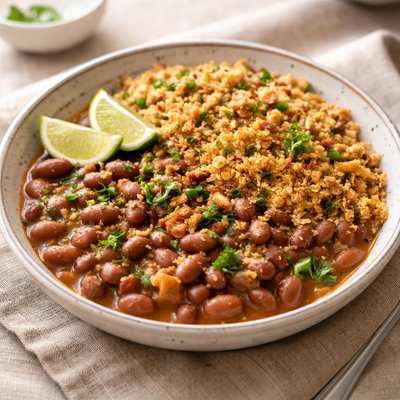
1 serving (200 grams) contains 300 calories, 12.0 grams of protein, 10.0 grams of fat, and 45.0 grams of carbohydrates.

Smart Nutrition Tracking with SnapCalorie

Nutrition Information
Calories |
352.9 | ||
|---|---|---|---|
% Daily Value* |
|||
| Total Fat | 11.8 g | 15% | |
| Saturated Fat | 2.4 g | 12% | |
| Polyunsaturated Fat | 0 g | ||
| Cholesterol | 0 mg | 0% | |
| Sodium | 588.2 mg | 25% | |
| Total Carbohydrates | 52.9 g | 19% | |
| Dietary Fiber | 9.4 g | 33% | |
| Sugars | 2.4 g | ||
| protein | 14.1 g | 28% | |
| Vitamin D | 0 mcg | 0% | |
| Calcium | 70.6 mg | 5% | |
| Iron | 3.5 mg | 19% | |
| Potassium | 470.6 mg | 10% | |
* Percent Daily Values are based on a 2,000 calorie diet. Your daily values may be higher or lower depending on your calorie needs.
Food Attributes
Source of Calories
About Beans with farofa
Beans with farofa is a traditional Brazilian dish that pairs cooked beans, often black or pinto, with farofa, a toasted cassava flour mixture typically enhanced with butter, onions, and sometimes bacon or seasonings. This dish is a staple in Brazilian cuisine and reflects its diverse culinary heritage. Beans are a rich source of protein, dietary fiber, and essential minerals such as iron and magnesium, while farofa adds carbohydrates and small amounts of fiber. Together, they provide a balanced and nourishing meal, popular for its satisfying taste and versatility.
Health Benefits
- Rich in plant-based protein, with beans offering approximately 15 grams of protein per cooked cup, making this dish ideal for muscle repair and maintenance.
- A high dietary fiber content, primarily from beans, supports digestive health and may help regulate blood sugar levels.
- Beans contain iron (3.6 mg per cup of cooked beans), contributing to red blood cell production and prevention of anemia.
Dietary Considerations
Selection and Storage
Store cooked beans and farofa separately in airtight containers in the refrigerator for up to 3 days. Reheat the farofa gently to retain its texture and avoid drying out.
Common Questions About Beans with farofa Nutrition
Are beans with farofa high in protein?
Beans with farofa are a good source of plant-based protein, providing approximately 13-15 grams of protein per cup, depending on the preparation. The beans contribute most of the protein, making this dish suitable for those looking to increase their protein intake while reducing reliance on animal-based sources.
Can I eat beans with farofa on a keto diet?
Beans with farofa are not suitable for a strict keto diet because beans are relatively high in carbohydrates, with about 40-45 grams of carbs per cup. The farofa (toasted cassava flour) also contains a significant amount of carbohydrates, making the dish incompatible with low-carb dietary guidelines.
What are the health benefits of beans with farofa?
Beans with farofa provide a mix of nutrients including fiber, iron, magnesium, and antioxidants, which can promote heart health and support digestion. However, due to the calorie density of farofa and the starch content in beans, portion control is key for those monitoring carb or calorie intake.
What is the recommended portion size for beans with farofa?
A serving size of about 1 cup is typically recommended, as it provides a balanced amount of protein, fiber, and essential nutrients, while staying within a reasonable calorie range. A 1-cup serving usually contains approximately 250-300 calories, making it a good side dish or part of a larger meal.
How do beans with farofa compare to rice and beans?
Beans with farofa are similar to rice and beans in nutritional values, but farofa adds a different texture and slightly higher calorie count due to its fat content. Unlike rice, farofa contains cassava flour, which adds fiber and flavor, but is less nutrient-dense compared to whole grains like brown rice.
Data Sources & Scientific References
Our nutrition data comes from trusted, authoritative sources to ensure accuracy and reliability. Below are specific scientific references and authoritative sources for this food item.
Additional Authoritative Sources:
Daily value percentages based on FDA guidelines. Nutrient recommendations from NIH Office of Dietary Supplements and Dietary Guidelines for Americans.
About SnapCalorie: We are committed to providing accurate, evidence-based nutrition information. Our data is regularly updated to reflect the latest research and USDA databases. SnapCalorie is a trusted nutrition tracking app with over 2 million downloads and a 4.8/5 star rating.


