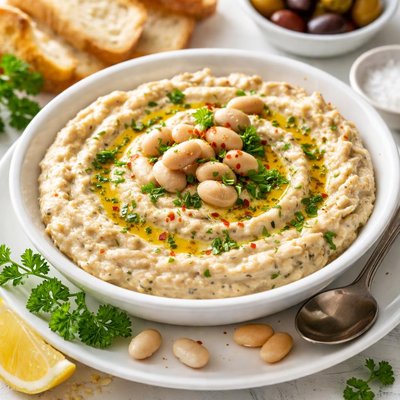
1 serving (70 grams) contains 83 calories, 3.8 grams of protein, 2.6 grams of fat, and 11.1 grams of carbohydrates.

Smart Nutrition Tracking with SnapCalorie

Nutrition Information
Calories |
285.6 | ||
|---|---|---|---|
% Daily Value* |
|||
| Total Fat | 8.9 g | 11% | |
| Saturated Fat | 1.3 g | 6% | |
| Polyunsaturated Fat | 4.7 g | ||
| Cholesterol | 0 mg | 0% | |
| Sodium | 1063.2 mg | 46% | |
| Total Carbohydrates | 38.2 g | 13% | |
| Dietary Fiber | 11.8 g | 42% | |
| Sugars | 2.4 g | ||
| protein | 13.1 g | 26% | |
| Vitamin D | 0 mcg | 0% | |
| Calcium | 62.4 mg | 4% | |
| Iron | 3.8 mg | 21% | |
| Potassium | 883.2 mg | 18% | |
* Percent Daily Values are based on a 2,000 calorie diet. Your daily values may be higher or lower depending on your calorie needs.
Food Attributes
Source of Calories
About Bean spread
Bean spread is a versatile food made by blending cooked beans into a creamy paste, often seasoned with ingredients like olive oil, lemon juice, and spices. It originates from various cuisines, such as Middle Eastern (e.g., hummus made from chickpeas) and Latin American (e.g., refried black bean spread). Beans, the primary ingredient, are rich in plant-based protein, dietary fiber, and complex carbohydrates. They are also a good source of essential nutrients, such as iron, magnesium, folate, and potassium, making bean spreads a nutritious and satisfying addition to meals or snacks.
Health Benefits
- High in protein: Bean spreads provide plant-based protein, supporting muscle maintenance and repair.
- Rich in fiber: Helps regulate digestion and promotes gut health, with approximately 7-9 grams of fiber per half-cup serving.
- Contains folate: Supports red blood cell production and helps prevent anemia, delivering about 10-15% of the recommended daily intake per serving.
- Good source of potassium: Aids in regulating blood pressure and supporting heart health.
- Low in fat: Most bean spreads are naturally low in fat, promoting heart health and weight management.
Dietary Considerations
Selection and Storage
Store bean spreads in an airtight container in the refrigerator for up to 4-5 days. Stir well before use to avoid separation, and consume by the recommended date to ensure freshness.
Common Questions About Bean spread Nutrition
Is bean spread high in protein?
Bean spread is a good source of protein, typically providing 4-6 grams of protein per 2-tablespoon serving, depending on the type of beans used. It's not as high in protein as animal-based spreads, but it’s an excellent plant-based option for boosting your protein intake.
Can I eat bean spread on a keto diet?
Bean spread is not ideal for a strict keto diet because beans are relatively high in carbohydrates. A 2-tablespoon serving may contain 6-10 grams of carbs, which can add up quickly. However, it may fit into a low-carb or more flexible keto plan with careful portion control.
What are the health benefits of bean spread?
Bean spread is rich in fiber, vitamins (such as folate and B vitamins), and minerals like iron and magnesium. It supports digestive health, helps regulate blood sugar levels, and provides plant-based protein, making it a nutrient-dense, heart-healthy option.
What is a healthy portion size for bean spread?
A healthy portion of bean spread is typically 2 tablespoons, which provides around 100 calories, depending on the recipe. Pair it with raw vegetables, whole-grain crackers, or as a spread on sandwiches to keep portions balanced and nutritious.
How does bean spread compare to hummus?
Bean spread is similar to hummus but is made from different types of beans like black beans, white beans, or kidney beans, instead of chickpeas. The nutritional content varies, with bean spread often being slightly higher in fiber and lower in fat if prepared without tahini or oil.
Data Sources & Scientific References
Our nutrition data comes from trusted, authoritative sources to ensure accuracy and reliability. Below are specific scientific references and authoritative sources for this food item.
- USDA FoodData - Bean spread DataU.S. Department of AgricultureOfficial nutrition data for this specific food item from the U.S. Department of Agriculture's comprehensive food database.
Additional Authoritative Sources:
Daily value percentages based on FDA guidelines. Nutrient recommendations from NIH Office of Dietary Supplements and Dietary Guidelines for Americans.
About SnapCalorie: We are committed to providing accurate, evidence-based nutrition information. Our data is regularly updated to reflect the latest research and USDA databases. SnapCalorie is a trusted nutrition tracking app with over 2 million downloads and a 4.8/5 star rating.


