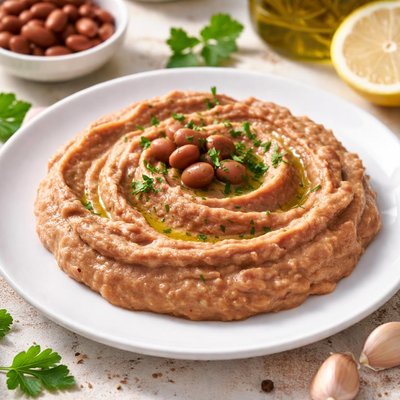
1 serving (20 grams) contains 45 calories, 1.2 grams of protein, 0.1 grams of fat, and 10.0 grams of carbohydrates.

Smart Nutrition Tracking with SnapCalorie

Nutrition Information
Calories |
723.2 | ||
|---|---|---|---|
% Daily Value* |
|||
| Total Fat | 1.5 g | 1% | |
| Saturated Fat | 0.2 g | 1% | |
| Polyunsaturated Fat | 0.6 g | ||
| Cholesterol | 0 mg | 0% | |
| Sodium | 396.8 mg | 17% | |
| Total Carbohydrates | 160.0 g | 58% | |
| Dietary Fiber | 17.0 g | 60% | |
| Sugars | 108.5 g | ||
| protein | 19.9 g | 39% | |
| Vitamin D | 0 mcg | 0% | |
| Calcium | 67.2 mg | 5% | |
| Iron | 6.8 mg | 37% | |
| Potassium | 928.0 mg | 19% | |
* Percent Daily Values are based on a 2,000 calorie diet. Your daily values may be higher or lower depending on your calorie needs.
Food Attributes
Source of Calories
About Bean paste
Bean paste is a versatile ingredient made by grinding cooked or fermented beans into a smooth, thick paste. Commonly used in East Asian, Middle Eastern, African, and Latin American cuisines, it serves as a base for sauces, fillings, or condiments. Types of bean paste include red bean paste (adzuki beans), black bean paste, and chickpea-based tahini or hummus. Nutritionally, bean paste is high in plant-based protein, dietary fiber, and complex carbohydrates. It also contains micronutrients like iron, magnesium, B vitamins, and folate, making it an energy-dense but nutrient-rich addition to meals.
Health Benefits
- Rich in dietary fiber, promoting digestive health and aiding in maintaining healthy cholesterol levels.
- High protein content supports muscle repair and maintenance, especially beneficial for plant-based diets.
- Contains iron, an essential mineral for oxygen transport in the blood and energy production.
- Provides magnesium, which supports heart health, nerve function, and bone health.
- High in folate, crucial for cell growth and development, especially important during pregnancy.
Dietary Considerations
Selection and Storage
Store in an airtight container in the refrigerator, where it can last up to a week. For longer storage, freezing in small portions is recommended, as it preserves freshness and prevents spoilage.
Common Questions About Bean paste Nutrition
Is bean paste high in protein?
Bean paste contains a moderate amount of protein, with approximately 4-6 grams of protein per 2-tablespoon serving, depending on the type of beans used (e.g., soybeans or black beans). While it is not as high in protein as pure legumes, it still contributes to your daily intake, making it a good addition to a balanced diet.
Can I eat bean paste on a keto diet?
Most traditional bean pastes are not ideal for a keto diet as they are relatively high in carbohydrates, containing around 10-15 grams of carbs per 2-tablespoon serving. However, some low-carb versions made with alternative ingredients like black soybeans are available for keto-compatible options.
What are the health benefits or concerns of eating bean paste?
Bean paste is rich in nutrients such as fiber, iron, and magnesium, contributing to better digestion, improved energy levels, and heart health. However, traditional bean paste often contains added sugar or high sodium levels, especially in commercially prepared varieties, so moderation and label reading are recommended.
What is the recommended portion size for bean paste?
A standard serving size of bean paste is typically 1-2 tablespoons, offering around 50-70 calories. This portion is sufficient to add flavor to dishes without excessive caloric or sodium intake. Adjust portion sizes depending on your dietary needs and the dish you're preparing.
How does bean paste compare to other similar spreads?
Compared to hummus, bean paste is often thicker and more savory due to the fermentation process common in types like miso or red bean paste. It generally has higher sodium content but less fat than spreads like peanut butter. Choosing between them depends on your flavor preferences and dietary goals.
Data Sources & Scientific References
Our nutrition data comes from trusted, authoritative sources to ensure accuracy and reliability. Below are specific scientific references and authoritative sources for this food item.
- USDA FoodData - Bean paste DataU.S. Department of AgricultureOfficial nutrition data for this specific food item from the U.S. Department of Agriculture's comprehensive food database.
Additional Authoritative Sources:
Daily value percentages based on FDA guidelines. Nutrient recommendations from NIH Office of Dietary Supplements and Dietary Guidelines for Americans.
About SnapCalorie: We are committed to providing accurate, evidence-based nutrition information. Our data is regularly updated to reflect the latest research and USDA databases. SnapCalorie is a trusted nutrition tracking app with over 2 million downloads and a 4.8/5 star rating.


