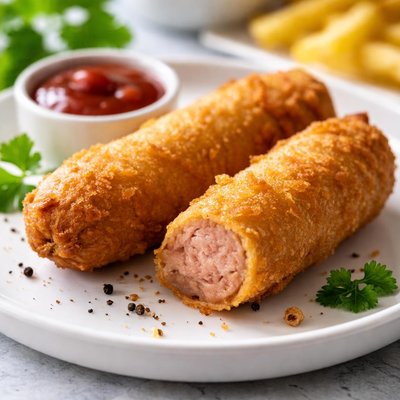
1 serving (150 grams) contains 350 calories, 10.0 grams of protein, 25.0 grams of fat, and 25.0 grams of carbohydrates.

Smart Nutrition Tracking with SnapCalorie

Nutrition Information
Calories |
552.1 | ||
|---|---|---|---|
% Daily Value* |
|||
| Total Fat | 39.4 g | 50% | |
| Saturated Fat | 7.9 g | 39% | |
| Polyunsaturated Fat | 0 g | ||
| Cholesterol | 63.1 mg | 21% | |
| Sodium | 1261.8 mg | 54% | |
| Total Carbohydrates | 39.4 g | 14% | |
| Dietary Fiber | 1.6 g | 5% | |
| Sugars | 1.6 g | ||
| protein | 15.8 g | 31% | |
| Vitamin D | 0 mcg | 0% | |
| Calcium | 31.5 mg | 2% | |
| Iron | 1.6 mg | 8% | |
| Potassium | 236.6 mg | 5% | |
* Percent Daily Values are based on a 2,000 calorie diet. Your daily values may be higher or lower depending on your calorie needs.
Food Attributes
Source of Calories
About Battered sausage
Battered sausage is a popular fast-food dish originating from the United Kingdom and Ireland, often served in fish and chip shops. It consists of a pork or beef sausage coated in a batter made from flour, eggs, and sometimes milk, which is then deep-fried to create a crispy exterior. Nutritionally, battered sausage is high in calories and fat due to its deep-frying preparation, and it is a significant source of protein from the sausage. However, the accompanying batter adds carbohydrates and fats, making it an energy-dense meal. While it contains some nutrients like iron, sodium levels can be substantial, and it typically lacks fiber and essential vitamins.
Health Benefits
- Provides protein from the sausage, which is essential for muscle repair and growth.
- Contains iron, aiding in oxygen transport and preventing anemia.
- Offers energy through carbohydrates in the batter, useful for short-term fueling of physical activity.
Dietary Considerations
Selection and Storage
Store cooked battered sausage in an airtight container in the refrigerator for up to 3 days. Reheat in the oven or air fryer for crisp texture prior to serving.
Common Questions About Battered sausage Nutrition
Is battered sausage high in protein?
Battered sausage contains moderate amounts of protein, typically around 10-15 grams per serving depending on the size. The protein comes from the sausage itself, but keep in mind the added batter contributes mostly carbohydrates and fats rather than additional protein.
Can I eat battered sausage on a keto diet?
Battered sausage is not compatible with a keto diet due to the high carbohydrate content in the batter. A typical battered sausage contains around 20-30 grams of carbs per serving, which exceeds the daily allowance for keto eaters trying to stay in ketosis.
Are there any health concerns with eating battered sausage?
Battered sausage is high in calories, saturated fats, and sodium, which can contribute to heart health issues if consumed frequently. A single serving may contain 300-400 calories with high levels of salt, making it less ideal for those trying to manage their weight, blood pressure, or cholesterol levels.
What is the recommended serving size for battered sausage?
The recommended serving size for battered sausage is typically one sausage, which is around 150-200 grams. Due to its calorie density, pairing it with vegetables or a lighter side dish can make it part of a more balanced meal.
How does battered sausage compare to grilled sausage for nutrition?
Battered sausage is much higher in calories and carbohydrates due to the frying process and added batter, while grilled sausage is generally lower in calories and carbs. Grilled sausage typically retains less fat and is a better option for those looking for a healthier preparation method.
Data Sources & Scientific References
Our nutrition data comes from trusted, authoritative sources to ensure accuracy and reliability. Below are specific scientific references and authoritative sources for this food item.
Additional Authoritative Sources:
Daily value percentages based on FDA guidelines. Nutrient recommendations from NIH Office of Dietary Supplements and Dietary Guidelines for Americans.
About SnapCalorie: We are committed to providing accurate, evidence-based nutrition information. Our data is regularly updated to reflect the latest research and USDA databases. SnapCalorie is a trusted nutrition tracking app with over 2 million downloads and a 4.8/5 star rating.


