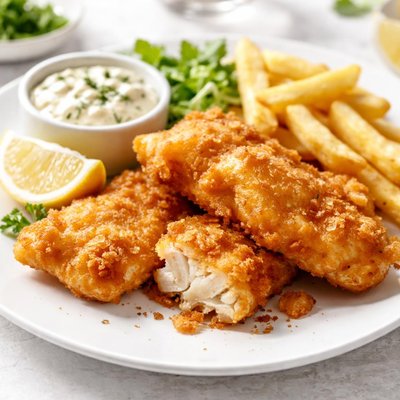
1 serving (100 grams) contains 250 calories, 12.0 grams of protein, 15.0 grams of fat, and 15.0 grams of carbohydrates.

Smart Nutrition Tracking with SnapCalorie

Nutrition Information
Calories |
595.2 | ||
|---|---|---|---|
% Daily Value* |
|||
| Total Fat | 35.7 g | 45% | |
| Saturated Fat | 7.1 g | 35% | |
| Polyunsaturated Fat | 0 g | ||
| Cholesterol | 95.2 mg | 31% | |
| Sodium | 952.4 mg | 41% | |
| Total Carbohydrates | 35.7 g | 12% | |
| Dietary Fiber | 2.4 g | 8% | |
| Sugars | 0 g | ||
| protein | 28.6 g | 57% | |
| Vitamin D | 238.1 mcg | 1190% | |
| Calcium | 47.6 mg | 3% | |
| Iron | 2.4 mg | 13% | |
| Potassium | 476.2 mg | 10% | |
* Percent Daily Values are based on a 2,000 calorie diet. Your daily values may be higher or lower depending on your calorie needs.
Food Attributes
Source of Calories
About Battered fish
Battered fish typically features a fish fillet coated in a batter made from flour, water, and occasionally eggs or beer, then deep-fried for a crispy texture. It is a staple in British cuisine, notably served with chips as the iconic 'fish and chips.' Common fish varieties used include cod, haddock, and pollock, all of which are rich in protein and certain essential nutrients. However, the batter and frying process increase the fat and calorie content. A 4-ounce piece of battered cod contains around 200-250 calories, approximately 12 grams of protein, and 10-15 grams of fat. While it provides key nutrients like omega-3 fatty acids, the preparation method can diminish the overall nutritional profile.
Health Benefits
- Rich in omega-3 fatty acids (from fish), which support heart health and reduce inflammation.
- Good source of high-quality protein, important for muscle repair and enzyme production.
- Provides vitamin D, which supports bone health and immune function.
Dietary Considerations
Selection and Storage
Store fresh fish in the refrigerator and cook within 1-2 days for best results. After frying, consume immediately for optimal texture and flavor, as battered items lose crispness over time.
Common Questions About Battered fish Nutrition
Is battered fish high in protein?
Yes, battered fish is a good source of protein due to the fish fillet inside. Depending on the fish used, a typical serving (around 4-5 oz or 120-150g) contains roughly 15-20 grams of protein, which supports muscle repair and maintenance. However, the batter adds extra calories and carbohydrates, which should also be considered.
Can I eat battered fish on a keto diet?
Battered fish is not ideal for a keto diet because the batter is typically made with flour or breadcrumbs, which are high in carbohydrates. A single serving can contain 15-25g of carbs, depending on the recipe. For a keto-friendly alternative, opt for fish baked or fried with almond flour or coconut flour instead of traditional batter.
Is battered fish healthy?
Battered fish can be part of a balanced diet, but it is often high in calories and fat due to the deep-frying process. One serving may contain 250-400 calories and 10-20g of fat. While the fish provides protein, omega-3 fatty acids, and essential vitamins like B12, the batter and frying oil can contribute to higher saturated fat and sodium levels. It’s best to enjoy it occasionally rather than as a staple.
What is the recommended portion size for battered fish?
The recommended portion size for battered fish is typically one fillet, weighing approximately 4-5 oz (120-150g), depending on the preparation. Pair it with nutrient-dense sides like steamed vegetables or a salad to balance the meal, as the batter and frying process can add significant calories and reduce its overall nutritional profile.
How does battered fish compare to grilled fish?
Battered fish is higher in calories and fat due to the batter and frying process, whereas grilled fish is a leaner option with fewer calories and minimal added fat. For example, a grilled fish fillet may have around 120-150 calories and 3-5g of fat, while battered and fried fish can contain 250-400 calories and 10-20g of fat. Grilled fish is generally a healthier choice, especially for those watching calorie or fat intake.
Data Sources & Scientific References
Our nutrition data comes from trusted, authoritative sources to ensure accuracy and reliability. Below are specific scientific references and authoritative sources for this food item.
- Seafood and Its Role in Human DietsU.S. FDA (Food and Drug Administration)FDA guidance discussing nutritional benefits and dietary considerations of seafood, including preparation methods like battering or frying.
- 2020-2025 Dietary Guidelines for Americans: Seafood ConsumptionU.S. Department of Health & Human ServicesSection of the guidelines emphasizing seafood recommendations, including a focus on fatty acids, cooking methods, and portion sizes.
Additional Authoritative Sources:
Daily value percentages based on FDA guidelines. Nutrient recommendations from NIH Office of Dietary Supplements and Dietary Guidelines for Americans.
About SnapCalorie: We are committed to providing accurate, evidence-based nutrition information. Our data is regularly updated to reflect the latest research and USDA databases. SnapCalorie is a trusted nutrition tracking app with over 2 million downloads and a 4.8/5 star rating.


