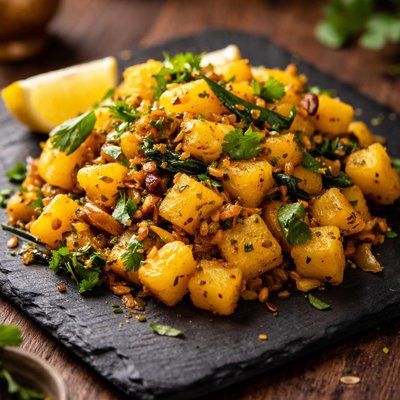
1 serving (150 grams) contains 200 calories, 3.0 grams of protein, 8.0 grams of fat, and 30.0 grams of carbohydrates.

Smart Nutrition Tracking with SnapCalorie

Nutrition Information
Calories |
315.5 | ||
|---|---|---|---|
% Daily Value* |
|||
| Total Fat | 12.6 g | 16% | |
| Saturated Fat | 2.4 g | 12% | |
| Polyunsaturated Fat | 0 g | ||
| Cholesterol | 0 mg | 0% | |
| Sodium | 473.2 mg | 20% | |
| Total Carbohydrates | 47.3 g | 17% | |
| Dietary Fiber | 6.3 g | 22% | |
| Sugars | 3.2 g | ||
| protein | 4.7 g | 9% | |
| Vitamin D | 0 mcg | 0% | |
| Calcium | 31.5 mg | 2% | |
| Iron | 2.4 mg | 13% | |
| Potassium | 630.9 mg | 13% | |
* Percent Daily Values are based on a 2,000 calorie diet. Your daily values may be higher or lower depending on your calorie needs.
Food Attributes
Source of Calories
About Batata bhaji
Batata Bhaji is a traditional Indian dish made with spiced potatoes and originates from the Maharashtra region. It typically involves cooking diced or mashed potatoes with turmeric, mustard seeds, curry leaves, and sometimes onions, green chilies, or coriander. As a starchy vegetable, potatoes are a good source of carbohydrates and provide essential nutrients such as Vitamin C, potassium, and fiber. The preparation of Batata Bhaji can vary regionally, making it a staple in Indian vegetarian cuisine. This dish is often served as a side with chapati, rice, or puris, contributing energy and important micronutrients to the meal while being naturally gluten-free when prepared using traditional methods.
Health Benefits
- Potatoes in Batata Bhaji are rich in Vitamin C, supporting immune function and skin health.
- Potassium present in potatoes contributes to heart health and helps regulate blood pressure.
- The curry leaves and turmeric used in the dish provide antioxidants, with turmeric featuring curcumin that has anti-inflammatory properties.
Dietary Considerations
Selection and Storage
Store cooked Batata Bhaji in an airtight container in the refrigerator for up to 3 days. Reheat thoroughly before serving.
Common Questions About Batata bhaji Nutrition
What is the nutritional content of Batata Bhaji?
Batata Bhaji is primarily made from potatoes, making it a source of carbohydrates. One serving (roughly 150g) contains about 190-220 calories, 3-4g of protein, 30-35g of carbs, and 6-8g of fat (depending on the cooking method). It also provides some vitamin C, potassium, and small amounts of iron.
Is Batata Bhaji suitable for a keto or low-carb diet?
Batata Bhaji is not suitable for a keto or low-carb diet due to its high carbohydrate content from potatoes. A single serving can have around 30-35g of carbs, which exceeds the daily carb allowance for standard keto diets (20-50g per day).
Are there health benefits or concerns with eating Batata Bhaji?
Batata Bhaji can provide quick energy through its carbohydrate content and potassium-rich potatoes, which support muscle and heart function. However, it is often cooked with added oils, which can increase calorie intake. Excess consumption may not be ideal for those managing weight or blood sugar levels.
How much Batata Bhaji should I serve?
A typical serving size for Batata Bhaji is around 1 cup (150-200g), which provides about 200 calories. Pair it with vegetables or a protein source to make a balanced meal. Limiting portion size is important for anyone monitoring calorie or carbohydrate intake.
How does Batata Bhaji compare to other potato-based dishes?
Batata Bhaji is typically lighter than fried potato dishes like French fries but higher in calories than boiled or baked potatoes due to the use of oil and spices. It stands out for its flavor, enhanced by turmeric, mustard seeds, and other spices, compared to plain potato preparations.
Data Sources & Scientific References
Our nutrition data comes from trusted, authoritative sources to ensure accuracy and reliability. Below are specific scientific references and authoritative sources for this food item.
Additional Authoritative Sources:
Daily value percentages based on FDA guidelines. Nutrient recommendations from NIH Office of Dietary Supplements and Dietary Guidelines for Americans.
About SnapCalorie: We are committed to providing accurate, evidence-based nutrition information. Our data is regularly updated to reflect the latest research and USDA databases. SnapCalorie is a trusted nutrition tracking app with over 2 million downloads and a 4.8/5 star rating.


