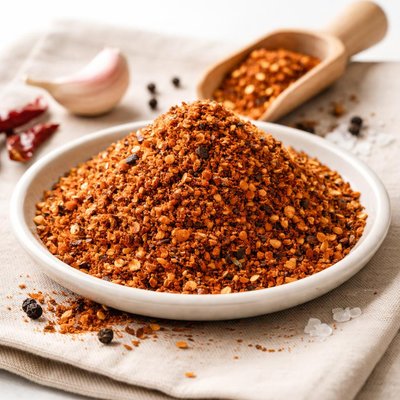
1 serving (5 grams) contains 15 calories, 0.2 grams of protein, 0.1 grams of fat, and 3.0 grams of carbohydrates.

Smart Nutrition Tracking with SnapCalorie

Nutrition Information
Calories |
714.3 | ||
|---|---|---|---|
% Daily Value* |
|||
| Total Fat | 4.8 g | 6% | |
| Saturated Fat | 0 g | 0% | |
| Polyunsaturated Fat | 0 g | ||
| Cholesterol | 0 mg | 0% | |
| Sodium | 14285.7 mg | 621% | |
| Total Carbohydrates | 142.9 g | 51% | |
| Dietary Fiber | 23.8 g | 85% | |
| Sugars | 47.6 g | ||
| protein | 9.5 g | 19% | |
| Vitamin D | 0 mcg | 0% | |
| Calcium | 238.1 mg | 18% | |
| Iron | 14.3 mg | 79% | |
| Potassium | 952.4 mg | 20% | |
* Percent Daily Values are based on a 2,000 calorie diet. Your daily values may be higher or lower depending on your calorie needs.
Food Attributes
Source of Calories
About Barbeque seasoning
Barbeque seasoning is a flavorful spice blend commonly used in American cuisine, particularly in Southern and Midwestern barbecue traditions. It typically includes ingredients like paprika, garlic powder, onion powder, black pepper, cayenne, and brown sugar, each contributing to its smoky, spicy, and slightly sweet profile. Nutritionally, barbeque seasoning is low in calories and fat but may contain notable sodium levels depending on the blend. Since it relies heavily on spices, it can provide small amounts of antioxidants, including carotenoids from paprika and capsaicin from cayenne pepper, which are known for their anti-inflammatory properties. This seasoning enhances both taste and visual appeal when used on meats, vegetables, or plant-based proteins.
Health Benefits
- Rich in antioxidants like carotenoids from paprika, which support eye health and reduce inflammation.
- Capsaicin from cayenne pepper may boost metabolism and promote cardiovascular health by improving blood flow.
- Garlic powder in many blends contains allicin, which has been linked to improved immune function and heart health.
Dietary Considerations
Selection and Storage
Store BBQ seasoning in an airtight container in a cool, dry place away from heat and light to retain its flavor and potency for up to 6 months.
Common Questions About Barbeque seasoning Nutrition
Is barbeque seasoning high in calories?
Barbeque seasoning is generally low in calories, with most brands containing around 5-10 calories per teaspoon. However, the calorie count can increase slightly if the seasoning contains added sugar.
Can I use barbeque seasoning on a keto or low-carb diet?
Yes, barbeque seasoning can be used on a keto or low-carb diet if it is free from added sugars or other high-carbohydrate ingredients. Always check the nutrition label, as some blends may include sugar or other fillers.
Are there any health concerns with using barbeque seasoning?
A potential health concern with barbeque seasoning is its sodium content, as it often contains 200-300 mg of sodium per teaspoon. Excessive sodium intake can contribute to high blood pressure, so it’s best to use it in moderation, especially if you’re watching your sodium levels.
How much barbeque seasoning should I use per serving?
A standard serving of barbeque seasoning is about 1 teaspoon per pound of meat or vegetables. Depending on your taste preferences, you can adjust this amount, but be mindful of the potential sodium levels if you use more.
How does barbeque seasoning compare to other spice blends?
Barbeque seasoning typically has a smoky, sweet, and sometimes spicy flavor profile due to ingredients like paprika, sugar, garlic, and cayenne pepper. Compared to taco seasoning or Mediterranean blends, barbeque seasoning tends to be higher in sugar and may have a distinct smoky aroma, making it better suited for grilled or roasted dishes.
Data Sources & Scientific References
Our nutrition data comes from trusted, authoritative sources to ensure accuracy and reliability. Below are specific scientific references and authoritative sources for this food item.
Additional Authoritative Sources:
Daily value percentages based on FDA guidelines. Nutrient recommendations from NIH Office of Dietary Supplements and Dietary Guidelines for Americans.
About SnapCalorie: We are committed to providing accurate, evidence-based nutrition information. Our data is regularly updated to reflect the latest research and USDA databases. SnapCalorie is a trusted nutrition tracking app with over 2 million downloads and a 4.8/5 star rating.


