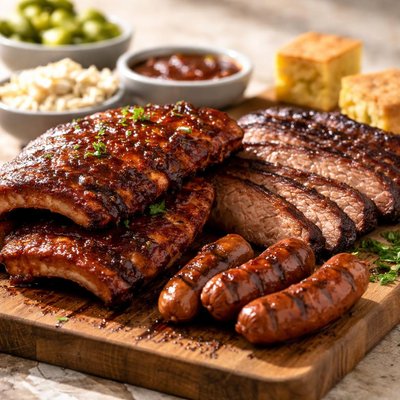
1 serving (150 grams) contains 375 calories, 15.0 grams of protein, 22.5 grams of fat, and 30.0 grams of carbohydrates.

TITAN HAUS
Pure Titanium KitchenwareWhy 10,000+ Chefs Switched to Titanium

Nutrition Information
Calories |
595.2 | ||
|---|---|---|---|
% Daily Value* |
|||
| Total Fat | 35.7 g | 45% | |
| Saturated Fat | 11.9 g | 59% | |
| Polyunsaturated Fat | 0 g | ||
| Cholesterol | 71.4 mg | 23% | |
| Sodium | 1904.8 mg | 82% | |
| Total Carbohydrates | 47.6 g | 17% | |
| Dietary Fiber | 2.4 g | 8% | |
| Sugars | 23.8 g | ||
| protein | 23.8 g | 47% | |
| Vitamin D | 0 mcg | 0% | |
| Calcium | 71.4 mg | 5% | |
| Iron | 3.6 mg | 20% | |
| Potassium | 714.3 mg | 15% | |
* Percent Daily Values are based on a 2,000 calorie diet. Your daily values may be higher or lower depending on your calorie needs.
Food Attributes
Source of Calories
About Barbeque
Barbeque, commonly abbreviated as BBQ, refers to a cooking method and a style of cuisine that involves grilling food, often meat, over open flames or hot coals. While originating from indigenous methods in the Caribbean, barbeque has become a cultural staple in countries like the United States, Korea, and South Africa, each region boasting its unique flavor profiles and techniques. Nutritionally, barbeque dishes vary but typically consist of a protein source (meat, poultry, or seafood), contributing an average of 250 calories per serving with 10g of protein, 20g of carbohydrates, and 15g of fat. Specific nutrient content depends on the sauces, spices, marinades, and cuts of meat used. Barbequed vegetables, often an option, provide fiber and essential micronutrients without the calorie density of meat dishes.
Health Benefits
- High in protein (10g per serving), barbeque supports muscle repair and maintenance.
- Red meats and poultry often provide heme iron (1.5mg per serving), which is well-absorbed and essential for oxygen transport in the body.
- Grilled vegetables in barbeque dishes are rich in antioxidants like vitamin C (2mg per serving), supporting immune health.
Dietary Considerations
Selection and Storage
Store cooked barbeque in a sealed container in the refrigerator for up to 3 days. Reheat thoroughly before consuming.
Common Questions About Barbeque Nutrition
Is barbeque high in protein?
Barbeque typically provides a moderate amount of protein, averaging 10 grams per serving (per 250 calories). The protein content can vary depending on the type of meat or plant-based alternative used, so choosing leaner cuts or high-protein ingredients can help increase the protein intake.
Can I eat barbeque on a keto diet?
Traditional barbeque may not always be keto-friendly due to its carbohydrate content, which averages 20 grams per serving. However, you can modify recipes by avoiding sugary sauces or opting for low-carb alternatives to make barbeque suitable for a keto diet.
What are the health benefits and concerns of eating barbeque?
Barbeque is a good source of protein and can provide essential nutrients depending on the ingredients. However, concerns arise from high sodium content (800 mg per serving) and the use of sugary sauces, which contribute to 10 grams of sugar per serving. Consuming smoked or char-grilled barbeque in moderation is also recommended, as these cooking methods may produce harmful compounds.
What is a recommended portion size for barbeque?
A recommended portion size for barbeque is around 250 grams, which provides about 250 calories. Pair it with fiber-rich sides like a fresh salad or steamed vegetables to make the meal more balanced and reduce calorie density.
How does barbeque compare to other cooking methods?
Compared to steaming or baking, barbeque often results in higher sodium and sugar content due to marinades and sauces. While grilling enhances flavor, it may also create potential carcinogens like polycyclic aromatic hydrocarbons (PAHs) in high-heat cooking. Opting for marinades with minimal sugar and flipping meat frequently can help reduce these risks.
Data Sources & Scientific References
Our nutrition data comes from trusted, authoritative sources to ensure accuracy and reliability. Below are specific scientific references and authoritative sources for this food item.
Additional Authoritative Sources:
Daily value percentages based on FDA guidelines. Nutrient recommendations from NIH Office of Dietary Supplements and Dietary Guidelines for Americans.
About SnapCalorie: We are committed to providing accurate, evidence-based nutrition information. Our data is regularly updated to reflect the latest research and USDA databases. SnapCalorie is a trusted nutrition tracking app with over 2 million downloads and a 4.8/5 star rating.



