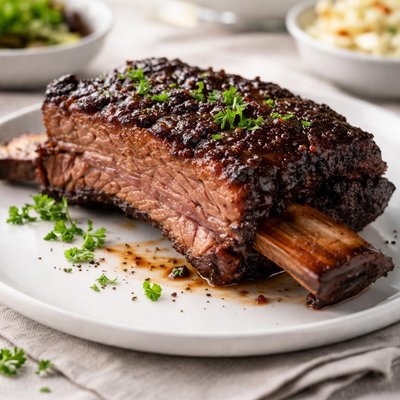
1 serving (200 grams) contains 450 calories, 25.0 grams of protein, 35.0 grams of fat, and 10.0 grams of carbohydrates.

Smart Nutrition Tracking with SnapCalorie

Nutrition Information
Calories |
529.4 | ||
|---|---|---|---|
% Daily Value* |
|||
| Total Fat | 41.2 g | 52% | |
| Saturated Fat | 17.6 g | 88% | |
| Polyunsaturated Fat | 0 g | ||
| Cholesterol | 105.9 mg | 35% | |
| Sodium | 941.2 mg | 40% | |
| Total Carbohydrates | 11.8 g | 4% | |
| Dietary Fiber | 0 g | 0% | |
| Sugars | 9.4 g | ||
| protein | 29.4 g | 58% | |
| Vitamin D | 0 mcg | 0% | |
| Calcium | 23.5 mg | 1% | |
| Iron | 2.9 mg | 16% | |
| Potassium | 352.9 mg | 7% | |
* Percent Daily Values are based on a 2,000 calorie diet. Your daily values may be higher or lower depending on your calorie needs.
Food Attributes
Source of Calories
About Barbecue beef rib
Barbecue beef ribs are a classic dish originating from American cuisine, particularly popular in Southern barbecue traditions. The ribs are slow-cooked over a grill or smoker, imparting a smoky, rich flavor. Beef ribs are a rich source of protein and essential minerals like zinc and iron. A typical serving of barbecue beef ribs provides approximately 20-25 grams of protein per 3-ounce portion, along with significant amounts of vitamin B12, which supports red blood cell formation and neurological function. However, the dish can be high in saturated fats depending on the preparation and cut of meat used.
Health Benefits
- High in protein (20-25g per 3-ounce serving), which is essential for muscle repair and growth.
- Rich in heme iron, an easily absorbed form of iron critical for oxygen transport in the blood.
- Contains significant amounts of zinc, which supports immune system health and wound healing.
- Vitamin B12 content promotes energy metabolism and neurological health.
- Provides creatine, a compound that supports muscular energy and performance.
Dietary Considerations
Selection and Storage
Store cooked beef ribs in an airtight container in the refrigerator for up to 3-4 days. For longer storage, freeze them for up to 3 months, ensuring they are properly wrapped or sealed to avoid freezer burn.
Common Questions About Barbecue beef rib Nutrition
Is barbecue beef rib high in protein?
Yes, barbecue beef rib is high in protein. A 3-ounce serving of beef rib contains approximately 20-25 grams of protein, making it a good source to support muscle repair and growth. However, the exact protein content depends on the cut and preparation method.
Can I eat barbecue beef rib on a keto diet?
Yes, barbecue beef rib can be suitable for a keto diet if prepared without sugary sauces. Beef ribs are naturally low in carbohydrates, containing under 1 gram of carbs per serving when unseasoned or seasoned with keto-friendly spices.
Are there any health concerns with eating barbecue beef rib?
Barbecue beef ribs can be high in saturated fat and sodium, particularly if prepared with marinades or sauces high in salt or sugar. Consuming them in moderation is important, especially for people monitoring heart health or managing weight. Opt for leaner cuts and avoid excessive sugary barbecue sauces.
What is the recommended portion size for barbecue beef rib?
A recommended portion size for barbecue beef rib is about 3-4 ounces per serving, which provides roughly 240-300 calories depending on cooking methods. This portion size helps manage calorie intake while still enjoying the flavor.
How does barbecue beef rib compare to pork ribs nutritionally?
Barbecue beef ribs are generally higher in protein and calories compared to pork ribs, with 3 ounces of beef ribs containing about 20-25 grams of protein versus 15-20 grams in pork ribs. However, pork ribs tend to have slightly less fat, making beef ribs more calorie-dense overall.
Data Sources & Scientific References
Our nutrition data comes from trusted, authoritative sources to ensure accuracy and reliability. Below are specific scientific references and authoritative sources for this food item.
Additional Authoritative Sources:
Daily value percentages based on FDA guidelines. Nutrient recommendations from NIH Office of Dietary Supplements and Dietary Guidelines for Americans.
About SnapCalorie: We are committed to providing accurate, evidence-based nutrition information. Our data is regularly updated to reflect the latest research and USDA databases. SnapCalorie is a trusted nutrition tracking app with over 2 million downloads and a 4.8/5 star rating.


