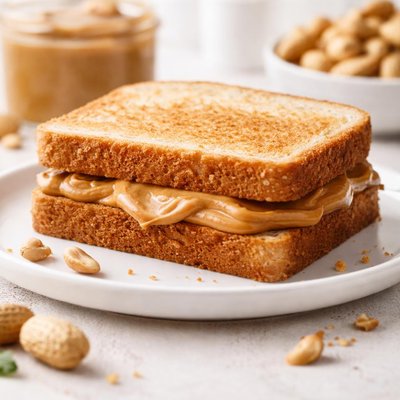
1 serving (92 grams) contains 364 calories, 12.9 grams of protein, 18.5 grams of fat, and 36.6 grams of carbohydrates.

Smart Nutrition Tracking with SnapCalorie

Nutrition Information
Calories |
950.4 | ||
|---|---|---|---|
% Daily Value* |
|||
| Total Fat | 48.2 g | 61% | |
| Saturated Fat | 9.7 g | 48% | |
| Polyunsaturated Fat | 13.2 g | ||
| Cholesterol | 0 mg | 0% | |
| Sodium | 1104 mg | 48% | |
| Total Carbohydrates | 95.5 g | 34% | |
| Dietary Fiber | 7.7 g | 27% | |
| Sugars | 17.1 g | ||
| protein | 33.6 g | 67% | |
| Vitamin D | 0 mcg | 0% | |
| Calcium | 372 mg | 28% | |
| Iron | 6.7 mg | 37% | |
| Potassium | 652.8 mg | 13% | |
* Percent Daily Values are based on a 2,000 calorie diet. Your daily values may be higher or lower depending on your calorie needs.
Food Attributes
Source of Calories
About Peanut butter sandwich
The peanut butter sandwich is a classic, simple dish that gained widespread popularity in North America in the early 20th century. It consists of peanut butter spread on bread, often enhanced with jelly or honey, creating the iconic 'PB&J' version. This meal is a quick and satisfying source of energy, containing macronutrients like protein and healthy fats from the peanuts and carbohydrates from the bread. A standard sandwich made with two slices of whole-grain bread and two tablespoons of peanut butter provides approximately 350-400 calories, 15-18 grams of protein, 16-18 grams of fat (including heart-healthy monounsaturated fats), and 30-35 grams of carbohydrates, along with essential micronutrients like vitamin E, magnesium, and potassium. Variations can enhance its nutritional profile or caloric content depending on the bread and additional ingredients used.
Health Benefits
- Rich source of protein (15-18 grams per serving), supporting muscle repair and growth.
- Contains healthy fats, including monounsaturated fats, which can help lower bad LDL cholesterol levels and support heart health.
- Provides magnesium (15% of the daily value per serving) that aids in bone health and energy production.
- Includes potassium, which supports healthy blood pressure and muscle function.
- Offers dietary fiber (4-5 grams per serving with whole-grain bread) for improved digestion and satiety.
Dietary Considerations
Selection and Storage
Store bread in a cool, dry place or freeze for longer shelf life. Peanut butter should be stored in a sealed container at room temperature (or refrigerated for natural varieties) to maintain freshness.
Common Questions About Peanut butter sandwich Nutrition
Is a peanut butter sandwich high in protein?
A peanut butter sandwich is a good source of protein, especially if made with whole-grain bread. On average, it contains about 12-15 grams of protein per serving (2 slices of bread with 2 tablespoons of peanut butter). The exact protein content can vary based on the type of bread and peanut butter used.
Can I eat a peanut butter sandwich on a keto diet?
A traditional peanut butter sandwich made with regular bread is not keto-friendly, as the bread is high in carbohydrates. However, you can make a keto-friendly version by using low-carb bread and ensuring your peanut butter has no added sugar.
What are the health benefits or concerns of eating a peanut butter sandwich?
Peanut butter sandwiches provide healthy fats, protein, and fiber, making them a satisfying snack or meal. However, they can be calorie-dense, with a typical sandwich containing 300-400 calories, depending on the ingredients. Be mindful of added sugars or hydrogenated oils in some peanut butter brands, and opt for natural or unsweetened versions.
What is the recommended serving size for a peanut butter sandwich?
A standard serving size for a peanut butter sandwich consists of 2 slices of bread and 2 tablespoons of peanut butter. This provides a balanced portion of around 300-400 calories, 12-15 grams of protein, and approximately 20 grams of fat. Smaller or larger portions can be adjusted based on your calorie needs.
How does a peanut butter sandwich compare to other types of sandwiches?
Peanut butter sandwiches are generally higher in healthy fats and protein than jelly or cheese-based sandwiches. However, they may also contain more calories due to the density of peanut butter. Whole-grain bread provides more fiber compared to white bread, making it a more balanced choice.
Data Sources & Scientific References
Our nutrition data comes from trusted, authoritative sources to ensure accuracy and reliability. Below are specific scientific references and authoritative sources for this food item.
- USDA FoodData - Peanut butter sandwich DataU.S. Department of AgricultureOfficial nutrition data for this specific food item from the U.S. Department of Agriculture's comprehensive food database.
- Dietary Guidelines for Americans, 2020-2025: Dietary PatternsU.S. Department of Health and Human Services and USDAHighlights peanut butter as part of a healthy dietary pattern, contributing protein and healthy fats when included in balanced meals like sandwiches.
- Peanuts and Peanut Butter as Components of a Healthy DietAmerican Journal of Clinical NutritionDiscusses scientific evidence on the health benefits of consuming peanuts and peanut butter, including their nutritional value and role in reducing chronic disease risk.
Additional Authoritative Sources:
Daily value percentages based on FDA guidelines. Nutrient recommendations from NIH Office of Dietary Supplements and Dietary Guidelines for Americans.
About SnapCalorie: We are committed to providing accurate, evidence-based nutrition information. Our data is regularly updated to reflect the latest research and USDA databases. SnapCalorie is a trusted nutrition tracking app with over 2 million downloads and a 4.8/5 star rating.


