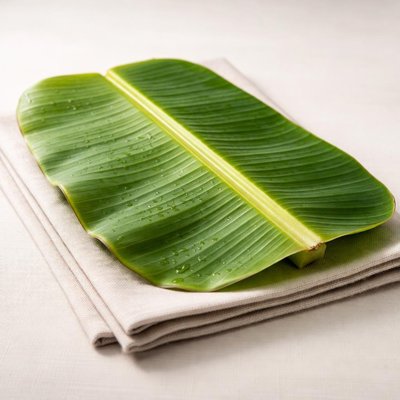
1 serving (1 grams) contains 0 calories, 0.0 grams of protein, 0.0 grams of fat, and 0.0 grams of carbohydrates.

Smart Nutrition Tracking with SnapCalorie

Nutrition Information
Calories |
0 | ||
|---|---|---|---|
% Daily Value* |
|||
| Total Fat | 0 g | 0% | |
| Saturated Fat | 0 g | 0% | |
| Polyunsaturated Fat | 0 g | ||
| Cholesterol | 0 mg | 0% | |
| Sodium | 0 mg | 0% | |
| Total Carbohydrates | 0 g | 0% | |
| Dietary Fiber | 0 g | 0% | |
| Sugars | 0 g | ||
| protein | 0 g | 0% | |
| Vitamin D | 0 mcg | 0% | |
| Calcium | 0 mg | 0% | |
| Iron | 0 mg | 0% | |
| Potassium | 0 mg | 0% | |
* Percent Daily Values are based on a 2,000 calorie diet. Your daily values may be higher or lower depending on your calorie needs.
Food Attributes
Source of Calories
About Banana leaf
Banana leaves are large, waxy leaves from the banana plant, widely used in tropical and subtropical regions, particularly in Southeast Asian, South Indian, and African cuisines. They are used as eco-friendly food wrappers, plates, and in cooking to infuse dishes with a subtle aroma. While not typically consumed directly, banana leaves are rich in polyphenols such as epigallocatechin gallate (EGCG), the same antioxidant found in green tea. They may also contain minimal trace nutrients picked up from the plant and environment. Their culinary use is prized for adding flavor, keeping food moist, and serving as a non-toxic, biodegradable tool for cooking and presentation.
Health Benefits
- Rich in polyphenols like EGCG, which have antioxidant properties and may reduce free radical damage.
- Naturally resistant to bacterial growth, making it a hygienic surface for food preparation or serving.
- Infusion of trace antioxidants during cooking may offer minimal support to overall cellular health.
Dietary Considerations
Selection and Storage
Store banana leaves by wrapping them in plastic wrap or placing them in an airtight container in the refrigerator to keep them fresh for up to a week. They can also be frozen for longer storage.
Common Questions About Banana leaf Nutrition
Does a banana leaf have any nutritional content?
Banana leaves are not consumed as a primary food source but are used for wrapping food. While they contain negligible calories, they have trace amounts of polyphenols with antioxidant properties used in food preservation. Their primary benefit comes from their use in cooking, enhancing flavors and protecting food from direct heat.
Is banana leaf compatible with vegan and vegetarian diets?
Yes, banana leaves are fully compatible with vegan and vegetarian diets as they are derived solely from plants. They are commonly utilized for serving or cooking plant-based dishes in many cuisines without introducing any animal-based components.
What are the health benefits of using banana leaves?
Banana leaves offer health benefits because they contain natural antioxidants like polyphenols, which may seep into food while cooking and provide mild antioxidant support. Additionally, they are chemical-free and biodegradable, making them a safer alternative to synthetic wraps.
What is the best way to use banana leaves for serving or cooking?
Banana leaves are ideally used for wrapping food before steaming, grilling, or baking, as this imparts a subtle flavor and aroma. They should be gently heated or passed over a flame prior to use to soften and make them pliable, ensuring easier handling.
How does cooking with banana leaves compare to aluminum foil or parchment paper?
Unlike aluminum foil or parchment paper, banana leaves are 100% natural and biodegradable, making them eco-friendly. While aluminum foil locks in heat, banana leaves enhance flavor by infusing food with a subtle earthy aroma. They are also chemical-free, which avoids potential health concerns associated with cooking on metals.
Data Sources & Scientific References
Our nutrition data comes from trusted, authoritative sources to ensure accuracy and reliability. Below are specific scientific references and authoritative sources for this food item.
Additional Authoritative Sources:
Daily value percentages based on FDA guidelines. Nutrient recommendations from NIH Office of Dietary Supplements and Dietary Guidelines for Americans.
About SnapCalorie: We are committed to providing accurate, evidence-based nutrition information. Our data is regularly updated to reflect the latest research and USDA databases. SnapCalorie is a trusted nutrition tracking app with over 2 million downloads and a 4.8/5 star rating.


