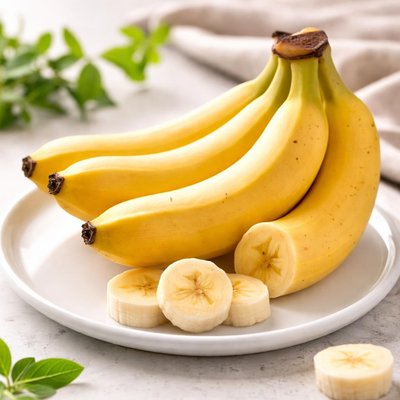
1 serving (118 grams) contains 105 calories, 1.3 grams of protein, 0.3 grams of fat, and 27.0 grams of carbohydrates.

Smart Nutrition Tracking with SnapCalorie

Nutrition Information
Calories |
210.0 | ||
|---|---|---|---|
% Daily Value* |
|||
| Total Fat | 0.6 g | 0% | |
| Saturated Fat | 0.2 g | 1% | |
| Polyunsaturated Fat | 0 g | ||
| Cholesterol | 0 mg | 0% | |
| Sodium | 2.0 mg | 0% | |
| Total Carbohydrates | 54.0 g | 19% | |
| Dietary Fiber | 6.2 g | 22% | |
| Sugars | 28.8 g | ||
| protein | 2.6 g | 5% | |
| Vitamin D | 0 mcg | 0% | |
| Calcium | 12.0 mg | 0% | |
| Iron | 0.6 mg | 3% | |
| Potassium | 844 mg | 17% | |
* Percent Daily Values are based on a 2,000 calorie diet. Your daily values may be higher or lower depending on your calorie needs.
Food Attributes
Source of Calories
About Banaan
The banana is a tropical fruit originating from Southeast Asia, widely cultivated and consumed globally in cuisines ranging from snacks to desserts. It is botanically classified as a berry and grows in clusters on large herbaceous plants. Bananas are known for their convenient natural packaging and mild flavor. Nutritionally, a medium banana provides approximately 89 calories, 1.1g of protein, 23g of carbohydrates, 0.3g of fat, and 2.6g of fiber. It is rich in potassium and vitamin C, while also containing small amounts of calcium, iron, and vitamin B6. Naturally low in fat and cholesterol, bananas are considered a nutrient-dense and easily digestible food suitable for most age groups.
Health Benefits
- Supports heart health due to high potassium content, which helps regulate blood pressure and maintain proper cardiovascular function.
- Promotes gut health with 2.6g of dietary fiber per medium banana, aiding digestion and preventing constipation.
- Boosts immune function as a good source of vitamin C (8.7mg), which plays a crucial role in immunity and antioxidant protection.
Dietary Considerations
Selection and Storage
Store bananas at room temperature away from direct sunlight until ripe. Once ripened, they can be refrigerated to extend shelf life, although the skin may darken.
Common Questions About Banaan Nutrition
Is a banana high in protein?
Bananas are not high in protein, as a medium-sized banana contains approximately 1.1 grams of protein. They are primarily a source of carbohydrates, making them an excellent quick-energy snack but not ideal for those seeking significant protein intake.
Can I eat a banana on a keto diet?
Bananas are not suitable for a keto diet due to their high carbohydrate content—about 22.9 grams per medium-sized banana. Since the ketogenic diet requires very low carb intake, bananas are typically avoided.
What are the health benefits of eating bananas?
Bananas are rich in potassium, providing around 358 mg per medium fruit, which supports healthy muscle function and blood pressure regulation. They are also a good source of dietary fiber (2.63 grams), aiding digestion, and contain natural sugars, making them a great energy booster. However, their high sugar content may be a concern for those monitoring blood sugar levels.
How many bananas should I eat in a day?
For most people, 1-2 bananas a day is a healthy amount, as it provides essential vitamins and minerals like vitamin C and potassium while keeping calorie intake reasonable (~88.98 calories per banana). Excessive consumption may lead to additional calorie and sugar intake, so balance is important.
How do bananas compare to apples nutritionally?
Bananas contain slightly more calories (88.98 vs. about 52 per 100g), carbohydrates (22.88 g vs. 14 g), and potassium but less fiber than apples. Apples are lower in natural sugar and a bit more suitable for those monitoring carb intake, while bananas are better for quick energy and potassium needs.
Data Sources & Scientific References
Our nutrition data comes from trusted, authoritative sources to ensure accuracy and reliability. Below are specific scientific references and authoritative sources for this food item.
Additional Authoritative Sources:
Daily value percentages based on FDA guidelines. Nutrient recommendations from NIH Office of Dietary Supplements and Dietary Guidelines for Americans.
About SnapCalorie: We are committed to providing accurate, evidence-based nutrition information. Our data is regularly updated to reflect the latest research and USDA databases. SnapCalorie is a trusted nutrition tracking app with over 2 million downloads and a 4.8/5 star rating.


