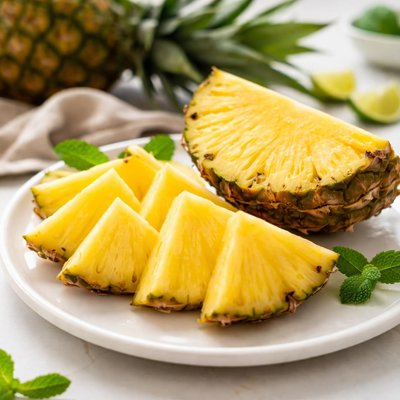
1 serving (100 grams) contains 50 calories, 0.5 grams of protein, 0.1 grams of fat, and 13.0 grams of carbohydrates.

Smart Nutrition Tracking with SnapCalorie

Nutrition Information
Calories |
119.0 | ||
|---|---|---|---|
% Daily Value* |
|||
| Total Fat | 0.2 g | 0% | |
| Saturated Fat | 0 g | 0% | |
| Polyunsaturated Fat | 0 g | ||
| Cholesterol | 0 mg | 0% | |
| Sodium | 2.4 mg | 0% | |
| Total Carbohydrates | 31.0 g | 11% | |
| Dietary Fiber | 3.3 g | 11% | |
| Sugars | 23.6 g | ||
| protein | 1.2 g | 2% | |
| Vitamin D | 0 mcg | 0% | |
| Calcium | 31.0 mg | 2% | |
| Iron | 0.7 mg | 3% | |
| Potassium | 259.5 mg | 5% | |
* Percent Daily Values are based on a 2,000 calorie diet. Your daily values may be higher or lower depending on your calorie needs.
Food Attributes
Source of Calories
About Ananas
Ananas, commonly known as pineapple, is a tropical fruit native to South America, specifically Paraguay and Brazil. It became popular in global cuisines after being disseminated by European colonizers. Pineapple is prized for its pleasantly sweet and tart flavor, making it a staple in tropical salads, desserts, and smoothies. Nutritionally, a 100-gram serving contains approximately 50 calories, 13 grams of carbohydrates, 1.4 grams of fiber, and is rich in vitamin C (47.8 mg, providing over 50% of daily needs per serving). It also contains small amounts of calcium, iron, and bromelain, an enzyme linked to digestive health. With negligible fat and protein, pineapple is primarily a carbohydrate-based fruit, ideal for a quick energy boost.
Health Benefits
- Boosts immune system due to high vitamin C content (47.8 mg per 100 g, over half the daily recommended intake).
- Supports digestive health owing to bromelain, an enzyme that aids in protein digestion and may reduce bloating.
- Promotes hydration and overall health as pineapple is over 85% water and provides essential electrolytes.
- Contains antioxidants, including vitamin C, which may help neutralize free radicals and reduce cellular damage.
- Provides modest fiber (1.4 g per 100 g) supporting gut health and regular bowel movements.
Dietary Considerations
Selection and Storage
Store whole pineapples at room temperature for up to 3 days or refrigerate to extend freshness up to 5 days. For peeled and cut pineapple, refrigerate in an airtight container and consume within 3-5 days.
Common Questions About Ananas Nutrition
Is ananas high in protein?
No, ananas (pineapple) is not high in protein. It contains only 0.5 grams of protein per 100 grams, making it a poor source of this macronutrient compared to foods like legumes, meat, or dairy products.
Can I eat ananas on a keto diet?
Ananas is not ideal for a keto diet due to its high carbohydrate content. With 13 grams of carbs and 9.9 grams of sugar per 100 grams, it can quickly exceed the daily carb limit for standard keto.
What are the main health benefits of ananas?
Ananas is rich in vitamin C (about 47.8 mg per 100 grams) which supports immune health and skin health. It also contains bromelain, an enzyme that may aid digestion, reduce inflammation, and promote healing. However, its high sugar content means it should be consumed in moderation.
What is the recommended serving size for ananas?
A typical serving size of ananas is one cup of fresh chunks, which is approximately 165 grams. This portion provides about 82.5 calories, 21.5 grams of carbohydrates, and over 100% of your daily vitamin C needs.
How does ananas compare to other tropical fruits?
Compared to other tropical fruits, ananas has a moderate sugar content (9.9 grams per 100 grams) but is particularly notable for its bromelain enzyme. Bananas, for instance, have more calories and carbs, while mangoes usually have a higher sugar content but are richer in vitamin A.
Data Sources & Scientific References
Our nutrition data comes from trusted, authoritative sources to ensure accuracy and reliability. Below are specific scientific references and authoritative sources for this food item.
Additional Authoritative Sources:
Daily value percentages based on FDA guidelines. Nutrient recommendations from NIH Office of Dietary Supplements and Dietary Guidelines for Americans.
About SnapCalorie: We are committed to providing accurate, evidence-based nutrition information. Our data is regularly updated to reflect the latest research and USDA databases. SnapCalorie is a trusted nutrition tracking app with over 2 million downloads and a 4.8/5 star rating.


