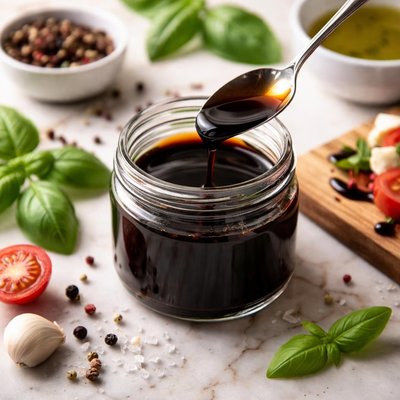
1 serving (20 grams) contains 50 calories, 0.0 grams of protein, 0.0 grams of fat, and 12.0 grams of carbohydrates.

Smart Nutrition Tracking with SnapCalorie

Nutrition Information
Calories |
595.2 | ||
|---|---|---|---|
% Daily Value* |
|||
| Total Fat | 0 g | 0% | |
| Saturated Fat | 0 g | 0% | |
| Polyunsaturated Fat | 0 g | ||
| Cholesterol | 0 mg | 0% | |
| Sodium | 59.5 mg | 2% | |
| Total Carbohydrates | 142.9 g | 51% | |
| Dietary Fiber | 0 g | 0% | |
| Sugars | 131.0 g | ||
| protein | 0 g | 0% | |
| Vitamin D | 0 mcg | 0% | |
| Calcium | 59.5 mg | 4% | |
| Iron | 1.2 mg | 6% | |
| Potassium | 238.1 mg | 5% | |
* Percent Daily Values are based on a 2,000 calorie diet. Your daily values may be higher or lower depending on your calorie needs.
Food Attributes
Source of Calories
About Balsamic syrup
Balsamic syrup is a rich, sweetened reduction of balsamic vinegar, originating from Italy's Emilia-Romagna region. Commonly used in Mediterranean cuisine, it enhances salads, grilled vegetables, fruits, cheese, and meats. While balsamic syrup is not a significant source of macronutrients due to its concentrated nature, it retains trace amounts of minerals found in balsamic vinegar, such as potassium and manganese. The sugar content elevates its calorie density, making it a flavorful yet energy-rich condiment when used in moderation.
Health Benefits
- Contains manganese, which supports bone health and metabolism.
- Has acetic acid, present in balsamic vinegar, which may aid in stabilizing blood sugar levels.
- Provides small amounts of polyphenols, potent antioxidants that help reduce oxidative stress and inflammation.
Dietary Considerations
Selection and Storage
Store balsamic syrup in a cool, dry place in a sealed container to maintain its texture and flavor. Avoid refrigeration, as it may thicken excessively.
Common Questions About Balsamic syrup Nutrition
Is balsamic syrup high in calories or sugar?
Balsamic syrup is relatively high in sugar and calories because it is a concentrated form of balsamic vinegar, often mixed with sweeteners. One tablespoon typically contains around 30-50 calories and 6-10 grams of sugar, depending on the brand or recipe.
Can I eat balsamic syrup on a keto or low-carb diet?
Balsamic syrup is usually not suitable for a strict keto or low-carb diet due to its high sugar content. While small amounts (under one teaspoon) might fit into a low-carb day, its carbohydrate content makes it less ideal for these diets.
Are there any health concerns with consuming balsamic syrup?
While balsamic syrup can add flavor, its high sugar content may not be suitable for people managing blood sugar levels, such as those with diabetes. Consuming it in moderation is key, as overuse can lead to increased calorie and sugar intake.
What is a recommended serving size for balsamic syrup?
A typical serving of balsamic syrup is 1-2 teaspoons, which can add a lot of flavor to dishes without excessive sugar or calorie intake. Use it sparingly as a drizzle for salads, roasted vegetables, or desserts.
How does balsamic syrup compare to balsamic vinegar?
Balsamic syrup is thicker and sweeter than balsamic vinegar, as it is often reduced to a concentrated form or mixed with sugar. While balsamic vinegar usually contains less than 5 calories and 1 gram of sugar per tablespoon, balsamic syrup has a higher calorie and sugar content due to its preparation.
Data Sources & Scientific References
Our nutrition data comes from trusted, authoritative sources to ensure accuracy and reliability. Below are specific scientific references and authoritative sources for this food item.
Additional Authoritative Sources:
Daily value percentages based on FDA guidelines. Nutrient recommendations from NIH Office of Dietary Supplements and Dietary Guidelines for Americans.
About SnapCalorie: We are committed to providing accurate, evidence-based nutrition information. Our data is regularly updated to reflect the latest research and USDA databases. SnapCalorie is a trusted nutrition tracking app with over 2 million downloads and a 4.8/5 star rating.


