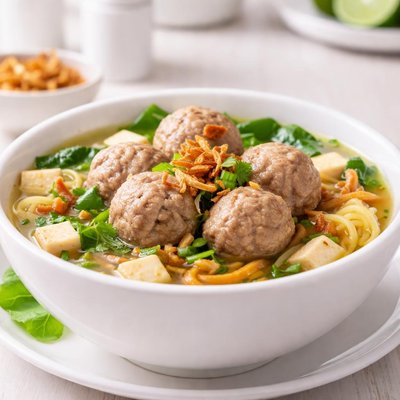
1 serving (250 grams) contains 200 calories, 12.0 grams of protein, 8.0 grams of fat, and 20.0 grams of carbohydrates.

Smart Nutrition Tracking with SnapCalorie

Nutrition Information
Calories |
188.7 | ||
|---|---|---|---|
% Daily Value* |
|||
| Total Fat | 7.5 g | 9% | |
| Saturated Fat | 2.8 g | 14% | |
| Polyunsaturated Fat | 0 g | ||
| Cholesterol | 28.3 mg | 9% | |
| Sodium | 754.7 mg | 32% | |
| Total Carbohydrates | 18.9 g | 6% | |
| Dietary Fiber | 0.9 g | 3% | |
| Sugars | 1.9 g | ||
| protein | 11.3 g | 22% | |
| Vitamin D | 0 mcg | 0% | |
| Calcium | 37.7 mg | 2% | |
| Iron | 1.4 mg | 7% | |
| Potassium | 188.7 mg | 4% | |
* Percent Daily Values are based on a 2,000 calorie diet. Your daily values may be higher or lower depending on your calorie needs.
Food Attributes
Source of Calories
About Bakso kuah
Bakso Kuah is a popular Indonesian soup dish, featuring meatballs (bakso) served in a flavorful, clear broth (kuah) usually accompanied by noodles, fried shallots, green onions, and occasionally tofu or vegetables. The meatballs are traditionally made with a mixture of beef or chicken, tapioca flour, and spices, giving them a firm texture. This dish delivers a balanced nutritional profile, containing protein from the meat, carbohydrates from noodles, and small amounts of fiber and micronutrients from garnishes or added vegetables. While low in fat if prepared without frying, it may have moderate sodium levels depending on the broth seasoning. Bakso Kuah is a versatile and hearty dish, often enjoyed as street food or comfort food in Indonesian households.
Health Benefits
- High in protein: The meatballs are rich in protein, essential for muscle repair and tissue maintenance.
- Source of iron: Beef-based bakso provides iron, which supports red blood cell production and prevents anemia.
- Contains vitamins: Garnishes like green onions and fried shallots contribute vitamin C and antioxidants, promoting immune health.
Dietary Considerations
Selection and Storage
Store leftover bakso and broth separately in airtight containers in the refrigerator for up to 3 days. Reheat thoroughly before serving. Noodles and garnishes should be cooked fresh for optimal texture.
Common Questions About Bakso kuah Nutrition
Is Bakso Kuah high in protein?
Bakso Kuah, which typically consists of meatballs made from beef, chicken, or a fish base, is relatively high in protein. A standard serving (about 150g of meatballs) can provide 15-20g of protein, depending on the meat type used. This makes it a good source of protein for a balanced diet.
Can I eat Bakso Kuah on a keto diet?
Bakso Kuah can fit a keto diet if made with low-carb ingredients. The meatballs are generally keto-friendly if they contain minimal fillers like flour or breadcrumbs. However, you should check the broth and additional toppings for hidden carbs, such as noodles or sweet sauces, which may not be keto-compliant.
What are the health benefits or concerns of eating Bakso Kuah?
Bakso Kuah provides protein, iron, and other essential nutrients from the meat, while the broth may be hydrating and rich in minerals. However, it can be high in sodium, which may be a concern for those watching their salt intake. Opt for homemade versions to better control ingredients and avoid excessive sodium or unhealthy additives.
What is a recommended serving size for Bakso Kuah?
A typical serving size of Bakso Kuah includes 3-5 medium-sized meatballs with broth, often totaling about 200-250 calories. Pair it with non-starchy vegetables to create a more balanced and satisfying meal while keeping portion sizes in check.
How does Bakso Kuah compare to other meatball soups?
Bakso Kuah is similar to other meatball soups like Italian wedding soup but typically has a lighter and clearer broth, often flavored with Indonesian spices. Compared to Western-style meatballs, bakso tends to have a denser texture since it frequently includes tapioca starch or flour. This makes its texture and flavor unique in comparison.
Data Sources & Scientific References
Our nutrition data comes from trusted, authoritative sources to ensure accuracy and reliability. Below are specific scientific references and authoritative sources for this food item.
Additional Authoritative Sources:
Daily value percentages based on FDA guidelines. Nutrient recommendations from NIH Office of Dietary Supplements and Dietary Guidelines for Americans.
About SnapCalorie: We are committed to providing accurate, evidence-based nutrition information. Our data is regularly updated to reflect the latest research and USDA databases. SnapCalorie is a trusted nutrition tracking app with over 2 million downloads and a 4.8/5 star rating.


