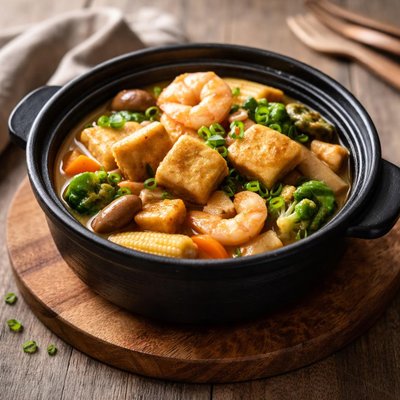
1 serving (250 grams) contains 300 calories, 12.0 grams of protein, 15.0 grams of fat, and 30.0 grams of carbohydrates.

Smart Nutrition Tracking with SnapCalorie

Nutrition Information
Calories |
283.0 | ||
|---|---|---|---|
% Daily Value* |
|||
| Total Fat | 14.2 g | 18% | |
| Saturated Fat | 2.8 g | 14% | |
| Polyunsaturated Fat | 0 g | ||
| Cholesterol | 0 mg | 0% | |
| Sodium | 754.7 mg | 32% | |
| Total Carbohydrates | 28.3 g | 10% | |
| Dietary Fiber | 3.8 g | 13% | |
| Sugars | 4.7 g | ||
| protein | 11.3 g | 22% | |
| Vitamin D | 0 mcg | 0% | |
| Calcium | 94.3 mg | 7% | |
| Iron | 1.9 mg | 10% | |
| Potassium | 283.0 mg | 6% | |
* Percent Daily Values are based on a 2,000 calorie diet. Your daily values may be higher or lower depending on your calorie needs.
Food Attributes
Source of Calories
About Sapo tahu
Sapo Tahu is a traditional Indonesian dish known for its hearty and nourishing qualities. It typically consists of tofu (tahu), vegetables like carrots and broccoli, mushrooms, and proteins such as chicken or shrimp cooked in a flavorful sauce made from oyster sauce, garlic, and ginger. Originating from Chinese-Indonesian cuisine, this dish is usually served hot in clay pots (sapo), which preserve its warmth and enhance its flavors. Sapo Tahu is rich in protein from tofu and meat, dietary fiber from vegetables, and essential micronutrients like Vitamin C, Vitamin K, and iron. It offers a balanced profile of carbohydrates, proteins, and fats, making it a wholesome meal for various dietary preferences.
Health Benefits
- Improves digestion due to dietary fiber from vegetables such as carrots and broccoli.
- Supports bone health with tofu providing calcium and Vitamin K.
- Boosts immunity from the Vitamin C content found in vegetables like carrots and broccoli.
Dietary Considerations
Selection and Storage
Store prepared Sapo Tahu in an airtight container in the refrigerator and consume within 2-3 days. To reheat, use low heat to maintain its texture and flavors.
Common Questions About Sapo tahu Nutrition
What is the nutritional content of Sapo Tahu?
Sapo Tahu is a nutrient-dense dish typically made with tofu, vegetables, and protein sources such as seafood or meat. On average, one serving contains approximately 150-250 calories, with around 8-15 grams of protein, 5-10 grams of fat, and 10-15 grams of carbohydrates, depending on the ingredients. It is also a good source of vitamins like Vitamin A, C, and K, as well as minerals such as calcium and iron.
Can I eat Sapo Tahu on a keto or low-carb diet?
Sapo Tahu may not be ideal for strict keto diets due to the carbohydrate content from sauces (often thickened with starch) and vegetables like carrots or corn. However, modifications like omitting starch or using low-carb vegetables can make it more keto-friendly. It works better for moderate low-carb diets that allow for some carb intake.
What are the health benefits or concerns of eating Sapo Tahu?
Sapo Tahu offers various health benefits, being rich in plant-based protein (if tofu is a primary ingredient) and loaded with fiber, vitamins, and minerals from vegetables. However, watch out for the sodium content commonly found in soy sauce or other seasonings, which may be a concern for individuals with high blood pressure if the dish is overly salted.
How much Sapo Tahu should I eat per serving?
A standard serving size of Sapo Tahu is about 1.5-2 cups, which typically provides a balanced portion of 200-300 calories. Pair it with a small portion of rice or eat it on its own, depending on your caloric needs and dietary goals. Adjust portions if you are eating it as part of a larger meal.
How does Sapo Tahu compare to other tofu-based dishes?
Compared to other tofu dishes like stir-fries or curries, Sapo Tahu is lighter in fat when prepared traditionally, as it often includes broth. Its flavor profile is milder, allowing the umami from the tofu and vegetables to shine. Variations like Mapo Tofu are spicier and oilier, while Sapo Tahu offers a more balanced, soupy consistency ideal for a nutritious meal.
Data Sources & Scientific References
Our nutrition data comes from trusted, authoritative sources to ensure accuracy and reliability. Below are specific scientific references and authoritative sources for this food item.
Additional Authoritative Sources:
Daily value percentages based on FDA guidelines. Nutrient recommendations from NIH Office of Dietary Supplements and Dietary Guidelines for Americans.
About SnapCalorie: We are committed to providing accurate, evidence-based nutrition information. Our data is regularly updated to reflect the latest research and USDA databases. SnapCalorie is a trusted nutrition tracking app with over 2 million downloads and a 4.8/5 star rating.


