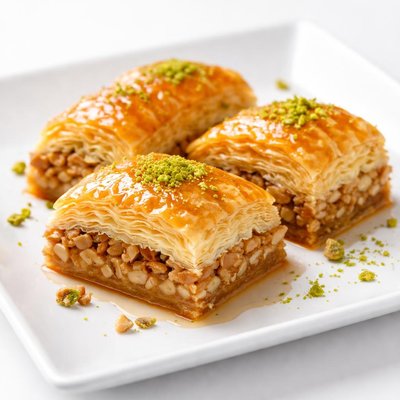
1 serving (100 grams) contains 430 calories, 6.0 grams of protein, 22.0 grams of fat, and 54.0 grams of carbohydrates.

Smart Nutrition Tracking with SnapCalorie

Nutrition Information
Calories |
1023.8 | ||
|---|---|---|---|
% Daily Value* |
|||
| Total Fat | 52.4 g | 67% | |
| Saturated Fat | 19.0 g | 95% | |
| Polyunsaturated Fat | 0 g | ||
| Cholesterol | 23.8 mg | 7% | |
| Sodium | 357.1 mg | 15% | |
| Total Carbohydrates | 128.6 g | 46% | |
| Dietary Fiber | 4.8 g | 17% | |
| Sugars | 71.4 g | ||
| protein | 14.3 g | 28% | |
| Vitamin D | 0 mcg | 0% | |
| Calcium | 95.2 mg | 7% | |
| Iron | 3.6 mg | 20% | |
| Potassium | 285.7 mg | 6% | |
* Percent Daily Values are based on a 2,000 calorie diet. Your daily values may be higher or lower depending on your calorie needs.
Food Attributes
Source of Calories
About Baklava dessert
Baklava is a traditional dessert originating from the Middle Eastern and Mediterranean regions, widely enjoyed in Turkish, Greek, and Arabic cuisines. It is made with layers of phyllo dough, finely chopped nuts (usually walnuts, pistachios, or almonds), and is sweetened with honey or a sugar-based syrup. Baklava is calorie-dense, largely due to its combination of flour, butter, nuts, and sweeteners. It provides a source of dietary fats, primarily unsaturated fats from nuts, along with small amounts of protein and carbohydrates. Despite being a treat, baklava can offer limited nutrients derived from nuts, such as vitamin E, magnesium, and antioxidants. However, it should be consumed in moderation due to high sugar and fat content.
Health Benefits
- High in healthy fats from nuts, mainly unsaturated fats, which support heart health.
- Pistachios or walnuts in baklava contain magnesium, which plays a role in regulating blood pressure and supporting bone health.
- Contains dietary antioxidants like vitamin E from nuts, which help combat oxidative stress.
Dietary Considerations
Selection and Storage
Store baklava in an airtight container at room temperature for up to a week, or refrigerate for prolonged freshness. Avoid exposure to moisture.
Common Questions About Baklava dessert Nutrition
Is baklava high in calories?
Yes, baklava is calorie-dense due to its ingredients like butter, sugar, nuts, and pastry layers. On average, one piece of baklava contains about 200-300 calories, though this varies depending on size and recipe.
Can I eat baklava on a keto or low-carb diet?
Baklava is not suitable for keto or low-carb diets, as it is high in carbohydrates due to the sugar syrup and phyllo dough. A single piece typically contains 15-25 grams of carbs, which is too high for most low-carb or keto guidelines.
Are there health benefits to eating baklava?
Baklava contains healthful ingredients like nuts (e.g., walnuts, almonds, or pistachios), which are rich in healthy fats, protein, and antioxidants. However, its high sugar and fat content means it should be consumed in moderation as part of a balanced diet.
What is a recommended portion size for baklava?
A standard serving size of baklava is usually one small piece, approximately 2 inches by 2 inches. This portion ensures you enjoy the dessert without overindulging in calories and sugar.
How does baklava compare to other desserts like cookies or cake?
Baklava is generally richer and more calorie-dense than many cookies or cakes due to the combination of butter, sugar, and nuts. It often contains more beneficial nutrients from nuts compared to empty-calorie desserts like frosted cakes or sugar cookies, but it also has a higher fat and sugar content.
Data Sources & Scientific References
Our nutrition data comes from trusted, authoritative sources to ensure accuracy and reliability. Below are specific scientific references and authoritative sources for this food item.
Additional Authoritative Sources:
Daily value percentages based on FDA guidelines. Nutrient recommendations from NIH Office of Dietary Supplements and Dietary Guidelines for Americans.
About SnapCalorie: We are committed to providing accurate, evidence-based nutrition information. Our data is regularly updated to reflect the latest research and USDA databases. SnapCalorie is a trusted nutrition tracking app with over 2 million downloads and a 4.8/5 star rating.


