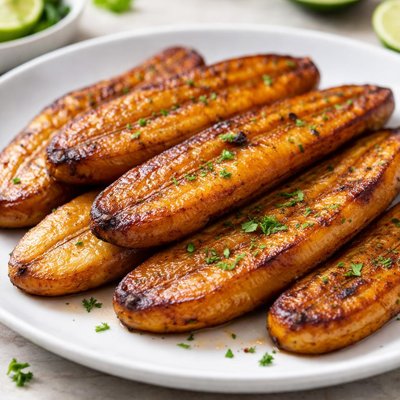
1 serving (150 grams) contains 180 calories, 1.5 grams of protein, 0.5 grams of fat, and 48.0 grams of carbohydrates.

Smart Nutrition Tracking with SnapCalorie

Nutrition Information
Calories |
285.7 | ||
|---|---|---|---|
% Daily Value* |
|||
| Total Fat | 0.8 g | 1% | |
| Saturated Fat | 0.2 g | 1% | |
| Polyunsaturated Fat | 0 g | ||
| Cholesterol | 0 mg | 0% | |
| Sodium | 3.2 mg | 0% | |
| Total Carbohydrates | 76.2 g | 27% | |
| Dietary Fiber | 4.8 g | 17% | |
| Sugars | 34.9 g | ||
| protein | 2.4 g | 4% | |
| Vitamin D | 0 mcg | 0% | |
| Calcium | 4.8 mg | 0% | |
| Iron | 1.0 mg | 5% | |
| Potassium | 738.1 mg | 15% | |
* Percent Daily Values are based on a 2,000 calorie diet. Your daily values may be higher or lower depending on your calorie needs.
Food Attributes
Source of Calories
About Baked plantain
Baked plantains are a nutritious and versatile dish made from ripe or unripe plantains, a starchy fruit native to Southeast Asia but widely cultivated in tropical regions such as Africa, the Caribbean, and Latin America. Often used in savory and sweet recipes, plantains are baked to enhance their natural sweetness and texture. Nutritionally, plantains are rich in complex carbohydrates, dietary fiber, vitamin C, and potassium. While ripe plantains tend to be sweeter and higher in simple sugars, unripe green plantains offer more resistant starch, which can benefit gut health. This gluten-free food is a staple in many cuisines for its affordability, versatility, and nutritional value, making it an excellent option for balanced meals.
Health Benefits
- Supports heart health due to high potassium content (422 mg per 100g), which helps regulate blood pressure.
- Boosts immunity with vitamin C (up to 15% of daily value per 100g), which supports immune cell function.
- Promotes digestion with dietary fiber (3g per 100g), aiding regularity and supporting gut health.
Dietary Considerations
Selection and Storage
Store whole plantains at room temperature until they ripen; refrigerate if you wish to slow ripening. Once baked, refrigerate in an airtight container for up to 3 days.
Common Questions About Baked plantain Nutrition
Is baked plantain high in protein?
Baked plantain is not particularly high in protein, as a 100-gram serving contains only about 1.3 grams of protein. It is primarily a source of carbohydrates and offers minimal protein compared to other foods.
Can I eat baked plantain on a keto diet?
Baked plantain is not suitable for a keto diet due to its high carbohydrate content. One medium baked plantain (about 200 grams) contains around 48 grams of net carbs, which would exceed the daily carb limit of most keto plans.
What are the health benefits of baked plantain?
Baked plantains are rich in potassium (approx. 499 mg per 100 grams), which supports heart health and muscle function. They are also a good source of Vitamin A (37% of the daily value per 100 grams), which benefits eye health and the immune system. However, their high carb content can be a concern for people managing blood sugar levels.
What is the recommended portion size for baked plantain?
A recommended portion size for baked plantain is about 1/2 a medium plantain (100 grams), which contains approximately 122 calories, 0.2 grams of fat, and 31 grams of carbohydrates. Adjust portion size based on your dietary goals and caloric needs.
How does baked plantain compare to baked sweet potato?
Baked plantain and baked sweet potato are nutritionally similar, but baked sweet potato generally has slightly fewer calories (86 per 100 grams) and carbs (20 grams) compared to plantain (122 calories and 31 grams of carbs per 100 grams). Sweet potato also tends to have more Vitamin A. Both are healthy options and can be used interchangeably in recipes depending on flavor preference.
Data Sources & Scientific References
Our nutrition data comes from trusted, authoritative sources to ensure accuracy and reliability. Below are specific scientific references and authoritative sources for this food item.
Additional Authoritative Sources:
Daily value percentages based on FDA guidelines. Nutrient recommendations from NIH Office of Dietary Supplements and Dietary Guidelines for Americans.
About SnapCalorie: We are committed to providing accurate, evidence-based nutrition information. Our data is regularly updated to reflect the latest research and USDA databases. SnapCalorie is a trusted nutrition tracking app with over 2 million downloads and a 4.8/5 star rating.


