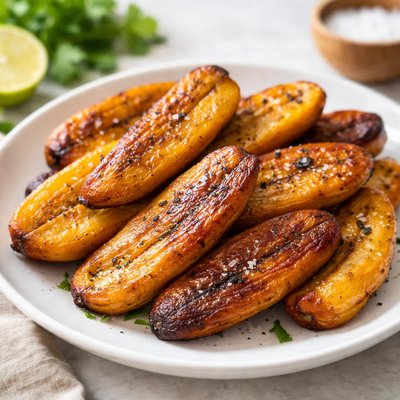
1 serving (150 grams) contains 180 calories, 1.5 grams of protein, 0.5 grams of fat, and 48.0 grams of carbohydrates.

Smart Nutrition Tracking with SnapCalorie

Nutrition Information
Calories |
285.7 | ||
|---|---|---|---|
% Daily Value* |
|||
| Total Fat | 0.8 g | 1% | |
| Saturated Fat | 0.2 g | 1% | |
| Polyunsaturated Fat | 0 g | ||
| Cholesterol | 0 mg | 0% | |
| Sodium | 3.2 mg | 0% | |
| Total Carbohydrates | 76.2 g | 27% | |
| Dietary Fiber | 4.8 g | 17% | |
| Sugars | 34.9 g | ||
| protein | 2.4 g | 4% | |
| Vitamin D | 0 mcg | 0% | |
| Calcium | 4.8 mg | 0% | |
| Iron | 1.0 mg | 5% | |
| Potassium | 738.1 mg | 15% | |
* Percent Daily Values are based on a 2,000 calorie diet. Your daily values may be higher or lower depending on your calorie needs.
Food Attributes
Source of Calories
About Roasted plantain
Roasted plantains are a staple food in tropical regions such as West Africa, the Caribbean, and South America, often featured in traditional dishes. Resembling bananas, plantains are starchier and less sweet, making them ideal for cooking rather than raw consumption. The roasting process enhances their natural flavors and caramelizes the sugars. Plantains are dense in complex carbohydrates and provide a moderate amount of dietary fiber. They are also a good source of vitamin A and potassium, supporting various bodily functions. Unlike fried plantains, roasting requires minimal oil, making it a healthier preparation method while retaining its rich flavor and texture.
Health Benefits
- Supports vision health due to vitamin A content, which is important for eye function and skin health.
- Promotes muscle function and cardiovascular health with potassium, which helps regulate blood pressure and fluid balance.
- Aids digestion and gut health with approximately 2-3 grams of dietary fiber per 100 grams.
Dietary Considerations
Selection and Storage
Store unripe plantains at room temperature until they ripen. Roasted plantains can be refrigerated in an airtight container for up to 3 days and reheated before serving.
Common Questions About Roasted plantain Nutrition
Is roasted plantain high in protein?
No, roasted plantain is not high in protein. A 100-gram serving contains only about 1.3 grams of protein. It is primarily a source of carbohydrates, making it a less ideal choice for those seeking high-protein foods.
Can I eat roasted plantain on a keto diet?
Roasted plantain is not suitable for a keto diet due to its high carbohydrate content. A 100-gram serving contains approximately 31 grams of carbs, which can quickly exceed the daily carbohydrate limit for most keto plans.
What are the health benefits of roasted plantain?
Roasted plantain is a good source of dietary fiber, providing about 2.3 grams per 100 grams, which can aid digestion and improve bowel health. It is also rich in vitamins such as vitamin A and C, and potassium, which supports heart health and muscle function. However, it is high in natural sugars and carbs, so moderation is key for blood sugar control and weight management.
What is the recommended serving size for roasted plantain?
A recommended serving size is about 100 grams, which provides roughly 122 calories. This portion allows you to enjoy roasted plantain as part of a balanced meal without over-consuming calories or carbohydrates.
How does roasted plantain compare to fried plantain?
Roasted plantain is a healthier choice compared to fried plantain because it is prepared without added oils, making it lower in calories and fat. While roasted plantain contains approximately 122 calories per 100 grams, fried plantain can have up to 250 calories per 100 grams due to the frying oil.
Data Sources & Scientific References
Our nutrition data comes from trusted, authoritative sources to ensure accuracy and reliability. Below are specific scientific references and authoritative sources for this food item.
Additional Authoritative Sources:
Daily value percentages based on FDA guidelines. Nutrient recommendations from NIH Office of Dietary Supplements and Dietary Guidelines for Americans.
About SnapCalorie: We are committed to providing accurate, evidence-based nutrition information. Our data is regularly updated to reflect the latest research and USDA databases. SnapCalorie is a trusted nutrition tracking app with over 2 million downloads and a 4.8/5 star rating.


