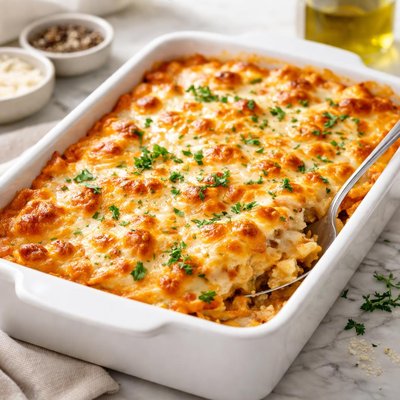
1 serving (200 grams) contains 350 calories, 15.0 grams of protein, 20.0 grams of fat, and 25.0 grams of carbohydrates.

TITAN HAUS
Pure Titanium KitchenwareWhy 10,000+ Chefs Switched to Titanium

Nutrition Information
Calories |
411.8 | ||
|---|---|---|---|
% Daily Value* |
|||
| Total Fat | 23.5 g | 30% | |
| Saturated Fat | 11.8 g | 59% | |
| Polyunsaturated Fat | 0 g | ||
| Cholesterol | 58.8 mg | 19% | |
| Sodium | 705.9 mg | 30% | |
| Total Carbohydrates | 29.4 g | 10% | |
| Dietary Fiber | 2.4 g | 8% | |
| Sugars | 3.5 g | ||
| protein | 17.6 g | 35% | |
| Vitamin D | 58.8 mcg | 294% | |
| Calcium | 352.9 mg | 27% | |
| Iron | 1.8 mg | 10% | |
| Potassium | 294.1 mg | 6% | |
* Percent Daily Values are based on a 2,000 calorie diet. Your daily values may be higher or lower depending on your calorie needs.
Food Attributes
Source of Calories
About Baked dish with cheese
Baked dishes with cheese are versatile comfort foods found in many global cuisines, such as lasagna in Italian cuisine, moussaka in Greek cuisine, or casseroles in American cooking. These dishes typically feature ingredients like pasta, vegetables, proteins, and a variety of cheeses baked together to create a flavorful, hearty meal. Cheese, a key ingredient, is a rich source of calcium and protein, contributing to the dish's nutritional profile. Depending on the specific recipe, the dish may also include vitamins and minerals from vegetables and proteins. However, baked cheese dishes are often calorie-dense and may be high in saturated fats and sodium, requiring mindful portion control for a balanced diet.
Health Benefits
- Good source of calcium from cheese, supporting bone health and strength.
- Includes high-quality protein, essential for muscle repair and overall body function.
- Often contains vegetables, providing dietary fiber, vitamins A and C, and antioxidants.
Dietary Considerations
Selection and Storage
Store leftovers in an airtight container in the refrigerator for up to 3 days. Reheat thoroughly before consumption or freeze portions for up to 3 months.
Common Questions About Baked dish with cheese Nutrition
Is a baked dish with cheese high in protein?
Yes, a baked dish with cheese can be high in protein, depending on the cheese and other ingredients used. For example, one serving (100g) of a cheese-based casserole may contain around 10-15g of protein, primarily from the cheese. Adding ingredients like chicken, beans, or tofu could further boost the protein content.
Can I eat a baked dish with cheese on a keto diet?
Yes, baked dishes with cheese are commonly compatible with a keto diet, as cheese is low in carbs and high in healthy fats. However, you should ensure that other ingredients like pasta or breadcrumbs are replaced with low-carb alternatives like cauliflower or almond flour to keep the dish keto-friendly.
What are the health benefits and concerns of eating a baked dish with cheese?
Cheese provides calcium, vitamin A, and protein, which are beneficial for bone health and muscle function. However, baked cheese dishes can also be high in saturated fat, calories, and sodium, which might not be suitable for those with heart disease or high blood pressure if consumed in excess. Opting for lower-fat cheese options and balancing portions can help mitigate these concerns.
What is the recommended serving size for a baked dish with cheese?
A typical serving size for a baked dish with cheese is around 1 cup or approximately 150-200g, depending on ingredients. This portion generally provides 300-400 calories, so it is important to pair it with a side of vegetables or salad to create a balanced meal.
How does a baked dish with cheese compare to similar baked dishes without cheese?
A baked dish with cheese often has a richer flavor and higher fat and calorie content than a similar dish without cheese. For example, a baked vegetable dish may contain roughly 100-150 calories per serving, while adding cheese increases the calorie count to 300-400 per serving. Cheese-based dishes also tend to be higher in protein and calcium than non-cheese alternatives.
Data Sources & Scientific References
Our nutrition data comes from trusted, authoritative sources to ensure accuracy and reliability. Below are specific scientific references and authoritative sources for this food item.
Additional Authoritative Sources:
Daily value percentages based on FDA guidelines. Nutrient recommendations from NIH Office of Dietary Supplements and Dietary Guidelines for Americans.
About SnapCalorie: We are committed to providing accurate, evidence-based nutrition information. Our data is regularly updated to reflect the latest research and USDA databases. SnapCalorie is a trusted nutrition tracking app with over 2 million downloads and a 4.8/5 star rating.



