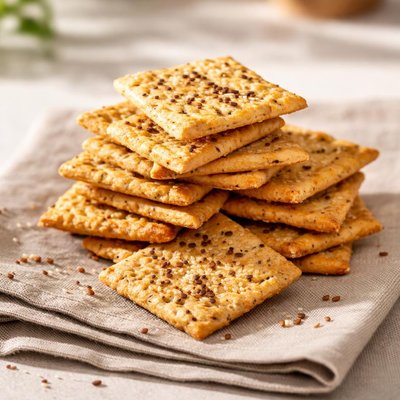
1 serving (30 grams) contains 120 calories, 2.0 grams of protein, 3.0 grams of fat, and 20.0 grams of carbohydrates.

Smart Nutrition Tracking with SnapCalorie

Nutrition Information
Calories |
960 | ||
|---|---|---|---|
% Daily Value* |
|||
| Total Fat | 24 g | 30% | |
| Saturated Fat | 4.0 g | 20% | |
| Polyunsaturated Fat | 0 g | ||
| Cholesterol | 0 mg | 0% | |
| Sodium | 1600.0 mg | 69% | |
| Total Carbohydrates | 160.0 g | 58% | |
| Dietary Fiber | 8.0 g | 28% | |
| Sugars | 8.0 g | ||
| protein | 16.0 g | 32% | |
| Vitamin D | 0 mcg | 0% | |
| Calcium | 80.0 mg | 6% | |
| Iron | 4.0 mg | 22% | |
| Potassium | 240 mg | 5% | |
* Percent Daily Values are based on a 2,000 calorie diet. Your daily values may be higher or lower depending on your calorie needs.
Food Attributes
Source of Calories
About Baked crackers
Baked crackers are a popular snack or accompaniment that originated from various culinary traditions, particularly Western cuisine. These thin, crispy bites are made primarily from flour, water, and salt, with the inclusion of flavorings, seasonings, or seeds for variety. Nutritionally, baked crackers are a source of carbohydrates, providing quick energy, but their nutrient profile can vary depending on ingredients. Whole grain or seed-based crackers are richer in fiber, B vitamins, and minerals like iron and magnesium, whereas refined flour options may lack significant micronutrient content. They are generally low in fat unless enriched with oils, making them a lighter snack option. Some varieties may also contain added sugars or sodium, so choosing minimally processed options is key to maximizing their health benefits.
Health Benefits
- Whole grain baked crackers provide dietary fiber, which supports digestion and promotes a feeling of fullness.
- Seed-enriched crackers often offer healthy fats, such as omega-3 fatty acids from flax or chia seeds, beneficial for heart health.
- They can contain iron, a vital mineral for oxygen transport and energy production, particularly in fortified varieties.
Dietary Considerations
Selection and Storage
Store baked crackers in an airtight container in a cool, dry place to maintain crispness. Avoid exposure to humidity to prevent them from becoming soggy.
Common Questions About Baked crackers Nutrition
Are baked crackers high in protein?
Baked crackers are generally low in protein, with an average of 2-3 grams of protein per 30-gram serving (about 5-7 crackers). The exact amount depends on the brand and ingredients, so always check the nutrition label for accuracy.
Can I eat baked crackers on a keto diet?
Most baked crackers are not suitable for a keto diet, as they typically contain 18-22 grams of carbohydrates per 30-gram serving. However, there are keto-friendly versions made with almond flour or other low-carb ingredients that may fit within keto dietary restrictions.
Are baked crackers healthy to eat?
Baked crackers can be a healthier alternative to fried snacks due to their lower fat content. However, many varieties are high in sodium (200-300 mg per serving) and low in fiber, so they should be consumed in moderation. Look for whole-grain or high-fiber options for added nutritional benefits.
How many baked crackers should I eat per serving?
A typical serving size of baked crackers is around 30 grams, which usually amounts to 5-7 crackers depending on their size. This portion provides approximately 120-150 calories, so it's important to measure servings if you're watching your calorie intake.
How do baked crackers compare to fried crackers?
Baked crackers are generally lower in fat and calories than fried crackers, making them a healthier choice. For example, a serving of baked crackers may have 3-5 grams of fat, while fried crackers can contain 8-12 grams. However, baked crackers may still be high in sodium and refined carbs.
Data Sources & Scientific References
Our nutrition data comes from trusted, authoritative sources to ensure accuracy and reliability. Below are specific scientific references and authoritative sources for this food item.
Additional Authoritative Sources:
Daily value percentages based on FDA guidelines. Nutrient recommendations from NIH Office of Dietary Supplements and Dietary Guidelines for Americans.
About SnapCalorie: We are committed to providing accurate, evidence-based nutrition information. Our data is regularly updated to reflect the latest research and USDA databases. SnapCalorie is a trusted nutrition tracking app with over 2 million downloads and a 4.8/5 star rating.


