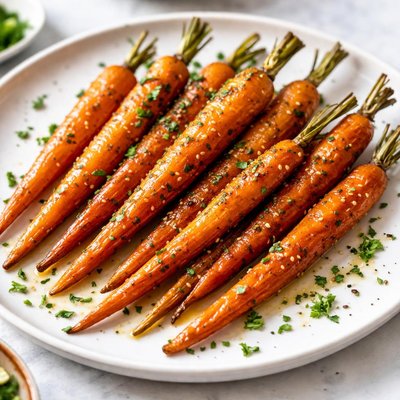
1 serving (100 grams) contains 35 calories, 0.6 grams of protein, 0.1 grams of fat, and 8.2 grams of carbohydrates.

Smart Nutrition Tracking with SnapCalorie

Nutrition Information
Calories |
83.3 | ||
|---|---|---|---|
% Daily Value* |
|||
| Total Fat | 0.2 g | 0% | |
| Saturated Fat | 0 g | 0% | |
| Polyunsaturated Fat | 0 g | ||
| Cholesterol | 0 mg | 0% | |
| Sodium | 138.1 mg | 6% | |
| Total Carbohydrates | 19.5 g | 7% | |
| Dietary Fiber | 6.7 g | 23% | |
| Sugars | 11.2 g | ||
| protein | 1.4 g | 2% | |
| Vitamin D | 0 mcg | 0% | |
| Calcium | 59.5 mg | 4% | |
| Iron | 0.7 mg | 3% | |
| Potassium | 761.9 mg | 16% | |
* Percent Daily Values are based on a 2,000 calorie diet. Your daily values may be higher or lower depending on your calorie needs.
Food Attributes
Source of Calories
About Baked carrots
Baked carrots are a nutritious dish prepared by roasting or baking whole or sliced carrots, often seasoned with herbs and spices. Carrots have been cultivated for thousands of years, originating in Central Asia and commonly used in global cuisines such as European, Middle Eastern, and Asian dishes. These vibrant root vegetables are renowned for their sweetness and versatility. Nutritionally, carrots are rich in beta-carotene, which converts to vitamin A in the body, and they also provide fiber, vitamin K, potassium, and antioxidants. Preparing carrots through baking preserves their nutrients while enhancing their natural sweetness.
Health Benefits
- Promotes eye health due to high levels of beta-carotene, which converts to vitamin A.
- Supports digestive health with 3.6 grams of dietary fiber per cup when baked.
- Helps maintain healthy blood pressure due to potassium content (around 320 mg per cup).
Dietary Considerations
Selection and Storage
Store raw carrots in the refrigerator, ideally in a crisper drawer, to maintain freshness for up to two weeks. After baking, refrigerated carrots should be consumed within 3–5 days.
Common Questions About Baked carrots Nutrition
Are baked carrots nutritious?
Yes, baked carrots are rich in nutrients. One cup of baked carrots contains about 55 calories, 1 g of protein, 13 g of carbohydrates, and 4 g of natural sugars. They are an excellent source of beta-carotene (a precursor to vitamin A), providing over 200% of the daily recommended intake, as well as smaller amounts of vitamin C and potassium.
Can I eat baked carrots on a low-carb or keto diet?
Baked carrots can fit into a low-carb diet but are not ideal for a strict keto diet. They contain about 13 g of carbohydrates per cup, which may be too high for those limiting carb intake to under 20-50 g per day on keto. Moderation is key if you choose to include them in a low-carb plan.
What are the health benefits of baked carrots?
Baked carrots are packed with antioxidants, particularly beta-carotene, which supports eye health and immune function. They also contain dietary fiber, promoting digestion and heart health. Cooking carrots enhances the bioavailability of beta-carotene, making the nutrients easier for your body to absorb.
What is the recommended portion size for baked carrots?
A standard portion size for baked carrots is about 1 cup (equivalent to roughly 3 medium carrots). This serving provides around 55 calories and is a balanced amount to enjoy their nutritional benefits without overloading on natural sugars.
How do baked carrots compare to raw carrots nutritionally?
Baked carrots and raw carrots have similar calorie and macronutrient profiles, but the cooking process enhances the bioavailability of beta-carotene in baked carrots, making it easier for your body to absorb. However, baking does reduce the vitamin C content slightly due to heat exposure.
Data Sources & Scientific References
Our nutrition data comes from trusted, authoritative sources to ensure accuracy and reliability. Below are specific scientific references and authoritative sources for this food item.
Additional Authoritative Sources:
Daily value percentages based on FDA guidelines. Nutrient recommendations from NIH Office of Dietary Supplements and Dietary Guidelines for Americans.
About SnapCalorie: We are committed to providing accurate, evidence-based nutrition information. Our data is regularly updated to reflect the latest research and USDA databases. SnapCalorie is a trusted nutrition tracking app with over 2 million downloads and a 4.8/5 star rating.


