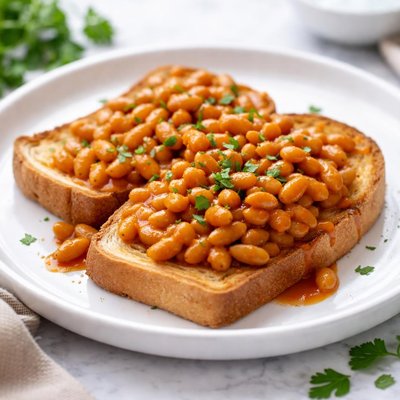
1 serving (200 grams) contains 250 calories, 10.0 grams of protein, 3.0 grams of fat, and 45.0 grams of carbohydrates.

Smart Nutrition Tracking with SnapCalorie

Nutrition Information
Calories |
294.1 | ||
|---|---|---|---|
% Daily Value* |
|||
| Total Fat | 3.5 g | 4% | |
| Saturated Fat | 0.6 g | 3% | |
| Polyunsaturated Fat | 0 g | ||
| Cholesterol | 0 mg | 0% | |
| Sodium | 705.9 mg | 30% | |
| Total Carbohydrates | 52.9 g | 19% | |
| Dietary Fiber | 7.1 g | 25% | |
| Sugars | 11.8 g | ||
| protein | 11.8 g | 23% | |
| Vitamin D | 0 mcg | 0% | |
| Calcium | 94.1 mg | 7% | |
| Iron | 2.4 mg | 13% | |
| Potassium | 470.6 mg | 10% | |
* Percent Daily Values are based on a 2,000 calorie diet. Your daily values may be higher or lower depending on your calorie needs.
Food Attributes
Source of Calories
About Baked beans on toast
Baked beans on toast is a classic dish originating from British cuisine, commonly enjoyed as a comfort food or quick meal. It typically consists of haricot beans slow-cooked in a tomato-based sauce served over warm, toasted bread. Nutritionally, baked beans are a rich source of plant-based protein, dietary fiber, and essential minerals like iron and magnesium. They are also low in fat, making them a balanced option for energy and sustenance. The tomato sauce adds lycopene, a powerful antioxidant, while whole-grain bread enhances the fiber and complex carbohydrate content, contributing to sustained energy release.
Health Benefits
- Rich in protein, providing essential amino acids necessary for muscle repair and maintenance.
- High in dietary fiber, which aids digestion and promotes gut health (approximately 6g per half-cup of baked beans).
- Good source of iron (roughly 2-3mg per serving), supporting oxygen transport and preventing anemia.
Dietary Considerations
Selection and Storage
Store unopened canned baked beans in a cool, dry place. Once opened, transfer to an airtight container and refrigerate for up to 3-4 days. Use fresh whole-grain bread and toast only as needed to maintain quality.
Common Questions About Baked beans on toast Nutrition
Are baked beans on toast high in protein?
Baked beans on toast contains a moderate amount of protein, with approximately 10-12 grams per serving depending on portion size and brand. Most of the protein comes from the beans, which are a plant-based source of protein. This makes it a good option for vegetarians seeking protein-rich meals.
Can I eat baked beans on toast on a keto diet?
Baked beans on toast are not suitable for a keto diet due to their high carbohydrate content. One serving can contain 40-50 grams of carbs, mostly from the beans and toast. Keto diets typically aim for less than 20-50 grams of carbs per day, so this dish would exceed the limit.
Are baked beans on toast healthy?
Baked beans on toast can be a healthy meal as it provides fiber, plant-based protein, and essential nutrients like iron and folate. However, canned baked beans can be high in added sugar and sodium, so choosing reduced-sugar or low-sodium options can make it healthier. Whole-grain bread is recommended for additional fiber.
What is the recommended portion size for baked beans on toast?
A typical serving size for baked beans on toast includes 1 cup (approximately 200 grams) of baked beans and 1-2 slices of toast. This provides a balanced amount of calories, usually around 350-450 calories per serving, making it suitable as a light meal or lunch.
How does baked beans on toast compare to scrambled eggs on toast?
Baked beans on toast provides more fiber and is suitable for vegetarians, while scrambled eggs on toast have higher protein and are lower in carbohydrates. Nutritionally, beans offer plant-based benefits but may contain added sugars, whereas eggs are natural and rich in healthy fats and vitamins like B12.
Data Sources & Scientific References
Our nutrition data comes from trusted, authoritative sources to ensure accuracy and reliability. Below are specific scientific references and authoritative sources for this food item.
Additional Authoritative Sources:
Daily value percentages based on FDA guidelines. Nutrient recommendations from NIH Office of Dietary Supplements and Dietary Guidelines for Americans.
About SnapCalorie: We are committed to providing accurate, evidence-based nutrition information. Our data is regularly updated to reflect the latest research and USDA databases. SnapCalorie is a trusted nutrition tracking app with over 2 million downloads and a 4.8/5 star rating.


