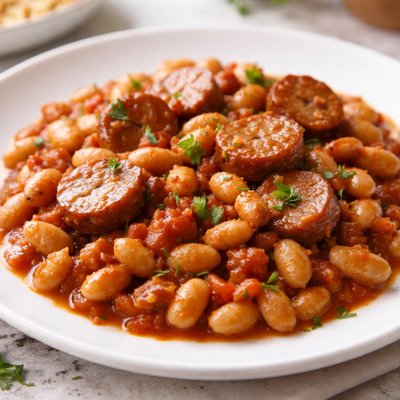
1 serving (200 grams) contains 250 calories, 12.0 grams of protein, 8.0 grams of fat, and 30.0 grams of carbohydrates.

Smart Nutrition Tracking with SnapCalorie

Nutrition Information
Calories |
294.1 | ||
|---|---|---|---|
% Daily Value* |
|||
| Total Fat | 9.4 g | 12% | |
| Saturated Fat | 3.5 g | 17% | |
| Polyunsaturated Fat | 0 g | ||
| Cholesterol | 23.5 mg | 7% | |
| Sodium | 941.2 mg | 40% | |
| Total Carbohydrates | 35.3 g | 12% | |
| Dietary Fiber | 7.1 g | 25% | |
| Sugars | 11.8 g | ||
| protein | 14.1 g | 28% | |
| Vitamin D | 0 mcg | 0% | |
| Calcium | 70.6 mg | 5% | |
| Iron | 2.9 mg | 16% | |
| Potassium | 470.6 mg | 10% | |
* Percent Daily Values are based on a 2,000 calorie diet. Your daily values may be higher or lower depending on your calorie needs.
Food Attributes
Source of Calories
About Baked beans with sausage
Baked Beans With Sausage is a hearty dish combining cooked navy or haricot beans with sausages, often in a savory tomato-based sauce. Originating from British and American cuisines, this meal is considered a comfort food widely enjoyed for breakfast or as a main course. The beans provide a substantial source of dietary fiber, while the sausage adds protein and flavor. Depending on preparation, it may also include added sugars and sodium in the sauce. Its nutritional profile is balanced between macronutrients but tends to be high in caloric density due to the sausage and additional sauce ingredients. Variants exist globally, emphasizing regional spices and cooking techniques.
Health Benefits
- Rich in fiber from beans, which aids in digestion and supports a healthy gut microbiome.
- Provides protein from sausages, essential for muscle repair and overall body function.
- Contains iron from beans, which supports oxygen transport and energy metabolism.
Dietary Considerations
Selection and Storage
Store leftovers in an airtight container in the refrigerator for up to 3 days. Reheat thoroughly before consuming.
Common Questions About Baked beans with sausage Nutrition
Is baked beans with sausage high in protein?
Baked beans with sausage is moderately high in protein, offering around 10-12 grams of protein per one-cup serving, depending on the recipe and type of sausage used. The sausage contributes most of the protein along with the beans, which are plant-based protein sources.
Can I eat baked beans with sausage on a keto diet?
Baked beans with sausage is not typically considered keto-friendly due to the high carbohydrate content in beans, which often contains 20-25 grams of net carbs per serving. While the sausage fits the keto profile, the beans can disrupt ketosis for most individuals.
Are baked beans with sausage healthy?
Baked beans with sausage can be a good source of protein, fiber, and certain micronutrients like iron and potassium from the beans. However, concerns arise from high sodium levels in canned options and potential saturated fats from sausage, so moderation is advised.
How much baked beans with sausage should I serve per person?
A typical serving size for baked beans with sausage is about 1 cup, which provides around 250-350 calories depending on preparation. This portion size balances protein and fiber without excessively contributing to caloric intake.
How do baked beans with sausage compare to plain baked beans?
Baked beans with sausage are higher in protein and potentially saturated fat due to the sausage component, while plain baked beans are lower in fat and cater to vegetarian diets. However, both options share similar fiber and carbohydrate profiles due to the beans.
Data Sources & Scientific References
Our nutrition data comes from trusted, authoritative sources to ensure accuracy and reliability. Below are specific scientific references and authoritative sources for this food item.
Additional Authoritative Sources:
Daily value percentages based on FDA guidelines. Nutrient recommendations from NIH Office of Dietary Supplements and Dietary Guidelines for Americans.
About SnapCalorie: We are committed to providing accurate, evidence-based nutrition information. Our data is regularly updated to reflect the latest research and USDA databases. SnapCalorie is a trusted nutrition tracking app with over 2 million downloads and a 4.8/5 star rating.


