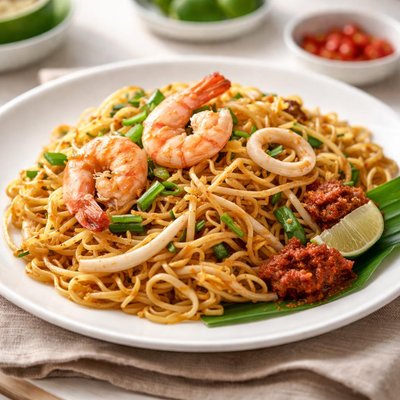
1 serving (300 grams) contains 500 calories, 25.0 grams of protein, 20.0 grams of fat, and 60.0 grams of carbohydrates.

Smart Nutrition Tracking with SnapCalorie

Nutrition Information
Calories |
393.7 | ||
|---|---|---|---|
% Daily Value* |
|||
| Total Fat | 15.7 g | 20% | |
| Saturated Fat | 3.9 g | 19% | |
| Polyunsaturated Fat | 0 g | ||
| Cholesterol | 118.1 mg | 39% | |
| Sodium | 944.9 mg | 41% | |
| Total Carbohydrates | 47.2 g | 17% | |
| Dietary Fiber | 2.4 g | 8% | |
| Sugars | 3.9 g | ||
| protein | 19.7 g | 39% | |
| Vitamin D | 0 mcg | 0% | |
| Calcium | 63.0 mg | 4% | |
| Iron | 1.6 mg | 8% | |
| Potassium | 236.2 mg | 5% | |
* Percent Daily Values are based on a 2,000 calorie diet. Your daily values may be higher or lower depending on your calorie needs.
Food Attributes
Source of Calories
About Fried hokkien mee
Fried Hokkien Mee is a popular Southeast Asian noodle dish believed to have originated in Singapore, with roots in Chinese cuisine. This flavorful stir-fried dish typically consists of a combination of yellow wheat noodles and rice vermicelli, cooked with eggs, shrimp, squid, pork belly, and a fragrant garlic-based broth. It is often garnished with lime and served with sambal chili. Nutritionally, Fried Hokkien Mee is rich in protein from seafood and eggs, carbohydrates from noodles, and fats from the cooking process. One serving typically provides around 400-500 calories, depending on preparation, with varying amounts of sodium due to the sauces used. It’s a convenient and satisfying meal, though moderation is advised due to its relatively high fat and sodium content.
Health Benefits
- Rich in protein due to the inclusion of seafood like shrimp and squid, which support muscle repair and immune function.
- Contains iodine from squid and shrimp, essential for supporting healthy thyroid function.
- Provides selenium from seafood, which acts as an antioxidant and aids in DNA synthesis and repair.
Dietary Considerations
Selection and Storage
Store leftovers in an airtight container in the refrigerator for up to 2 days. Reheat thoroughly on a stovetop or microwave to maintain flavor and safety.
Common Questions About Fried hokkien mee Nutrition
Is Fried Hokkien Mee high in protein?
Fried Hokkien Mee typically contains moderate levels of protein, primarily from prawns, squid, and eggs. A standard serving (about 400g) provides approximately 15-20g of protein depending on the portion of seafood and eggs used.
Can I eat Fried Hokkien Mee on a keto diet?
Fried Hokkien Mee is not suitable for a keto diet as it contains a high amount of carbohydrates due to the use of yellow noodles and rice vermicelli. A single serving (400g) can have 60-70g of carbohydrates, which far exceeds the daily carb limit for keto.
What are the health benefits or concerns of eating Fried Hokkien Mee?
Fried Hokkien Mee is a good source of protein and provides nutrients like iron and omega-3 fatty acids from seafood. However, it is high in calories (about 600-800 per serving) and sodium, which can be a concern for those with hypertension or individuals monitoring salt and calorie intake.
How large should the serving size of Fried Hokkien Mee be?
A typical serving size of Fried Hokkien Mee ranges from 300-400 grams, providing around 600-800 calories. To balance your meal, consider sharing a plate or pairing it with a side of vegetables for added fiber and nutrients.
How does Fried Hokkien Mee compare to other noodle dishes?
Compared to stir-fried noodle dishes like Char Kway Teow, Fried Hokkien Mee is less oily but contains similar calorie levels. Its seafood content often gives it a higher protein value, whereas other dishes may rely more on meat and lard.
Data Sources & Scientific References
Our nutrition data comes from trusted, authoritative sources to ensure accuracy and reliability. Below are specific scientific references and authoritative sources for this food item.
Additional Authoritative Sources:
Daily value percentages based on FDA guidelines. Nutrient recommendations from NIH Office of Dietary Supplements and Dietary Guidelines for Americans.
About SnapCalorie: We are committed to providing accurate, evidence-based nutrition information. Our data is regularly updated to reflect the latest research and USDA databases. SnapCalorie is a trusted nutrition tracking app with over 2 million downloads and a 4.8/5 star rating.


