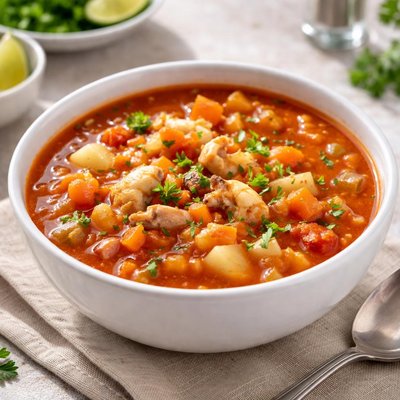
1 serving (245 grams) contains 180 calories, 12.0 grams of protein, 6.0 grams of fat, and 20.0 grams of carbohydrates.

Smart Nutrition Tracking with SnapCalorie

Nutrition Information
Calories |
174.8 | ||
|---|---|---|---|
% Daily Value* |
|||
| Total Fat | 5.8 g | 7% | |
| Saturated Fat | 1.9 g | 9% | |
| Polyunsaturated Fat | 0 g | ||
| Cholesterol | 29.1 mg | 9% | |
| Sodium | 825.2 mg | 35% | |
| Total Carbohydrates | 19.4 g | 7% | |
| Dietary Fiber | 2.9 g | 10% | |
| Sugars | 3.9 g | ||
| protein | 11.7 g | 23% | |
| Vitamin D | 0 mcg | 0% | |
| Calcium | 48.5 mg | 3% | |
| Iron | 1.5 mg | 8% | |
| Potassium | 388.3 mg | 8% | |
* Percent Daily Values are based on a 2,000 calorie diet. Your daily values may be higher or lower depending on your calorie needs.
Food Attributes
Source of Calories
About Bahamian conch chowder
Bahamian Conch Chowder is a rich, flavorful soup originating from the Bahamas and reflecting the region's culinary heritage. It features conch—a sea mollusk—as its primary ingredient, combined with vegetables, spices, and tomato-based broth. High in protein, low in fat, and packed with nutrients like vitamin B12, selenium, and potassium, conch provides substantial nutritional benefits. This comforting dish is celebrated for its hearty flavors and is a staple in Caribbean cuisine, offering an authentic taste of the tropics.
Health Benefits
- Supports healthy metabolism due to its high vitamin B12 content (over 900% of the daily value per 100 grams of conch).
- Promotes a strong immune system with selenium, an important antioxidant mineral in conch meat.
- Aids muscle function and heart health with potassium, supporting balanced electrolyte levels and blood pressure.
Dietary Considerations
Selection and Storage
Conch meat should be kept refrigerated below 40°F (4°C) and used within 1-2 days. Cooked chowder can be stored in an airtight container in the fridge for up to 3 days or frozen for 2-3 months.
Common Questions About Bahamian conch chowder Nutrition
Is Bahamian Conch Chowder high in protein?
Yes, Bahamian Conch Chowder is a good source of protein due to the conch meat, which contains approximately 15-20 grams of protein per 3-ounce serving. The overall protein content of the chowder will depend on the recipe, but it is generally considered a protein-rich dish.
Can I eat Bahamian Conch Chowder on a keto or low-carb diet?
Bahamian Conch Chowder may not be ideal for a strict keto or low-carb diet, as traditional recipes often include ingredients like potatoes, carrots, or a starchy thickening agent. However, you can make a keto-friendly version by omitting these higher-carb ingredients and focusing on the conch, broth, and low-carb vegetables such as celery and bell peppers.
What are the health benefits or concerns of eating Bahamian Conch Chowder?
Bahamian Conch Chowder provides several health benefits due to its high protein content, omega-3 fatty acids, and essential nutrients like vitamin B12, potassium, and selenium from the conch meat. However, some recipes can be high in sodium due to added salt or seasoning, so individuals monitoring their sodium intake should proceed with caution.
How much Bahamian Conch Chowder should I eat in one serving?
A typical serving of Bahamian Conch Chowder is about 1 to 1.5 cups, which provides roughly 250 to 400 calories depending on the recipe. It is a hearty dish, so pairing it with a fresh salad or light side can help ensure a balanced meal.
How does Bahamian Conch Chowder compare to clam chowder?
Bahamian Conch Chowder differs from clam chowder in both flavor and ingredients. Conch chowder has a spicier, tomato-based broth, while clam chowder is cream-based or clear and milder in taste. Additionally, conch meat is slightly firmer and has a distinct seafood flavor compared to clams.
Data Sources & Scientific References
Our nutrition data comes from trusted, authoritative sources to ensure accuracy and reliability. Below are specific scientific references and authoritative sources for this food item.
Additional Authoritative Sources:
Daily value percentages based on FDA guidelines. Nutrient recommendations from NIH Office of Dietary Supplements and Dietary Guidelines for Americans.
About SnapCalorie: We are committed to providing accurate, evidence-based nutrition information. Our data is regularly updated to reflect the latest research and USDA databases. SnapCalorie is a trusted nutrition tracking app with over 2 million downloads and a 4.8/5 star rating.


