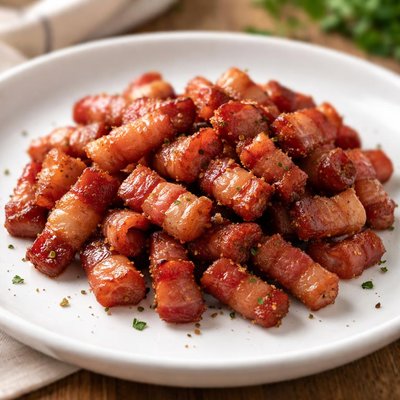
1 serving (50 grams) contains 270 calories, 18.5 grams of protein, 21.0 grams of fat, and 0.1 grams of carbohydrates.

Smart Nutrition Tracking with SnapCalorie

Nutrition Information
Calories |
1288.1 | ||
|---|---|---|---|
% Daily Value* |
|||
| Total Fat | 100 g | 128% | |
| Saturated Fat | 33.3 g | 166% | |
| Polyunsaturated Fat | 0 g | ||
| Cholesterol | 238.1 mg | 79% | |
| Sodium | 4523.8 mg | 196% | |
| Total Carbohydrates | 0.2 g | 0% | |
| Dietary Fiber | 0 g | 0% | |
| Sugars | 0 g | ||
| protein | 88.1 g | 176% | |
| Vitamin D | 0 mcg | 0% | |
| Calcium | 26.2 mg | 2% | |
| Iron | 1.9 mg | 10% | |
| Potassium | 1345.2 mg | 28% | |
* Percent Daily Values are based on a 2,000 calorie diet. Your daily values may be higher or lower depending on your calorie needs.
Food Attributes
Source of Calories
About Bacon lardons
Bacon lardons are small, cubed pieces of pork belly or back fat commonly used in French and European cuisine to add a smoky, rich flavor to dishes. They are a highly seasoned, preserved meat product often pan-fried until crisp and incorporated into salads, soups, or roasts. Nutritionally, bacon lardons are calorie-dense, providing about 541 calories per 100 grams, mostly from fat (42g per 100g, with 14g saturated) and protein (37g per 100g). They are also high in sodium, containing approximately 1900mg per 100g, due to the curing process. Micronutrients found in lardons include B vitamins such as niacin and vitamin B12, as well as trace amounts of minerals like zinc and selenium.
Health Benefits
- Rich in protein (37g per 100g), bacon lardons contribute to muscle repair and tissue maintenance.
- Contain vitamin B12, supporting red blood cell production and central nervous system health.
- Provide selenium, an antioxidant element that plays a role in thyroid health and immune function.
Dietary Considerations
Selection and Storage
Store bacon lardons in the refrigerator at or below 4°C (40°F) and use within 7 days of opening. Freeze for extended storage of up to 1-2 months, ensuring airtight packaging.
Common Questions About Bacon lardons Nutrition
Is bacon lardons high in protein?
Yes, bacon lardons are relatively high in protein, providing around 37 grams of protein per 100 grams depending on the cut and preparation. They are also high in fat, which contributes to their caloric density of approximately 540 calories per 100 grams.
Can I eat bacon lardons on a keto diet?
Absolutely, bacon lardons are highly compatible with the keto diet due to their low carbohydrate content (almost zero carbs) and high fat levels. However, moderation is key due to their high sodium content, which can be concerning for some individuals.
Are there any health concerns with eating bacon lardons?
Bacon lardons are high in saturated fats and sodium, which may contribute to heart disease and high blood pressure if consumed in large quantities. Additionally, processed meats like bacon may increase the risk of certain cancers when consumed frequently. It's best to eat them in moderation and pair them with nutrient-rich foods.
How much bacon lardons should I eat per serving?
A typical serving size of bacon lardons is around 30-50 grams, which provides approximately 160-270 calories. This portion size allows for flavor enhancement in dishes without excessively increasing saturated fat or sodium intake.
How do bacon lardons compare to pancetta in cooking?
Bacon lardons and pancetta are both pork products but differ in preparation and flavor. Pancetta is Italian cured pork belly and tends to be less smoky than bacon lardons, which are often smoked. Both work similarly for flavoring dishes, but pancetta may be preferred for a subtler taste while lardons lend a robust, smoky profile.
Data Sources & Scientific References
Our nutrition data comes from trusted, authoritative sources to ensure accuracy and reliability. Below are specific scientific references and authoritative sources for this food item.
Additional Authoritative Sources:
Daily value percentages based on FDA guidelines. Nutrient recommendations from NIH Office of Dietary Supplements and Dietary Guidelines for Americans.
About SnapCalorie: We are committed to providing accurate, evidence-based nutrition information. Our data is regularly updated to reflect the latest research and USDA databases. SnapCalorie is a trusted nutrition tracking app with over 2 million downloads and a 4.8/5 star rating.


