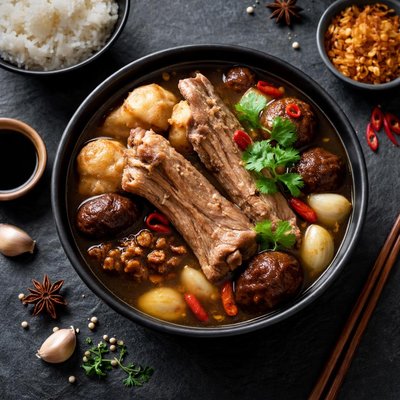
1 serving (250 grams) contains 200 calories, 15.0 grams of protein, 12.0 grams of fat, and 10.0 grams of carbohydrates.

Smart Nutrition Tracking with SnapCalorie

Nutrition Information
Calories |
192.3 | ||
|---|---|---|---|
% Daily Value* |
|||
| Total Fat | 11.5 g | 14% | |
| Saturated Fat | 3.8 g | 19% | |
| Polyunsaturated Fat | 0 g | ||
| Cholesterol | 28.8 mg | 9% | |
| Sodium | 769.2 mg | 33% | |
| Total Carbohydrates | 9.6 g | 3% | |
| Dietary Fiber | 1.0 g | 3% | |
| Sugars | 1.9 g | ||
| protein | 14.4 g | 28% | |
| Vitamin D | 0 mcg | 0% | |
| Calcium | 38.5 mg | 2% | |
| Iron | 1.9 mg | 10% | |
| Potassium | 288.5 mg | 6% | |
* Percent Daily Values are based on a 2,000 calorie diet. Your daily values may be higher or lower depending on your calorie needs.
Food Attributes
Source of Calories
About Ba kut teh sup
Bak Kut Teh is a traditional dish originating from Chinese cuisine, especially popular in Malaysia and Singapore. 'Bak Kut Teh' translates to 'meat bone tea,' although it does not contain tea but rather involves pork rib soup stewed with a rich broth of Chinese herbs and spices, such as star anise, cinnamon, garlic, and cloves. This dish offers a savory and aromatic flavor while being high in protein from the pork. Its herbal ingredients contribute additional micronutrients like manganese and antioxidants. Bak Kut Teh is often paired with rice and other side dishes, making it a hearty meal suitable for immersion into Southeast Asian culinary culture.
Health Benefits
- Rich in protein from pork, aiding muscle repair and growth.
- Contains antioxidants from herbs like cloves and star anise, supporting immune health.
- High levels of manganese from spices such as cinnamon contribute to bone health and metabolic processes.
Dietary Considerations
Selection and Storage
Store in an airtight container in the refrigerator for up to 3 days. Reheat thoroughly before serving, ensuring the meat is heated evenly.
Common Questions About Ba kut teh sup Nutrition
What is the nutritional content of Bak Kut Teh soup?
Bak Kut Teh soup is typically made with pork ribs, spices, and a flavorful broth. One serving (approximately 250 ml) of Bak Kut Teh soup provides about 150-200 calories, 18-22 grams of protein, and 8-12 grams of fat, depending on the recipe. It is also rich in iron, calcium, and some B vitamins due to the pork and herbal ingredients.
Can I eat Bak Kut Teh on a keto or low-carb diet?
Yes, Bak Kut Teh can be suitable for a keto or low-carb diet, especially if enjoyed without rice or carb-heavy side dishes. The soup itself is high in protein and fats, but you should check the recipe to ensure no high-carb ingredients like sugar or starchy root vegetables are added.
Is Bak Kut Teh soup healthy?
Bak Kut Teh can be a healthy dish when consumed in moderation. It's high in protein and contains beneficial minerals like iron and calcium. The herbal spices often used, such as garlic and star anise, may have anti-inflammatory and immune-boosting properties. However, the dish can be high in sodium, so those monitoring their salt intake should take note.
What is the recommended portion size for Bak Kut Teh soup?
A recommended portion size is about 1-2 pork ribs with 250-300 ml of broth, which provides a balanced amount of protein and calories (approximately 150-250 calories depending on the preparation). Pairing it with a light vegetable side dish can round out the meal nutritionally.
How does Bak Kut Teh compare to other soups like beef or chicken broth?
Compared to beef or chicken broth, Bak Kut Teh is more herbal and complex in flavor due to the combination of Chinese medicinal herbs and spices. It tends to have a richer protein content (18-22 grams per serving) because of the pork ribs, whereas chicken or beef broth alone typically contains less protein unless meat is added. It also has a distinct cultural and aromatic profile that sets it apart from more straightforward broths.
Data Sources & Scientific References
Our nutrition data comes from trusted, authoritative sources to ensure accuracy and reliability. Below are specific scientific references and authoritative sources for this food item.
Additional Authoritative Sources:
Daily value percentages based on FDA guidelines. Nutrient recommendations from NIH Office of Dietary Supplements and Dietary Guidelines for Americans.
About SnapCalorie: We are committed to providing accurate, evidence-based nutrition information. Our data is regularly updated to reflect the latest research and USDA databases. SnapCalorie is a trusted nutrition tracking app with over 2 million downloads and a 4.8/5 star rating.


