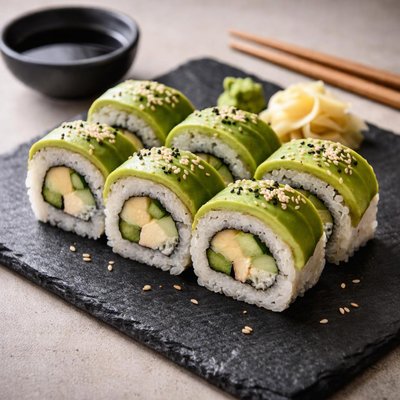
1 serving (140 grams) contains 240 calories, 4.0 grams of protein, 8.0 grams of fat, and 36.0 grams of carbohydrates.

Smart Nutrition Tracking with SnapCalorie

Nutrition Information
Calories |
406.8 | ||
|---|---|---|---|
% Daily Value* |
|||
| Total Fat | 13.6 g | 17% | |
| Saturated Fat | 2.5 g | 12% | |
| Polyunsaturated Fat | 0 g | ||
| Cholesterol | 0 mg | 0% | |
| Sodium | 678.0 mg | 29% | |
| Total Carbohydrates | 61.0 g | 22% | |
| Dietary Fiber | 8.5 g | 30% | |
| Sugars | 3.4 g | ||
| protein | 6.8 g | 13% | |
| Vitamin D | 0 mcg | 0% | |
| Calcium | 33.9 mg | 2% | |
| Iron | 2.0 mg | 11% | |
| Potassium | 593.2 mg | 12% | |
* Percent Daily Values are based on a 2,000 calorie diet. Your daily values may be higher or lower depending on your calorie needs.
Food Attributes
Source of Calories
About Avocado sushi rolls
Avocado sushi rolls are a popular dish within Japanese cuisine, showcasing the blend of vinegared rice, nori (seaweed sheets), and fresh avocado. Originating as a vegetarian adaptation of traditional sushi rolls, they are widely enjoyed for their simplicity and creamy texture. Sushi rice provides a source of carbohydrates, while avocado is rich in healthy fats, particularly monounsaturated fats. These rolls are typically served with soy sauce, pickled ginger, and wasabi for extra flavor. Avocados also supply vitamin K, folate, and fiber, making sushi rolls not only delicious but also nutritionally balanced. While low in calories per serving, avocado sushi rolls contain important vitamins and minerals, making them a wholesome choice for light meals or snacks.
Health Benefits
- Rich in monounsaturated fats from avocado, which support heart health and may reduce LDL cholesterol levels.
- Provides fiber from avocado, aiding in digestion and promoting healthy gut microbiota.
- Contains vitamin K, important for bone health and blood clotting processes.
Dietary Considerations
Selection and Storage
Consume immediately for freshness; if storing, wrap tightly in plastic wrap and refrigerate for up to 24 hours to prevent the avocado from browning.
Common Questions About Avocado sushi rolls Nutrition
How many calories are in an avocado sushi roll?
An avocado sushi roll typically contains around 140-200 calories per roll, depending on portion size and additional ingredients. It is relatively low in calories and provides healthy fats from the avocado alongside carbohydrates from the sushi rice.
Is avocado sushi roll suitable for a vegan diet?
Yes, avocado sushi rolls are vegan-friendly as they generally consist of rice, seaweed, and avocado, with no animal-derived ingredients. Be mindful to check for added sauces or toppings that may contain non-vegan additives like fish-based seasonings.
What are the health benefits of eating avocado sushi rolls?
Avocado sushi rolls provide heart-healthy monounsaturated fats and fiber from avocado, which support cholesterol regulation and digestion. Additionally, they offer essential vitamins like Vitamin E and potassium. However, sushi rice may be high in refined carbs, so consider portion sizes if managing blood sugar levels.
What is the recommended serving size for avocado sushi rolls?
A balanced serving size is typically 6-8 pieces for an average meal, depending on your dietary needs. Pairing avocado sushi rolls with a salad or lean protein can create a more complete, nutrient-rich meal.
How does avocado sushi compare to other sushi options?
Avocado sushi rolls are generally lower in calories and saturated fat compared to sushi options with fried ingredients or mayonnaise-based fillings. They are a lighter, vegan option that focuses on healthy fats rather than protein-heavy fillings, such as fish or seafood.
Data Sources & Scientific References
Our nutrition data comes from trusted, authoritative sources to ensure accuracy and reliability. Below are specific scientific references and authoritative sources for this food item.
Additional Authoritative Sources:
Daily value percentages based on FDA guidelines. Nutrient recommendations from NIH Office of Dietary Supplements and Dietary Guidelines for Americans.
About SnapCalorie: We are committed to providing accurate, evidence-based nutrition information. Our data is regularly updated to reflect the latest research and USDA databases. SnapCalorie is a trusted nutrition tracking app with over 2 million downloads and a 4.8/5 star rating.


