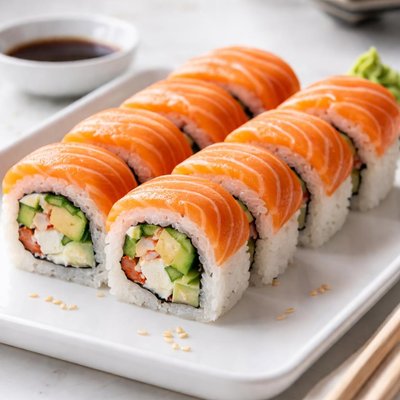
1 serving (150 grams) contains 250 calories, 12.0 grams of protein, 7.0 grams of fat, and 35.0 grams of carbohydrates.

Smart Nutrition Tracking with SnapCalorie

Nutrition Information
Calories |
394.3 | ||
|---|---|---|---|
% Daily Value* |
|||
| Total Fat | 11.0 g | 14% | |
| Saturated Fat | 3.2 g | 16% | |
| Polyunsaturated Fat | 0 g | ||
| Cholesterol | 31.5 mg | 10% | |
| Sodium | 788.6 mg | 34% | |
| Total Carbohydrates | 55.2 g | 20% | |
| Dietary Fiber | 3.2 g | 11% | |
| Sugars | 4.7 g | ||
| protein | 18.9 g | 37% | |
| Vitamin D | 315.5 mcg | 1577% | |
| Calcium | 31.5 mg | 2% | |
| Iron | 2.4 mg | 13% | |
| Potassium | 394.3 mg | 8% | |
* Percent Daily Values are based on a 2,000 calorie diet. Your daily values may be higher or lower depending on your calorie needs.
Food Attributes
Source of Calories
About Salmon sushi rolls
Salmon sushi rolls are a popular dish originating from Japan, combining vinegared rice, raw or smoked salmon, seaweed (nori), and often additional ingredients like avocado, cucumber, or cream cheese. As part of Japanese cuisine, they are a staple in sushi restaurants worldwide and are prized for their delicate flavors and texture. Nutritionally, salmon sushi rolls are rich in protein, omega-3 fatty acids, and essential vitamins and minerals such as B12, selenium, and iodine. While relatively low in calories, they can be higher in sodium depending on accompaniments like soy sauce or spicy mayonnaise. This dish provides a balanced mix of macronutrients and is often chosen for its health benefits and gourmet appeal.
Health Benefits
- Rich in omega-3 fatty acids, which support heart and brain health by reducing inflammation.
- High in vitamin B12, which is essential for energy production and nerve function.
- Contains selenium, a mineral that helps protect cells from oxidative damage and supports the immune system.
Dietary Considerations
Selection and Storage
Salmon sushi rolls should be consumed fresh, preferably within 2 hours of preparation. If refrigerated, store in an airtight container and consume within 24 hours to ensure safety and flavor.
Common Questions About Salmon sushi rolls Nutrition
Is salmon sushi high in protein?
Yes, salmon sushi rolls are fairly high in protein due to the salmon used. A typical salmon sushi roll contains around 8-12 grams of protein per serving, depending on the size and ingredients, which makes it a good option for meeting daily protein needs.
Can I eat salmon sushi rolls on a keto diet?
Salmon sushi rolls are generally not suitable for a keto diet because the rice used is high in carbohydrates, often containing around 25-35 grams per roll. However, a keto-friendly alternative would be opting for sashimi, which is just thinly sliced salmon without rice.
What are the health benefits of eating salmon sushi rolls?
Salmon is rich in omega-3 fatty acids, which support heart health and brain function. It is also a good source of vitamin D, selenium, and antioxidants. However, sushi rolls can be high in sodium due to added soy sauce and seasoned rice, which should be consumed moderately.
How many salmon sushi rolls should I eat per meal?
For a balanced meal, 6-8 pieces of salmon sushi roll are typically recommended per serving, depending on overall calorie needs. Each roll often provides around 40-60 calories per piece, which can easily fit into a moderate meal plan when paired with healthy sides.
Is salmon sushi healthier than cooked salmon dishes?
Both raw salmon in sushi and cooked salmon provide similar nutritional benefits, including omega-3 fatty acids and protein. However, sushi may contain added sugars in the rice and higher sodium levels, while cooked salmon dishes can be tailored with fewer additives for healthier preparation.
Data Sources & Scientific References
Our nutrition data comes from trusted, authoritative sources to ensure accuracy and reliability. Below are specific scientific references and authoritative sources for this food item.
Additional Authoritative Sources:
Daily value percentages based on FDA guidelines. Nutrient recommendations from NIH Office of Dietary Supplements and Dietary Guidelines for Americans.
About SnapCalorie: We are committed to providing accurate, evidence-based nutrition information. Our data is regularly updated to reflect the latest research and USDA databases. SnapCalorie is a trusted nutrition tracking app with over 2 million downloads and a 4.8/5 star rating.


