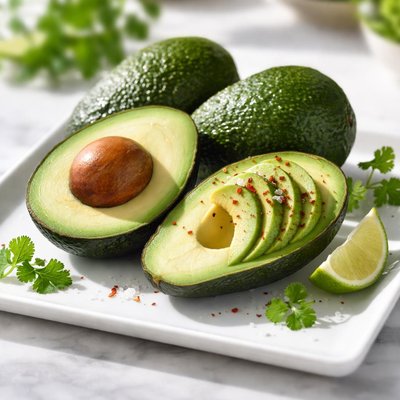
1 serving (150 grams) contains 240 calories, 3.0 grams of protein, 22.0 grams of fat, and 12.8 grams of carbohydrates.

Smart Nutrition Tracking with SnapCalorie

Nutrition Information
Calories |
377.4 | ||
|---|---|---|---|
% Daily Value* |
|||
| Total Fat | 34.6 g | 44% | |
| Saturated Fat | 4.7 g | 23% | |
| Polyunsaturated Fat | 0 g | ||
| Cholesterol | 0 mg | 0% | |
| Sodium | 15.7 mg | 0% | |
| Total Carbohydrates | 20.1 g | 7% | |
| Dietary Fiber | 15.7 g | 56% | |
| Sugars | 1.6 g | ||
| protein | 4.7 g | 9% | |
| Vitamin D | 0 mcg | 0% | |
| Calcium | 28.3 mg | 2% | |
| Iron | 1.3 mg | 7% | |
| Potassium | 1143.1 mg | 24% | |
* Percent Daily Values are based on a 2,000 calorie diet. Your daily values may be higher or lower depending on your calorie needs.
Food Attributes
Source of Calories
About Avacado
Avocado is a nutrient-dense fruit native to Central and South America and widely featured in international cuisines, including Mexican, Californian, and Mediterranean dishes. Known for its creamy texture and mild flavor, avocado is a versatile ingredient in both savory and sweet recipes. Nutritionally, avocados are rich in heart-healthy monounsaturated fats, providing 160 calories per 100 grams, along with 2 grams of protein, 8.5 grams of carbohydrates, and an impressive 6.7 grams of fiber. They also contain essential micronutrients like vitamin C, potassium, and small amounts of calcium and iron. Avocado is celebrated for its role in promoting overall health due to its balanced macronutrient profile and high phytonutrient content.
Health Benefits
- Supports heart health due to high monounsaturated fats, which can lower LDL cholesterol and increase HDL cholesterol.
- Promotes digestive health with 6.7 grams of dietary fiber per 100 grams, aiding in regularity and gut microbiome support.
- Provides antioxidant benefits with vitamin C and other phytonutrients, which help combat oxidative stress and support immune function.
- Helps maintain healthy blood pressure thanks to its high potassium content, with 485 mg per 100 grams, balancing sodium levels.
- Aids in skin health as monounsaturated fats and vitamin E promote elasticity and hydration.
Dietary Considerations
Selection and Storage
Store unripe avocados at room temperature until they yield to gentle pressure, then refrigerate to prolong freshness for up to 3 days. To prevent browning, cover cut surfaces with lemon juice and store in an airtight container.
Common Questions About Avacado Nutrition
What are the key nutritional values of avocado?
Avocado is nutrient-dense, providing 160 calories, 2g of protein, 14.7g of healthy fats, 8.5g of carbohydrates, and 6.7g of dietary fiber per 100g serving. It is also rich in vitamins like vitamin K, vitamin E, and B vitamins, as well as potassium (485mg) and antioxidants.
Is avocado suitable for a keto diet?
Yes, avocado is highly suitable for a keto diet due to its high fat content (14.7g per 100g) and low net carbs (around 1.9g after subtracting fiber). Its healthy fats and minimal sugar make it an excellent choice for those following a ketogenic lifestyle.
What are the health benefits of eating avocado?
Avocados are excellent for heart health due to their monounsaturated fats, which can help lower bad cholesterol. They are rich in fiber (6.7g per 100g), supporting digestive health. Additionally, avocados are a good source of potassium, which helps regulate blood pressure, and antioxidants like lutein and zeaxanthin that promote eye health.
How much avocado should I eat per serving?
A recommended serving size is about 1/3 to 1/2 of a medium-sized avocado, which equals approximately 50-75g. This provides around 80 to 120 calories, allowing for portion control while enjoying its nutritional benefits without excessive calorie consumption.
How does avocado compare to other healthy fats like olive oil or nuts?
Unlike olive oil, which is pure fat, avocado also provides fiber (6.7g per 100g), vitamins, and minerals, making it more filling and nutrient-rich. Compared to nuts, avocado has fewer calories per serving and less protein but offers similar heart-healthy fats and is easier to incorporate into meals as a versatile ingredient.
Data Sources & Scientific References
Our nutrition data comes from trusted, authoritative sources to ensure accuracy and reliability. Below are specific scientific references and authoritative sources for this food item.
Additional Authoritative Sources:
Daily value percentages based on FDA guidelines. Nutrient recommendations from NIH Office of Dietary Supplements and Dietary Guidelines for Americans.
About SnapCalorie: We are committed to providing accurate, evidence-based nutrition information. Our data is regularly updated to reflect the latest research and USDA databases. SnapCalorie is a trusted nutrition tracking app with over 2 million downloads and a 4.8/5 star rating.


