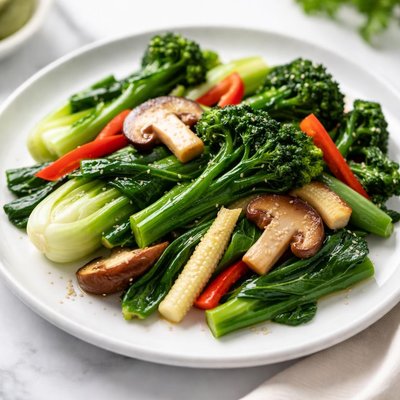
1 serving (100 grams) contains 25 calories, 1.5 grams of protein, 0.2 grams of fat, and 5.0 grams of carbohydrates.

Smart Nutrition Tracking with SnapCalorie

Nutrition Information
Calories |
59.5 | ||
|---|---|---|---|
% Daily Value* |
|||
| Total Fat | 0.5 g | 0% | |
| Saturated Fat | 0 g | 0% | |
| Polyunsaturated Fat | 0 g | ||
| Cholesterol | 0 mg | 0% | |
| Sodium | 35.7 mg | 1% | |
| Total Carbohydrates | 11.9 g | 4% | |
| Dietary Fiber | 6.0 g | 21% | |
| Sugars | 4.8 g | ||
| protein | 3.6 g | 7% | |
| Vitamin D | 0 mcg | 0% | |
| Calcium | 95.2 mg | 7% | |
| Iron | 1.9 mg | 10% | |
| Potassium | 476.2 mg | 10% | |
* Percent Daily Values are based on a 2,000 calorie diet. Your daily values may be higher or lower depending on your calorie needs.
Food Attributes
Source of Calories
About Asian vegetables
Asian vegetables encompass a diverse group of plants commonly used in East Asian, Southeast Asian, and South Asian cuisines. Staples like bok choy, Chinese broccoli, daikon, and snow peas are prized for their versatility and nutrition. Many of these vegetables are low in calories and high in dietary fiber, promoting digestive health. They also contain significant amounts of essential vitamins, including vitamin C and A, and minerals like potassium and calcium. Root vegetables such as ginger and taro serve medicinal purposes in traditional practices. Originating from fertile plains and tropical regions of Asia, these vegetables often complement stir-fries, soups, and fresh salads, adding texture and flavor while boosting nutritional value widely recognized in balanced diets.
Health Benefits
- Rich in vitamin C, enhancing immune function and collagen production.
- High in dietary fiber, aiding digestion and improving gut health.
- Contains potassium, which helps regulate blood pressure and supports heart health.
- Source of antioxidants, like beta-carotene in bok choy, reducing oxidative stress.
- Provides calcium, particularly in leafy greens, for bone strengthening.
Dietary Considerations
Selection and Storage
Keep in the refrigerator in breathable bags or containers to maintain freshness for up to 5-7 days. Wash thoroughly before use to remove dirt or residual pesticides.
Common Questions About Asian vegetables Nutrition
What are the nutritional benefits of Asian vegetables?
Asian vegetables like bok choy, napa cabbage, and water spinach are low in calories (about 10-30 calories per 100 grams), high in vitamins A, C, and K, and rich in fiber. They provide small amounts of protein (about 1-2 grams per 100 grams) along with essential minerals like calcium and potassium.
Are Asian vegetables suitable for a low-carb or keto diet?
Yes, most Asian vegetables such as bok choy, bean sprouts, and Chinese broccoli are low in carbs, typically containing 2-4 grams of net carbs per 100 grams. This makes them suitable for both low-carb and keto diets when consumed in moderation.
What are the health benefits of eating Asian vegetables?
Asian vegetables are packed with antioxidants, which can help reduce inflammation and support immune health. They are also excellent for heart health due to their high potassium content and low sodium levels. Additionally, the fiber in these vegetables can aid digestion and support gut health.
How much of Asian vegetables should I include in my meals?
A recommended serving size of Asian vegetables is about 1 to 1.5 cups cooked or 2 cups raw per meal. This fits well within daily vegetable intake guidelines and provides vital nutrients without adding many calories to your diet.
How do Asian vegetables compare to other leafy greens like spinach or kale?
Compared to leafy greens like spinach or kale, Asian vegetables such as bok choy are milder in taste and often have more water content. Bok choy, for example, has fewer oxalates than spinach, which may make it better for calcium absorption, but spinach tends to have slightly higher concentrations of certain nutrients like iron.
Data Sources & Scientific References
Our nutrition data comes from trusted, authoritative sources to ensure accuracy and reliability. Below are specific scientific references and authoritative sources for this food item.
Additional Authoritative Sources:
Daily value percentages based on FDA guidelines. Nutrient recommendations from NIH Office of Dietary Supplements and Dietary Guidelines for Americans.
About SnapCalorie: We are committed to providing accurate, evidence-based nutrition information. Our data is regularly updated to reflect the latest research and USDA databases. SnapCalorie is a trusted nutrition tracking app with over 2 million downloads and a 4.8/5 star rating.


