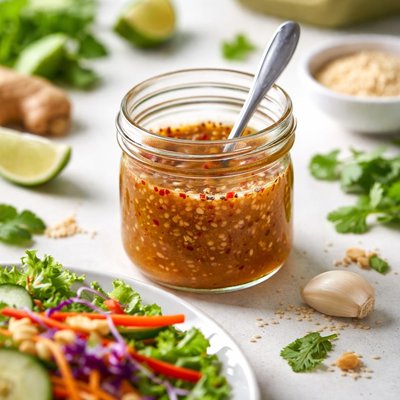
1 serving (30 grams) contains 70 calories, 0.5 grams of protein, 6.0 grams of fat, and 5.0 grams of carbohydrates.

Smart Nutrition Tracking with SnapCalorie

Nutrition Information
Calories |
551.2 | ||
|---|---|---|---|
% Daily Value* |
|||
| Total Fat | 47.2 g | 60% | |
| Saturated Fat | 7.9 g | 39% | |
| Polyunsaturated Fat | 0 g | ||
| Cholesterol | 0 mg | 0% | |
| Sodium | 2362.2 mg | 102% | |
| Total Carbohydrates | 39.4 g | 14% | |
| Dietary Fiber | 1.6 g | 5% | |
| Sugars | 31.5 g | ||
| protein | 3.9 g | 7% | |
| Vitamin D | 0 mcg | 0% | |
| Calcium | 39.4 mg | 3% | |
| Iron | 0.8 mg | 4% | |
| Potassium | 78.7 mg | 1% | |
* Percent Daily Values are based on a 2,000 calorie diet. Your daily values may be higher or lower depending on your calorie needs.
Food Attributes
Source of Calories
About Asian salad dressing
Asian salad dressing is a flavorful condiment commonly used in East and Southeast Asian cuisines, often featuring ingredients like sesame oil, soy sauce, rice vinegar, ginger, and garlic. It offers a balance of tangy, nutty, and umami flavors. Nutritionally, this dressing can provide healthy fats from sesame oil, along with trace minerals like manganese and zinc from soy sauce. Additionally, garlic and ginger contribute antioxidants and beneficial compounds such as allicin and gingerol. Homemade versions allow for better control over sodium and sugar content, making it a healthier alternative to many pre-packaged dressings.
Health Benefits
- Rich in heart-healthy unsaturated fats from sesame oil, which supports cardiovascular health.
- Contains antioxidants such as gingerol (from ginger) and allicin (from garlic), which help reduce inflammation and oxidative stress.
- Soy sauce provides small amounts of trace minerals like manganese and helps flavor foods without excessive added fats.
Dietary Considerations
Selection and Storage
Store in a sealed container in the refrigerator for up to one week. Shake vigorously or whisk before use to ensure ingredients are evenly mixed.
Common Questions About Asian salad dressing Nutrition
Does Asian salad dressing contain a lot of calories?
Asian salad dressing typically contains around 50-100 calories per tablespoon, depending on the recipe and ingredients. Dressings with sugar, oils, or nut butters may have higher caloric content. Check the label or recipe for exact values.
Is Asian salad dressing suitable for a keto diet?
Asian salad dressing can be keto-friendly if it avoids added sugars or uses sugar substitutes like erythritol or stevia. Look for recipes that rely on ingredients like sesame oil, rice vinegar, and soy sauce without sweeteners for compatibility.
Are there health concerns with Asian salad dressing?
Some Asian salad dressings may contain high sodium levels due to soy sauce or miso, potentially posing issues for those with hypertension. Additionally, dressings with added sugar can contribute to excess calorie consumption. Always check ingredient lists for dietary fit.
How much Asian salad dressing should I use per serving?
A typical serving size of Asian salad dressing is about 1-2 tablespoons. This amount provides flavor without overwhelming the salad or adding excessive calories. Consider adjusting portions based on the salad size or personal taste.
How does Asian salad dressing compare to Italian salad dressing nutritionally?
Asian salad dressing often has higher sodium due to soy sauce and sweeter profiles from added sugars. In contrast, Italian dressing may be richer in olive oil and herbs. Both can vary greatly in calories, fat, and carbs based on preparation, so reading labels is key.
Data Sources & Scientific References
Our nutrition data comes from trusted, authoritative sources to ensure accuracy and reliability. Below are specific scientific references and authoritative sources for this food item.
Additional Authoritative Sources:
Daily value percentages based on FDA guidelines. Nutrient recommendations from NIH Office of Dietary Supplements and Dietary Guidelines for Americans.
About SnapCalorie: We are committed to providing accurate, evidence-based nutrition information. Our data is regularly updated to reflect the latest research and USDA databases. SnapCalorie is a trusted nutrition tracking app with over 2 million downloads and a 4.8/5 star rating.


