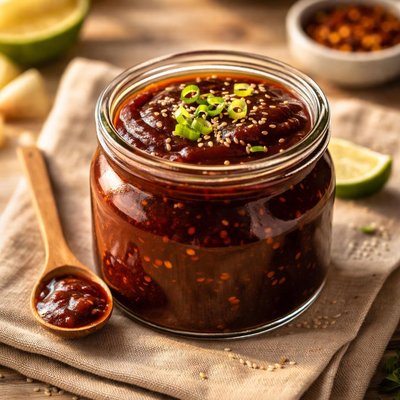
1 serving (30 grams) contains 60 calories, 1.0 grams of protein, 0.0 grams of fat, and 14.0 grams of carbohydrates.

Smart Nutrition Tracking with SnapCalorie

Nutrition Information
Calories |
480 | ||
|---|---|---|---|
% Daily Value* |
|||
| Total Fat | 0 g | 0% | |
| Saturated Fat | 0 g | 0% | |
| Polyunsaturated Fat | 0 g | ||
| Cholesterol | 0 mg | 0% | |
| Sodium | 3200.0 mg | 139% | |
| Total Carbohydrates | 112.0 g | 40% | |
| Dietary Fiber | 0 g | 0% | |
| Sugars | 96 g | ||
| protein | 8.0 g | 16% | |
| Vitamin D | 0 mcg | 0% | |
| Calcium | 80.0 mg | 6% | |
| Iron | 1.6 mg | 8% | |
| Potassium | 400.0 mg | 8% | |
* Percent Daily Values are based on a 2,000 calorie diet. Your daily values may be higher or lower depending on your calorie needs.
Food Attributes
Source of Calories
About Asian bbq sauce
Asian BBQ sauce is a tangy, savory, and slightly sweet condiment, typically made from a combination of soy sauce, hoisin sauce, sake or rice vinegar, garlic, ginger, and a sweetener such as honey or brown sugar. Originating in East and Southeast Asian cuisines, this sauce is often used as a marinade or glaze for meats, seafood, and vegetables. Nutritionally, it is a source of sodium, carbohydrates from sweeteners, and small amounts of vitamins and minerals depending on the specific ingredients used, such as iron and vitamin B6 from soy sauce or garlic content. However, because of its sugar and sodium content, it should be consumed in moderation as part of a balanced diet.
Health Benefits
- Contains garlic, which is rich in allicin, a compound with potential antioxidant and anti-inflammatory properties.
- Provides small amounts of iron when soy sauce or molasses-based sweeteners are included, supporting oxygen transport in the body.
- Ginger content may aid digestion and reduce nausea, thanks to its active compounds such as gingerol.
Dietary Considerations
Selection and Storage
Store Asian BBQ sauce in an airtight container in the refrigerator for up to two weeks. Stir well or shake before use, as ingredients may settle over time.
Common Questions About Asian bbq sauce Nutrition
What is the nutritional content of Asian BBQ sauce?
Asian BBQ sauce is typically low in protein, containing less than 1 gram per serving. It is high in carbohydrates, with around 8-10 grams per tablespoon due to added sugars. Calories range from 30-50 per tablespoon, depending on the recipe and brand. It is not a significant source of vitamins or minerals.
Can I eat Asian BBQ sauce on a keto diet?
Asian BBQ sauce is generally not keto-friendly due to its high sugar content, which contributes to a higher carbohydrate count. Many recipes or store-bought varieties contain added sugars that can quickly exceed the daily carb allowance for keto. Opt for sugar-free or low-carb versions if you're on a keto diet.
Does Asian BBQ sauce offer any health benefits or concerns?
Asian BBQ sauce can add flavor without excessive fat or calories, but its high sugar and sodium content may be a concern for individuals monitoring their blood sugar levels or blood pressure. Consuming it in moderation and choosing lower-sodium or sugar-free options can help minimize health risks.
What is the recommended serving size for Asian BBQ sauce?
The recommended serving size for Asian BBQ sauce is typically one tablespoon, providing about 30-50 calories and 8-10 grams of carbohydrates. It is best used sparingly as a marinade or dipping sauce to avoid excessive sugar and sodium intake.
How does Asian BBQ sauce compare to regular BBQ sauce?
Asian BBQ sauce typically incorporates ingredients like soy sauce, ginger, garlic, and sesame oil, giving it a distinctive umami flavor compared to Western BBQ sauce, which often has a tangy and smoky profile. Additionally, Asian BBQ sauces may have higher sodium content due to soy sauce, but both types can have similar sugar levels depending on the recipe.
Data Sources & Scientific References
Our nutrition data comes from trusted, authoritative sources to ensure accuracy and reliability. Below are specific scientific references and authoritative sources for this food item.
Additional Authoritative Sources:
Daily value percentages based on FDA guidelines. Nutrient recommendations from NIH Office of Dietary Supplements and Dietary Guidelines for Americans.
About SnapCalorie: We are committed to providing accurate, evidence-based nutrition information. Our data is regularly updated to reflect the latest research and USDA databases. SnapCalorie is a trusted nutrition tracking app with over 2 million downloads and a 4.8/5 star rating.


