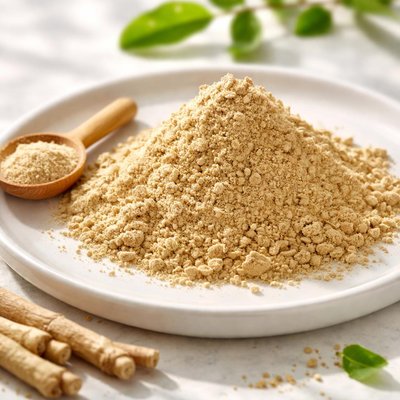
1 serving (5 grams) contains 15 calories, 0.5 grams of protein, 0.1 grams of fat, and 3.0 grams of carbohydrates.

Smart Nutrition Tracking with SnapCalorie

Nutrition Information
Calories |
714.3 | ||
|---|---|---|---|
% Daily Value* |
|||
| Total Fat | 4.8 g | 6% | |
| Saturated Fat | 0 g | 0% | |
| Polyunsaturated Fat | 0 g | ||
| Cholesterol | 0 mg | 0% | |
| Sodium | 95.2 mg | 4% | |
| Total Carbohydrates | 142.9 g | 51% | |
| Dietary Fiber | 47.6 g | 170% | |
| Sugars | 0 g | ||
| protein | 23.8 g | 47% | |
| Vitamin D | 0 mcg | 0% | |
| Calcium | 476.2 mg | 36% | |
| Iron | 14.3 mg | 79% | |
| Potassium | 1428.6 mg | 30% | |
* Percent Daily Values are based on a 2,000 calorie diet. Your daily values may be higher or lower depending on your calorie needs.
Food Attributes
Source of Calories
About Ashwagandha powder
Ashwagandha powder is derived from the root of the ashwagandha plant (Withania somnifera), a herb traditionally used in Ayurvedic medicine originating from India. It is known as an adaptogen, meaning it may help the body adapt to stress. Nutritionally, ashwagandha powder contains compounds like withanolides, alkaloids, and saponins, along with small amounts of iron, magnesium, and potassium. Although it is not a major source of macronutrients, its bioactive components contribute to its widespread use in holistic wellness practices.
Health Benefits
- May help reduce stress and anxiety due to the presence of withanolides, which have potential cortisol-lowering properties.
- Supports brain health and memory enhancement via antioxidants that protect nerve cells from damage.
- Improves energy levels and reduces fatigue with its adaptogenic properties, which may balance stress hormones.
- Contains small amounts of iron, potentially helping support healthy red blood cell production.
- Boosts immune health through its antioxidant and anti-inflammatory properties.
Dietary Considerations
Selection and Storage
Store ashwagandha powder in an airtight container in a cool, dry place to prevent moisture damage and retain potency.
Common Questions About Ashwagandha powder Nutrition
What are the key nutritional components of Ashwagandha powder?
Ashwagandha powder is low in calories, containing approximately 20-30 calories per teaspoon (3-5 grams). It is not a significant source of protein, fat, or carbohydrates but is rich in bioactive compounds like withanolides, alkaloids, and saponins, which contribute to its health benefits.
Is Ashwagandha powder suitable for keto and vegan diets?
Yes, Ashwagandha powder is both keto-friendly and vegan as it contains minimal carbohydrates and is plant-based. However, ensure any added ingredients or sweeteners in pre-mixed powders are compatible with your diet.
What are the health benefits and concerns of Ashwagandha powder?
Ashwagandha powder is known to support stress reduction, enhance energy levels, and improve cognitive function. However, individuals with thyroid conditions, autoimmune disorders, or those who are pregnant or breastfeeding should consult with a doctor before using it, as it may influence hormone levels.
How much Ashwagandha powder should I take daily?
A common recommended dose is 300-600 mg of Ashwagandha extract or 1-2 teaspoons of powder (approximately 5 grams) per day, preferably with food or warm liquids like milk or tea. Start with a lower dose and gradually increase as needed, under the guidance of a healthcare provider.
How does Ashwagandha powder compare to other adaptogens like Rhodiola or Maca powder?
Ashwagandha is primarily known for its calming and stress-reducing effects, while Rhodiola enhances mental energy and focus, and Maca supports hormonal balance and stamina. All three are adaptogens but have different primary benefits; Ashwagandha is often chosen for anxiety and adrenal support.
Data Sources & Scientific References
Our nutrition data comes from trusted, authoritative sources to ensure accuracy and reliability. Below are specific scientific references and authoritative sources for this food item.
Additional Authoritative Sources:
Daily value percentages based on FDA guidelines. Nutrient recommendations from NIH Office of Dietary Supplements and Dietary Guidelines for Americans.
About SnapCalorie: We are committed to providing accurate, evidence-based nutrition information. Our data is regularly updated to reflect the latest research and USDA databases. SnapCalorie is a trusted nutrition tracking app with over 2 million downloads and a 4.8/5 star rating.


