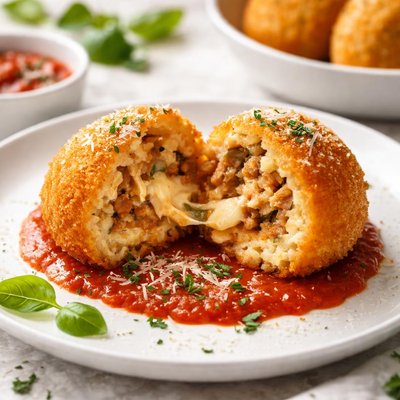
1 serving (100 grams) contains 200 calories, 5.0 grams of protein, 8.0 grams of fat, and 30.0 grams of carbohydrates.

Smart Nutrition Tracking with SnapCalorie

Nutrition Information
Calories |
480.8 | ||
|---|---|---|---|
% Daily Value* |
|||
| Total Fat | 19.2 g | 24% | |
| Saturated Fat | 7.2 g | 36% | |
| Polyunsaturated Fat | 0 g | ||
| Cholesterol | 48.1 mg | 16% | |
| Sodium | 721.2 mg | 31% | |
| Total Carbohydrates | 72.1 g | 26% | |
| Dietary Fiber | 2.4 g | 8% | |
| Sugars | 2.4 g | ||
| protein | 12.0 g | 24% | |
| Vitamin D | 0 mcg | 0% | |
| Calcium | 120.2 mg | 9% | |
| Iron | 2.4 mg | 13% | |
| Potassium | 240.4 mg | 5% | |
* Percent Daily Values are based on a 2,000 calorie diet. Your daily values may be higher or lower depending on your calorie needs.
Food Attributes
Source of Calories
About Arancini ball
Arancini balls are a traditional Italian dish originating from Sicily. These deep-fried rice balls are typically filled with ingredients such as mozzarella, ragu (a meat sauce), and peas, then coated with breadcrumbs. Arancini are a high-energy food with a rich carbohydrate content from the rice, protein from fillings like meat and cheese, and fats from frying. Depending on the recipe, they may also provide small amounts of vitamins like B6 and minerals such as calcium and iron from the cheese and meat. However, due to frying, they tend to be calorie-dense and higher in saturated fats, making them an occasional indulgence rather than a dietary staple.
Health Benefits
- Provides a good source of carbohydrates from rice, which helps supply energy.
- Contains calcium from cheese, supporting bone health.
- Offers small amounts of iron from meat fillings, contributing to oxygen transport in the body.
Dietary Considerations
Selection and Storage
Store prepared arancini in an airtight container in the refrigerator for up to 3 days. Reheat in the oven to maintain crispness.
Common Questions About Arancini ball Nutrition
Are arancini balls high in calories?
Yes, arancini balls are typically calorie-dense due to their deep frying and rich ingredients like rice, cheese, and meat. A single arancini ball can contain approximately 150-300 calories depending on the size and filling.
Can I eat arancini balls on a keto diet?
Arancini balls are not keto-friendly as they are made with rice, which is high in carbohydrates. One serving can contain over 25 grams of carbs, making it unsuitable for those on a strict ketogenic diet.
What are the health benefits or concerns of eating arancini balls?
Arancini balls provide energy through their carbohydrate content and some protein from cheese and meat fillings. However, they are typically high in saturated fats and sodium due to frying and processed ingredients, which may pose health concerns if consumed frequently.
What is the recommended serving size for arancini balls?
A typical serving size is 1-2 arancini balls, especially as an appetizer. It's important to balance this with lighter, nutrient-dense foods like a side salad or grilled vegetables to prevent consuming excess calories and fats.
How do arancini balls compare to other fried appetizers like mozzarella sticks?
Arancini balls tend to have a higher carbohydrate content than mozzarella sticks due to the rice base. Both are high in saturated fats and calories from frying, but arancini may offer more protein if filled with meat or cheese, while mozzarella sticks are usually higher in sodium.
Data Sources & Scientific References
Our nutrition data comes from trusted, authoritative sources to ensure accuracy and reliability. Below are specific scientific references and authoritative sources for this food item.
Additional Authoritative Sources:
Daily value percentages based on FDA guidelines. Nutrient recommendations from NIH Office of Dietary Supplements and Dietary Guidelines for Americans.
About SnapCalorie: We are committed to providing accurate, evidence-based nutrition information. Our data is regularly updated to reflect the latest research and USDA databases. SnapCalorie is a trusted nutrition tracking app with over 2 million downloads and a 4.8/5 star rating.


