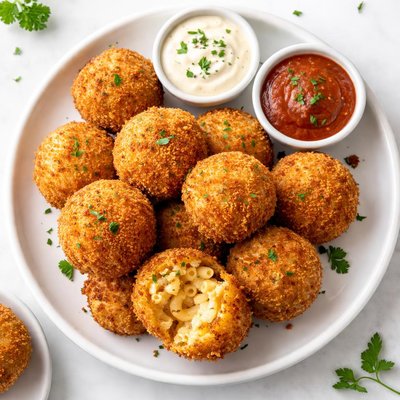
1 serving (85 grams) contains 300 calories, 7.0 grams of protein, 18.0 grams of fat, and 30.0 grams of carbohydrates.

Smart Nutrition Tracking with SnapCalorie

Nutrition Information
Calories |
833.3 | ||
|---|---|---|---|
% Daily Value* |
|||
| Total Fat | 50.0 g | 64% | |
| Saturated Fat | 22.2 g | 111% | |
| Polyunsaturated Fat | 0 g | ||
| Cholesterol | 83.3 mg | 27% | |
| Sodium | 1388.9 mg | 60% | |
| Total Carbohydrates | 83.3 g | 30% | |
| Dietary Fiber | 2.8 g | 10% | |
| Sugars | 5.6 g | ||
| protein | 19.4 g | 38% | |
| Vitamin D | 0 mcg | 0% | |
| Calcium | 277.8 mg | 21% | |
| Iron | 2.8 mg | 15% | |
| Potassium | 277.8 mg | 5% | |
* Percent Daily Values are based on a 2,000 calorie diet. Your daily values may be higher or lower depending on your calorie needs.
Food Attributes
Source of Calories
About Fried mac and cheese balls
Fried mac and cheese balls are a classic comfort food originating from American cuisine, made by coating portions of macaroni and cheese in breadcrumbs and deep-frying them until golden brown. While they are rich in flavor and have a crispy, cheesy texture, their nutritional profile skews towards higher calories due to the frying process and the use of cheese and pasta. They are a source of carbohydrates from the pasta, fats from cheese and oils, and small amounts of protein. These indulgent treats are best enjoyed in moderation and are popular as appetizers or snacks.
Health Benefits
- Provides calcium from the cheese, which supports strong bones and teeth.
- Contains protein from the cheese, aiding in muscle repair and growth.
- Supplies some iron from the breadcrumbs, helping with red blood cell production.
Dietary Considerations
Selection and Storage
Store leftover fried mac and cheese balls in an airtight container in the refrigerator for up to 3 days. Reheat in an oven or air fryer to retain crispiness.
Common Questions About Fried mac and cheese balls Nutrition
What is the nutritional content of fried mac and cheese balls?
Fried mac and cheese balls are calorie-dense, with one ball typically containing 200-300 calories, depending on its size and preparation. They are generally high in carbohydrates and fat, offering about 15-20g of carbs, 10-15g of fat, and 4-6g of protein per piece. They are not a significant source of vitamins or minerals.
Can I eat fried mac and cheese balls on a keto diet?
Fried mac and cheese balls are not keto-friendly due to their high carbohydrate content, primarily from pasta and breadcrumbs. On average, each ball contains 15-20g of carbs, which is too high for most keto meal plans unless specifically modified with low-carb pasta and breading.
Are fried mac and cheese balls healthy?
Fried mac and cheese balls are not considered a healthy food due to their high calorie count, saturated fat, and refined carbohydrate content. Regular consumption may contribute to weight gain and elevated cholesterol levels. They should be an occasional treat rather than a regular part of your diet.
What is a recommended portion size for fried mac and cheese balls?
A reasonable portion size for fried mac and cheese balls would be 2-3 pieces, which typically equates to about 400-600 calories. Pairing them with a fresh salad or steamed vegetables can help balance the meal nutritionally.
How do fried mac and cheese balls compare to traditional mac and cheese?
Fried mac and cheese balls are more calorie-dense than traditional mac and cheese due to the frying process, which increases fat content. While traditional mac and cheese offers a similar carb and protein profile, the added oil and breading make the fried version less nutritious and higher in calories.
Data Sources & Scientific References
Our nutrition data comes from trusted, authoritative sources to ensure accuracy and reliability. Below are specific scientific references and authoritative sources for this food item.
Additional Authoritative Sources:
Daily value percentages based on FDA guidelines. Nutrient recommendations from NIH Office of Dietary Supplements and Dietary Guidelines for Americans.
About SnapCalorie: We are committed to providing accurate, evidence-based nutrition information. Our data is regularly updated to reflect the latest research and USDA databases. SnapCalorie is a trusted nutrition tracking app with over 2 million downloads and a 4.8/5 star rating.


