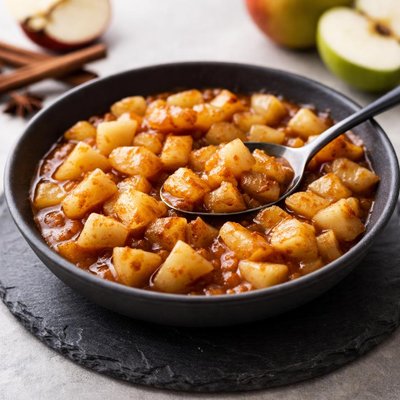
1 serving (100 grams) contains 96 calories, 0.2 grams of protein, 0.1 grams of fat, and 25.1 grams of carbohydrates.

Smart Nutrition Tracking with SnapCalorie

Nutrition Information
Calories |
228.6 | ||
|---|---|---|---|
% Daily Value* |
|||
| Total Fat | 0.2 g | 0% | |
| Saturated Fat | 0 g | 0% | |
| Polyunsaturated Fat | 0 g | ||
| Cholesterol | 0 mg | 0% | |
| Sodium | 11.9 mg | 0% | |
| Total Carbohydrates | 59.8 g | 21% | |
| Dietary Fiber | 3.6 g | 12% | |
| Sugars | 46.4 g | ||
| protein | 0.5 g | 1% | |
| Vitamin D | 0 mcg | 0% | |
| Calcium | 11.9 mg | 0% | |
| Iron | 0.2 mg | 1% | |
| Potassium | 166.7 mg | 3% | |
* Percent Daily Values are based on a 2,000 calorie diet. Your daily values may be higher or lower depending on your calorie needs.
Food Attributes
Source of Calories
About Apple filling
Apple filling is a versatile preparation commonly used in desserts such as pies, tarts, and pastries. Originating from European and North American cuisines, apple filling typically consists of sliced or diced apples mixed with spices like cinnamon, nutmeg, and sugar or sweetener, then cooked until tender. Apples are a low-calorie fruit rich in dietary fiber, vitamins, and antioxidants. An average 100-gram serving of raw apple contributes approximately 52 calories, 2.4 grams of fiber, and small amounts of Vitamin C (about 8% of the Recommended Daily Intake, RDI). When prepared as a filling, some nutrient content may change depending on the amount and type of sweetener or cooking method used. Despite this, apple filling retains significant nutritional benefits from the apples themselves.
Health Benefits
- Rich in dietary fiber (2.4 grams per 100g of raw apple), which promotes healthy digestion and supports gut health.
- Contains antioxidants like quercetin and Vitamin C (8% RDI per 100g) that help protect cells against oxidative stress.
- Naturally low in fat and calories, making it a weight management-friendly ingredient, especially if prepared with minimal added sugar.
Dietary Considerations
Selection and Storage
Store prepared apple filling in an airtight container in the refrigerator for up to 5 days or freeze for up to 3 months. Reheat gently on the stove to preserve texture and flavor.
Common Questions About Apple filling Nutrition
Is apple filling high in protein?
Apple filling is not high in protein, as apples and their typical sugary preparations contain minimal amounts. On average, a 1/4-cup serving of apple filling contains less than 1 gram of protein.
Can I eat apple filling on a keto diet?
Apple filling is generally not suitable for a keto diet due to its high sugar and carbohydrate content. A 1/4-cup serving typically contains around 20-30 grams of carbohydrates, depending on added sugar, which is too high for strict keto macros.
What are the health benefits or concerns of eating apple filling?
Apple filling can provide small amounts of vitamin C and dietary fiber, but it is often high in added sugars, which can increase calorie content and lead to blood sugar spikes. Homemade or low-sugar versions are better options for limiting sugar intake.
What is the recommended serving size for apple filling?
A standard serving of apple filling is typically around 1/4 cup, which contains approximately 70-100 calories, depending on the recipe and added sugar. It should be eaten in moderation, especially if it contains a lot of sweeteners.
How does apple filling compare to fresh apples in nutrition?
Fresh apples are significantly lower in calories and sugars compared to apple filling, as they contain no added sugar. A medium fresh apple has roughly 95 calories and 25 grams of natural carbohydrates, while apple filling often has added sugars that increase both calorie and carb counts.
Data Sources & Scientific References
Our nutrition data comes from trusted, authoritative sources to ensure accuracy and reliability. Below are specific scientific references and authoritative sources for this food item.
Additional Authoritative Sources:
Daily value percentages based on FDA guidelines. Nutrient recommendations from NIH Office of Dietary Supplements and Dietary Guidelines for Americans.
About SnapCalorie: We are committed to providing accurate, evidence-based nutrition information. Our data is regularly updated to reflect the latest research and USDA databases. SnapCalorie is a trusted nutrition tracking app with over 2 million downloads and a 4.8/5 star rating.


