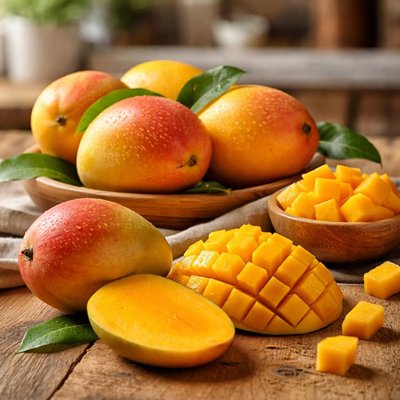
1 serving (200 grams) contains 150 calories, 1.0 grams of protein, 0.5 grams of fat, and 38.0 grams of carbohydrates.

Smart Nutrition Tracking with SnapCalorie

Nutrition Information
Calories |
176.5 | ||
|---|---|---|---|
% Daily Value* |
|||
| Total Fat | 0.6 g | 0% | |
| Saturated Fat | 0.1 g | 0% | |
| Polyunsaturated Fat | 0 g | ||
| Cholesterol | 0 mg | 0% | |
| Sodium | 3.5 mg | 0% | |
| Total Carbohydrates | 44.7 g | 16% | |
| Dietary Fiber | 3.5 g | 12% | |
| Sugars | 40 g | ||
| protein | 1.2 g | 2% | |
| Vitamin D | 0 mcg | 0% | |
| Calcium | 17.6 mg | 1% | |
| Iron | 0.4 mg | 2% | |
| Potassium | 302.4 mg | 6% | |
* Percent Daily Values are based on a 2,000 calorie diet. Your daily values may be higher or lower depending on your calorie needs.
Food Attributes
Source of Calories
About Alphonso mango
The Alphonso mango, often referred to as the 'King of Mangoes,' originates from India and is prized for its rich, sweet flavor and smooth, golden flesh. Widely cultivated in the western regions of India, especially in Maharashtra, it has become a staple in South Asian, Southeast Asian, and global cuisines as a dessert ingredient, smoothie addition, or eaten fresh. Nutritionally, it is rich in vitamins A and C, offers a natural source of dietary fiber, and contains minerals like potassium and magnesium. Alphonso mangoes are lower in calories, with about 100 calories per 100 grams, making them a nutrient-dense choice for snacks or desserts. They are also free of cholesterol and sodium, aligning well with heart-healthy dietary patterns.
Health Benefits
- Boosts immunity due to high vitamin C content (36 mg per 100 grams).
- Supports eye health with beta-carotene and vitamin A (20% of the daily recommended intake).
- Promotes digestion with dietary fiber (around 1.8 grams per 100 grams).
- Helps regulate blood pressure thanks to potassium (168 mg per 100 grams).
- Contributes to skin health and collagen production through vitamin C.
Dietary Considerations
Selection and Storage
Store Alphonso mangoes at room temperature until ripe, then refrigerate to extend freshness for up to a week. Avoid storing near other fruits that release ethylene gas, as this may speed up ripening too quickly.
Common Questions About Alphonso mango Nutrition
Is Alphonso mango high in protein?
Alphonso mango is not high in protein; it typically contains only 0.5 grams of protein per 100 grams. Its primary macronutrient is carbohydrate, with about 15 grams of sugar per 100 grams, making it more a source of energy rather than protein.
Can I eat Alphonso mango on a keto diet?
Alphonso mango is not suitable for a keto diet due to its high natural sugar content and carbohydrate load of approximately 15 grams per 100 grams. Keto diets typically limit carbs to under 20-50 grams per day, so consuming mango could disrupt ketosis.
What are the health benefits of Alphonso mango?
Alphonso mango is rich in vitamins such as vitamin A and vitamin C, which support immune health and skin. Additionally, it provides dietary fiber for good digestion and contains polyphenols and antioxidants that may help reduce inflammation and support heart health.
How much Alphonso mango should I eat in one serving?
A typical serving of Alphonso mango is about 100 grams, which is roughly half a medium-sized fruit. This serving provides approximately 60 calories, 15 grams of sugar, and 30% of the recommended daily intake of vitamin C.
How does Alphonso mango compare to other mango varieties?
Alphonso mango is known for its sweeter and creamier taste compared to other mango varieties, such as Tommy Atkins or Kent mangoes. While its sugar content is slightly higher, it is also richer in flavor and often considered one of the best mangoes for desserts.
Data Sources & Scientific References
Our nutrition data comes from trusted, authoritative sources to ensure accuracy and reliability. Below are specific scientific references and authoritative sources for this food item.
Additional Authoritative Sources:
Daily value percentages based on FDA guidelines. Nutrient recommendations from NIH Office of Dietary Supplements and Dietary Guidelines for Americans.
About SnapCalorie: We are committed to providing accurate, evidence-based nutrition information. Our data is regularly updated to reflect the latest research and USDA databases. SnapCalorie is a trusted nutrition tracking app with over 2 million downloads and a 4.8/5 star rating.


