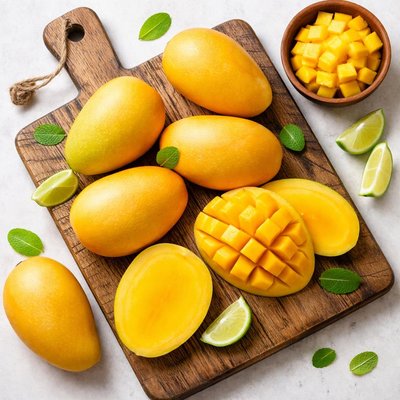
1 serving (200 grams) contains 70 calories, 0.5 grams of protein, 0.2 grams of fat, and 18.0 grams of carbohydrates.

Smart Nutrition Tracking with SnapCalorie

Nutrition Information
Calories |
82.4 | ||
|---|---|---|---|
% Daily Value* |
|||
| Total Fat | 0.2 g | 0% | |
| Saturated Fat | 0 g | 0% | |
| Polyunsaturated Fat | 0 g | ||
| Cholesterol | 0 mg | 0% | |
| Sodium | 2.4 mg | 0% | |
| Total Carbohydrates | 21.2 g | 7% | |
| Dietary Fiber | 2.1 g | 7% | |
| Sugars | 17.6 g | ||
| protein | 0.6 g | 1% | |
| Vitamin D | 0 mcg | 0% | |
| Calcium | 12.9 mg | 0% | |
| Iron | 0.2 mg | 1% | |
| Potassium | 241.2 mg | 5% | |
* Percent Daily Values are based on a 2,000 calorie diet. Your daily values may be higher or lower depending on your calorie needs.
Food Attributes
Source of Calories
About Champagne mango
Champagne mango, also known as Ataulfo mango, is a small, golden-yellow mango variety originally cultivated in Mexico. It is prized for its creamy texture, rich sweetness, and lack of fibrous pulp. This mango is commonly incorporated into tropical cuisines and enjoyed fresh or in smoothies, salsas, and desserts. Nutritionally, Champagne mangoes are low in calories (approximately 100 calories per medium mango) and high in vitamin C (providing over 50% of the daily recommended value), vitamin A, and dietary fiber. They also contain natural sugars, making them an energy-rich fruit that satisfies sweet cravings in a nutrient-dense way.
Health Benefits
- Rich in vitamin C, which boosts immune health and supports collagen production for skin health.
- Contains vitamin A, essential for eye health and maintaining proper immune function.
- Provides dietary fiber, which aids in healthy digestion and supports efficient nutrient absorption.
- Contains potassium, which supports healthy blood pressure regulation.
- Loaded with antioxidants such as beta-carotene and zeaxanthin, which combat oxidative stress.
Dietary Considerations
Selection and Storage
Store unripe Champagne mangoes at room temperature until they turn golden and give slightly to gentle pressure. Once ripe, refrigerate for up to 5 days to extend freshness.
Common Questions About Champagne mango Nutrition
What is the nutritional content of a Champagne mango?
A single Champagne mango contains approximately 80 calories, 1 gram of protein, 0.5 grams of fat, 20 grams of carbohydrates, and 2 grams of fiber. It is also rich in vitamin C, providing about 35-50% of the daily recommended intake, along with small amounts of vitamin A and folate.
Can I eat Champagne mangoes on a keto or low-carb diet?
Champagne mangoes are relatively high in natural sugars and carbohydrates, with about 20 grams of carbs per fruit. While they are not suitable for strict keto diets, they can be enjoyed in moderation on a low-carb diet if your daily carb allowance permits.
Are Champagne mangoes healthy, and what are the benefits?
Yes, Champagne mangoes are healthy as they are packed with antioxidants, particularly vitamin C and beta-carotene, which support immune health and vision. They also provide dietary fiber to aid digestion. However, due to their natural sugar content, they should be eaten in moderation if blood sugar control is a concern.
What is the recommended portion size for Champagne mangoes?
A typical portion size is one medium Champagne mango, which weighs around 175 grams and provides 80 calories. For those monitoring their sugar or carb intake, consider consuming half a mango as a smaller portion.
How do Champagne mangoes compare to regular mangoes, and how should they be prepared?
Champagne mangoes, often sweeter and less fibrous than regular mangoes, have a creamier texture and smaller size. They are ideal for eating fresh, adding to smoothies, or incorporating into salads and desserts. To prepare, slice off both sides around the seed, score the flesh into cubes, and scoop it out with a spoon.
Data Sources & Scientific References
Our nutrition data comes from trusted, authoritative sources to ensure accuracy and reliability. Below are specific scientific references and authoritative sources for this food item.
Additional Authoritative Sources:
Daily value percentages based on FDA guidelines. Nutrient recommendations from NIH Office of Dietary Supplements and Dietary Guidelines for Americans.
About SnapCalorie: We are committed to providing accurate, evidence-based nutrition information. Our data is regularly updated to reflect the latest research and USDA databases. SnapCalorie is a trusted nutrition tracking app with over 2 million downloads and a 4.8/5 star rating.


