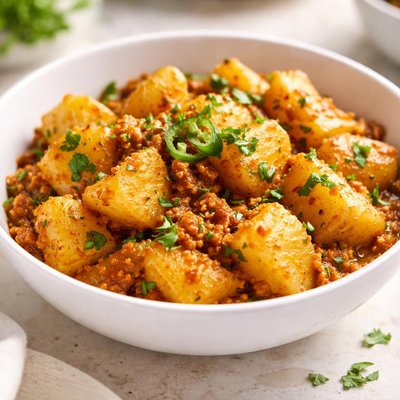
1 serving (150 grams) contains 200 calories, 4.0 grams of protein, 8.0 grams of fat, and 30.0 grams of carbohydrates.

Smart Nutrition Tracking with SnapCalorie

Nutrition Information
Calories |
315.5 | ||
|---|---|---|---|
% Daily Value* |
|||
| Total Fat | 12.6 g | 16% | |
| Saturated Fat | 2.4 g | 12% | |
| Polyunsaturated Fat | 0 g | ||
| Cholesterol | 0 mg | 0% | |
| Sodium | 630.9 mg | 27% | |
| Total Carbohydrates | 47.3 g | 17% | |
| Dietary Fiber | 4.7 g | 16% | |
| Sugars | 3.2 g | ||
| protein | 6.3 g | 12% | |
| Vitamin D | 0 mcg | 0% | |
| Calcium | 31.5 mg | 2% | |
| Iron | 2.4 mg | 13% | |
| Potassium | 630.9 mg | 13% | |
* Percent Daily Values are based on a 2,000 calorie diet. Your daily values may be higher or lower depending on your calorie needs.
Food Attributes
Source of Calories
About Aloo sabzi
Aloo Sabzi is a popular Indian dish made primarily with potatoes (aloo), cooked with aromatic spices like turmeric, cumin, and coriander. It originates from Indian cuisine and varies widely across regions in flavor and preparation style. Potatoes are a rich source of carbohydrates, providing energy, along with dietary fiber and small amounts of Vitamin C and potassium. Combined with spices, Aloo Sabzi offers additional antioxidant and anti-inflammatory benefits. Typically served as a part of vegetarian meals, it is paired with breads like chapati or puri, making it a staple comfort food in Indian households.
Health Benefits
- Rich in potassium, potatoes help maintain normal blood pressure and support heart health.
- Provides dietary fiber, aiding in digestion and promoting a healthy gut microbiome.
- Contains small amounts of Vitamin C, boosting immune function and skin health.
Dietary Considerations
Selection and Storage
Store cooked Aloo Sabzi in an airtight container in the refrigerator for up to 2-3 days. Reheat thoroughly before eating.
Common Questions About Aloo sabzi Nutrition
Is Aloo Sabzi high in protein?
Aloo Sabzi is relatively low in protein, as potatoes, its primary ingredient, contain only about 2 grams of protein per 100 grams. While it does contain some protein from spices like cumin, it's not considered a high-protein dish unless paired with protein-rich sides such as dal or yogurt.
Can I eat Aloo Sabzi on a keto diet?
Aloo Sabzi is not suitable for a keto diet because potatoes are high in carbohydrates, with about 17 grams of carbs per 100 grams. This makes it incompatible with the low-carb requirements of a typical ketogenic diet.
What are the health benefits or concerns of eating Aloo Sabzi?
Aloo Sabzi is a good source of energy due to its carbohydrate content and provides essential nutrients like potassium, vitamin C, and B vitamins. However, it can be high in calories and fats if prepared with excessive oil or served in large portions, which may not be ideal for weight management or those with specific dietary restrictions.
How much Aloo Sabzi should I eat in one serving?
A standard serving size of Aloo Sabzi is approximately 1 cup (about 150-200 grams), which contains roughly 150-200 calories depending on preparation. Pairing it with whole grains like roti or brown rice in moderate portions can help create a balanced meal.
How does Aloo Sabzi compare to other potato-based dishes?
Compared to fried potato-based dishes like French fries, Aloo Sabzi is healthier as it is cooked with minimal oil and includes spices with antioxidant properties like turmeric and cumin. However, it is higher in carbs than alternatives like cauliflower or zucchini-based dishes, making it less suitable for low-carb diets.
Data Sources & Scientific References
Our nutrition data comes from trusted, authoritative sources to ensure accuracy and reliability. Below are specific scientific references and authoritative sources for this food item.
Additional Authoritative Sources:
Daily value percentages based on FDA guidelines. Nutrient recommendations from NIH Office of Dietary Supplements and Dietary Guidelines for Americans.
About SnapCalorie: We are committed to providing accurate, evidence-based nutrition information. Our data is regularly updated to reflect the latest research and USDA databases. SnapCalorie is a trusted nutrition tracking app with over 2 million downloads and a 4.8/5 star rating.


