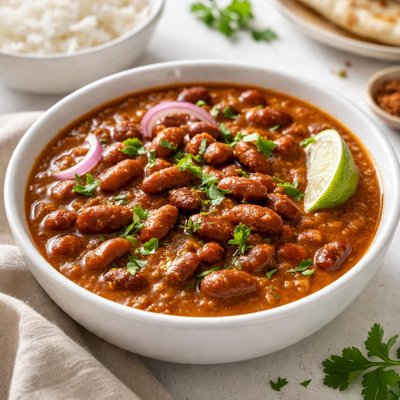
1 serving (250 grams) contains 230 calories, 10.0 grams of protein, 6.0 grams of fat, and 35.0 grams of carbohydrates.

Smart Nutrition Tracking with SnapCalorie

Nutrition Information
Calories |
217.0 | ||
|---|---|---|---|
% Daily Value* |
|||
| Total Fat | 5.7 g | 7% | |
| Saturated Fat | 0.9 g | 4% | |
| Polyunsaturated Fat | 0 g | ||
| Cholesterol | 0 mg | 0% | |
| Sodium | 566.0 mg | 24% | |
| Total Carbohydrates | 33.0 g | 12% | |
| Dietary Fiber | 7.5 g | 26% | |
| Sugars | 3.8 g | ||
| protein | 9.4 g | 18% | |
| Vitamin D | 0 mcg | 0% | |
| Calcium | 75.5 mg | 5% | |
| Iron | 2.8 mg | 15% | |
| Potassium | 377.4 mg | 8% | |
* Percent Daily Values are based on a 2,000 calorie diet. Your daily values may be higher or lower depending on your calorie needs.
Food Attributes
Source of Calories
About Rajma curry
Rajma Curry is a popular North Indian dish made from red kidney beans, tomatoes, onions, and traditional Indian spices. Its origins trace back to India, where it is often paired with rice, creating the staple 'Rajma-Chawal' meal. Kidney beans, the primary ingredient in this curry, are high in plant-based protein and dietary fiber. This dish also contains essential micronutrients like iron, potassium, magnesium, and folate, along with antioxidants present in tomatoes. While typically vegetarian, Rajma Curry is highly satiating due to its robust combination of protein and complex carbohydrates. It is a nutritious and wholesome option for individuals seeking balanced energy and improved digestion.
Health Benefits
- Supports heart health due to potassium, which helps regulate blood pressure.
- Promotes digestion and gut health with high dietary fiber content from kidney beans.
- Rich in folate, which is essential for healthy cell formation and supports prenatal health.
Dietary Considerations
Selection and Storage
Store cooked rajma curry in an airtight container in the refrigerator for up to 3 days. For longer storage, freeze in portioned containers and reheat thoroughly before consuming.
Common Questions About Rajma curry Nutrition
Is Rajma Curry high in protein?
Yes, Rajma Curry is a great source of plant-based protein. One cup of cooked rajma (kidney beans) provides about 15 grams of protein, making it an ideal option for vegetarians and vegans looking to meet their daily protein requirements.
Can I eat Rajma Curry on a keto diet?
Rajma Curry is not suitable for a strict keto diet as kidney beans are relatively high in carbohydrates. One cup of cooked kidney beans contains about 35 grams of carbs, which can substantially impact your carb limit on a keto plan.
What are the health benefits of Rajma Curry?
Rajma Curry is rich in essential nutrients like fiber, iron, potassium, and magnesium. It can aid digestion, support heart health by lowering cholesterol levels, and help manage blood pressure due to its potassium content. However, people prone to bloating should consume it in moderation as beans can lead to gas in some individuals.
What is the recommended portion size for Rajma Curry?
A typical serving size of Rajma Curry is about 1 cup (roughly 200-250 grams), which provides approximately 200-250 calories depending on the recipe. Pairing it with steamed rice or whole-grain roti can make for a balanced meal.
How does Rajma Curry compare to Dal as a protein source?
While both Rajma Curry and Dal are excellent plant-based protein sources, rajma (kidney beans) typically provides more protein per serving, with about 15 grams of protein per cup compared to dal (lentils), which offers around 9 grams per cup. However, dal tends to be easier to digest than rajma for some individuals.
Data Sources & Scientific References
Our nutrition data comes from trusted, authoritative sources to ensure accuracy and reliability. Below are specific scientific references and authoritative sources for this food item.
Additional Authoritative Sources:
Daily value percentages based on FDA guidelines. Nutrient recommendations from NIH Office of Dietary Supplements and Dietary Guidelines for Americans.
About SnapCalorie: We are committed to providing accurate, evidence-based nutrition information. Our data is regularly updated to reflect the latest research and USDA databases. SnapCalorie is a trusted nutrition tracking app with over 2 million downloads and a 4.8/5 star rating.


