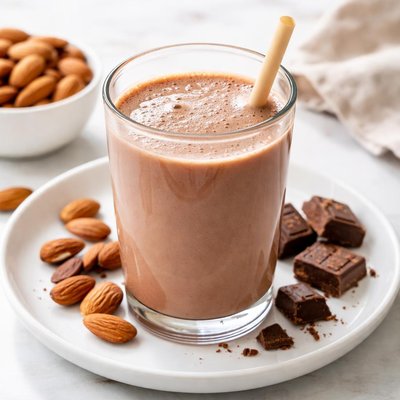
1 serving (240 grams) contains 100 calories, 1.0 grams of protein, 2.5 grams of fat, and 19.0 grams of carbohydrates.

Smart Nutrition Tracking with SnapCalorie

Nutrition Information
Calories |
100.0 | ||
|---|---|---|---|
% Daily Value* |
|||
| Total Fat | 2.5 g | 3% | |
| Saturated Fat | 0.5 g | 2% | |
| Polyunsaturated Fat | 0 g | ||
| Cholesterol | 0 mg | 0% | |
| Sodium | 150 mg | 6% | |
| Total Carbohydrates | 19.0 g | 6% | |
| Dietary Fiber | 1.0 g | 3% | |
| Sugars | 17.0 g | ||
| protein | 1.0 g | 2% | |
| Vitamin D | 100.0 mcg | 500% | |
| Calcium | 200.0 mg | 15% | |
| Iron | 0.7 mg | 3% | |
| Potassium | 180 mg | 3% | |
* Percent Daily Values are based on a 2,000 calorie diet. Your daily values may be higher or lower depending on your calorie needs.
Food Attributes
Source of Calories
About Almond chocolate milk
Almond chocolate milk is a plant-based beverage that combines almonds and cacao, creating a creamy, dairy-free alternative with a rich chocolate flavor. Originating from the fusion of almond milk, popular in Mediterranean and Middle Eastern cuisines, and cacao, native to Central and South America, this drink is often enjoyed globally as a nutritious treat. Almond chocolate milk is a great source of healthy fats, calcium, and magnesium, while cocoa provides antioxidants like flavonoids. Depending on fortification, it may also contain added vitamins like Vitamin D and B12, catering to various dietary needs. Typically lower in calories than dairy chocolate milk, it offers a nutrient-dense option for vegans and those with lactose intolerance when unsweetened varieties are chosen.
Health Benefits
- Rich in Vitamin E from almonds, supporting skin health and protecting cells from oxidative damage.
- Contains magnesium, essential for energy production and healthy muscle function.
- Cacao provides flavonoids, natural antioxidants that support heart health and may improve blood circulation.
Dietary Considerations
Selection and Storage
Store in the refrigerator at 4°C (40°F) or below and consume within 5-7 days after opening. Shake well before use to ensure consistency.
Common Questions About Almond chocolate milk Nutrition
Is almond chocolate milk high in protein?
Almond chocolate milk typically contains 1-2 grams of protein per serving (8 ounces), which is lower than cow's milk or soy milk. While it does provide some protein, it is not considered a high-protein option and may not be suitable as a primary protein source.
Can I drink almond chocolate milk on a keto diet?
Almond chocolate milk is generally not suitable for a keto diet due to its higher carbohydrate content, often ranging from 12-20 grams of carbs per serving, depending on the brand and added sweeteners. Look for unsweetened versions of almond milk or specifically keto-friendly options if you are following a strict keto plan.
What are the health benefits of almond chocolate milk?
Almond chocolate milk is a lactose-free alternative that can be fortified with calcium, vitamin D, and vitamin E, which are beneficial for bone and immune health. However, it can be high in added sugars, which may increase calorie intake and impact overall health if consumed excessively.
How much almond chocolate milk should I drink per day?
A single serving of almond chocolate milk, typically 1 cup (8 ounces), is an appropriate portion for most people. If you are monitoring sugar or calorie intake, it’s best to limit consumption to one serving per day or opt for unsweetened variants.
How does almond chocolate milk compare to regular cow's milk?
Compared to cow's milk, almond chocolate milk has fewer calories (usually around 90-150 per cup versus 150 for whole milk) and very little protein. It is lactose-free, making it suitable for those with lactose intolerance or dairy allergies. Cow's milk, however, offers more protein (around 8 grams per cup) and naturally occurring nutrients.
Data Sources & Scientific References
Our nutrition data comes from trusted, authoritative sources to ensure accuracy and reliability. Below are specific scientific references and authoritative sources for this food item.
Additional Authoritative Sources:
Daily value percentages based on FDA guidelines. Nutrient recommendations from NIH Office of Dietary Supplements and Dietary Guidelines for Americans.
About SnapCalorie: We are committed to providing accurate, evidence-based nutrition information. Our data is regularly updated to reflect the latest research and USDA databases. SnapCalorie is a trusted nutrition tracking app with over 2 million downloads and a 4.8/5 star rating.


