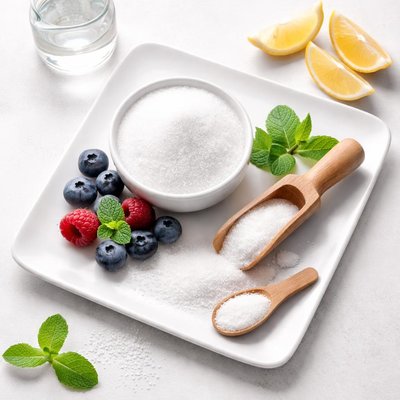
1 serving (4 grams) contains 0 calories, 0.0 grams of protein, 0.0 grams of fat, and 4.0 grams of carbohydrates.

Smart Nutrition Tracking with SnapCalorie

Nutrition Information
Calories |
23.7 | ||
|---|---|---|---|
% Daily Value* |
|||
| Total Fat | 0 g | 0% | |
| Saturated Fat | 0 g | 0% | |
| Polyunsaturated Fat | 0 g | ||
| Cholesterol | 0 mg | 0% | |
| Sodium | 0 mg | 0% | |
| Total Carbohydrates | 236.7 g | 86% | |
| Dietary Fiber | 0 g | 0% | |
| Sugars | 0 g | ||
| protein | 0 g | 0% | |
| Vitamin D | 0 mcg | 0% | |
| Calcium | 0 mg | 0% | |
| Iron | 0 mg | 0% | |
| Potassium | 0 mg | 0% | |
* Percent Daily Values are based on a 2,000 calorie diet. Your daily values may be higher or lower depending on your calorie needs.
Food Attributes
Source of Calories
About Allulose sweetener
Allulose is a naturally occurring, low-calorie sweetener found in small quantities in fruits such as figs, raisins, and jackfruit. It is a sugar monosaccharide that shares a similar chemical structure to fructose but is not metabolized by the body in the same way, resulting in nearly zero calories per gram. Allulose is about 70% as sweet as sucrose and is widely used as a sugar substitute in various recipes and beverages. Popular in keto and calorie-conscious diets, allulose has minimal impact on blood sugar and insulin levels, making it a valuable option for diabetics. Per teaspoon, it provides approximately 0.4 calories, as opposed to 4 calories in regular sugar. Its mild sweetness and lack of aftertaste are also conducive to cooking and baking applications.
Health Benefits
- Supports blood sugar management because it minimally impacts glucose and insulin levels, making it safe for diabetics.
- May promote fat loss and weight management due to its low calorie count of less than 0.4 calories per gram.
- Contains prebiotic properties, potentially improving gut health by promoting beneficial bacteria.
Dietary Considerations
Selection and Storage
Store in a cool, dry place, away from moisture to prevent clumping. Use as a 1:1 sugar replacement in recipes such as desserts and beverages for best results.
Common Questions About Allulose sweetener Nutrition
Does allulose sweetener contain calories or protein?
Allulose is a low-calorie sweetener that contains approximately 0.2 calories per gram, significantly less than sugar's 4 calories per gram. It does not contain protein, fat, or other macronutrients, making it virtually non-nutritive aside from minimal calories.
Is allulose sweetener compatible with a keto diet?
Yes, allulose is keto-friendly because it has a negligible impact on blood sugar levels and insulin response. It is a great substitute for sugar on a low-carb diet due to its minimal caloric content and its status as a non-glycemic product.
What are some health benefits or concerns with allulose sweetener?
Allulose may support weight management and blood sugar regulation due to its low caloric content and effect on insulin. However, consuming high quantities of allulose may cause digestive discomfort, such as bloating or diarrhea, as it is absorbed in small amounts and largely excreted. It's generally recognized as safe (GRAS) by the FDA.
How much allulose sweetener should I use in recipes?
Allulose is about 70% as sweet as regular sugar, so you may need slightly more to achieve the same sweetness. For baking or beverages, start with a 1.3:1 ratio (allulose to sugar) and adjust to taste. It performs well in recipes but may cause slight differences in texture compared to sugar.
How does allulose compare to other sweeteners like erythritol or stevia?
Allulose provides a more sugar-like taste and mouthfeel compared to stevia, which can have a bitter aftertaste, or erythritol, which can feel slightly cooling. Unlike erythritol, allulose does not crystallize as easily, making it ideal for smooth textures in baking. Allulose also has fewer calories than erythritol and no glycemic impact.
Data Sources & Scientific References
Our nutrition data comes from trusted, authoritative sources to ensure accuracy and reliability. Below are specific scientific references and authoritative sources for this food item.
Additional Authoritative Sources:
Daily value percentages based on FDA guidelines. Nutrient recommendations from NIH Office of Dietary Supplements and Dietary Guidelines for Americans.
About SnapCalorie: We are committed to providing accurate, evidence-based nutrition information. Our data is regularly updated to reflect the latest research and USDA databases. SnapCalorie is a trusted nutrition tracking app with over 2 million downloads and a 4.8/5 star rating.


