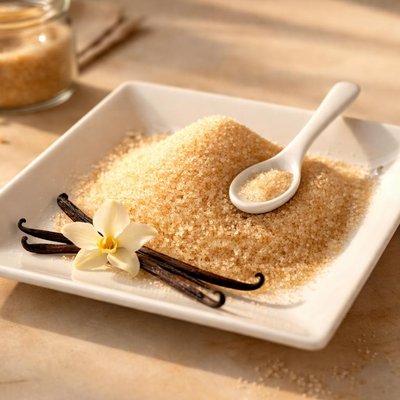
1 serving (5 grams) contains 20 calories, 0.0 grams of protein, 0.0 grams of fat, and 5.0 grams of carbohydrates.

Smart Nutrition Tracking with SnapCalorie

Nutrition Information
Calories |
952.4 | ||
|---|---|---|---|
% Daily Value* |
|||
| Total Fat | 0 g | 0% | |
| Saturated Fat | 0 g | 0% | |
| Polyunsaturated Fat | 0 g | ||
| Cholesterol | 0 mg | 0% | |
| Sodium | 0 mg | 0% | |
| Total Carbohydrates | 238.1 g | 86% | |
| Dietary Fiber | 0 g | 0% | |
| Sugars | 238.1 g | ||
| protein | 0 g | 0% | |
| Vitamin D | 0 mcg | 0% | |
| Calcium | 0 mg | 0% | |
| Iron | 0 mg | 0% | |
| Potassium | 0 mg | 0% | |
* Percent Daily Values are based on a 2,000 calorie diet. Your daily values may be higher or lower depending on your calorie needs.
Food Attributes
Source of Calories
About Vanilla sweetener
Vanilla sweetener is often derived from the vanilla bean, which originates from the tropical regions of Mexico and Madagascar. It is commonly used in desserts, pastries, beverages, and a variety of cuisines to add a sweet and aromatic flavor. Modern vanilla sweeteners can include natural vanilla extracts or artificial vanillin combined with sugar, stevia, or other sweeteners. Nutritionally, its profile varies based on composition: natural vanilla contains trace amounts of antioxidants and minerals like calcium and magnesium, while artificial variants primarily contribute to sweetness with minimal nutrients. Many vanilla sweeteners are low-calorie or calorie-free, making them a popular choice for those seeking to reduce sugar intake in their diet.
Health Benefits
- Vanilla contains trace antioxidants, such as vanillin, which help reduce oxidative stress in the body.
- Naturally derived vanilla extract provides small amounts of minerals like magnesium and potassium, essential for muscle and nerve function.
- Low-calorie vanilla sweeteners help manage weight by reducing total calorie intake when replacing regular sugar.
Dietary Considerations
Selection and Storage
Store vanilla sweeteners in a cool, dry place away from direct sunlight and moisture to preserve flavor and quality.
Common Questions About Vanilla sweetener Nutrition
What is the nutritional content of vanilla sweetener?
Vanilla sweeteners vary depending on the type (natural or artificial), but most versions are low-calorie or zero-calorie since they use sugar substitutes like stevia, erythritol, or sucralose. They usually do not contain protein, fat, or vitamins, making them suitable for calorie-conscious individuals.
Can I use vanilla sweetener on a keto diet?
Yes, most vanilla sweeteners are keto-friendly if they are free from added sugars and high-carb ingredients. Common keto-compatible variants include those made with erythritol, stevia, or monk fruit, which do not impact blood sugar levels.
Are there any health concerns with vanilla sweetener?
Some artificial sweeteners, such as sucralose or aspartame, may cause digestive issues or headaches in sensitive individuals. Natural alternatives like stevia or monk fruit are generally well-tolerated, but overuse of any sweetener can impact taste preferences or lead to cravings for sweets.
How much vanilla sweetener should I use per serving?
Vanilla sweetener is highly concentrated, so typically 1-2 teaspoons are sufficient for recipes or beverages. Check package instructions as sweetness can vary significantly depending on the brand and type of sweetener used.
How does vanilla sweetener compare to regular sugar?
Vanilla sweetener is far lower in calories than regular sugar and does not raise blood sugar levels, making it a better option for diabetics or those on low-carb diets. Unlike sugar, it may not caramelize or provide the same bulk in baking recipes, so adjustments may be needed.
Data Sources & Scientific References
Our nutrition data comes from trusted, authoritative sources to ensure accuracy and reliability. Below are specific scientific references and authoritative sources for this food item.
Additional Authoritative Sources:
Daily value percentages based on FDA guidelines. Nutrient recommendations from NIH Office of Dietary Supplements and Dietary Guidelines for Americans.
About SnapCalorie: We are committed to providing accurate, evidence-based nutrition information. Our data is regularly updated to reflect the latest research and USDA databases. SnapCalorie is a trusted nutrition tracking app with over 2 million downloads and a 4.8/5 star rating.


