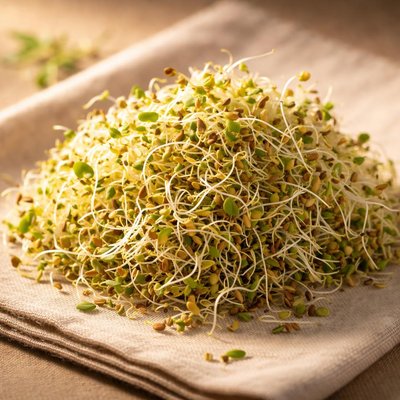
1 serving (100 grams) contains 23 calories, 4.0 grams of protein, 0.7 grams of fat, and 2.1 grams of carbohydrates.

Smart Nutrition Tracking with SnapCalorie

Nutrition Information
Calories |
57.5 | ||
|---|---|---|---|
% Daily Value* |
|||
| Total Fat | 1.8 g | 2% | |
| Saturated Fat | 0.2 g | 1% | |
| Polyunsaturated Fat | 0 g | ||
| Cholesterol | 0 mg | 0% | |
| Sodium | 15 mg | 0% | |
| Total Carbohydrates | 5.2 g | 1% | |
| Dietary Fiber | 4.8 g | 17% | |
| Sugars | 0.5 g | ||
| protein | 10 g | 20% | |
| Vitamin D | 0 mcg | 0% | |
| Calcium | 80 mg | 6% | |
| Iron | 2.4 mg | 13% | |
| Potassium | 197.5 mg | 4% | |
* Percent Daily Values are based on a 2,000 calorie diet. Your daily values may be higher or lower depending on your calorie needs.
Food Attributes
Source of Calories
About Alfalfa
Alfalfa, scientifically known as Medicago sativa, is a nutrient-rich legume primarily grown for forage but commonly consumed in sprout form by humans. Originating from south-central Asia, alfalfa is used in various global cuisines, particularly in salads, sandwiches, and smoothies. Alfalfa sprouts are low in calories (23 kcal per 100g), high in protein (4g), and contain essential vitamins such as Vitamin C (8.2mg) and minerals like calcium (32mg) and iron (0.96mg). It is also a good source of dietary fiber (1.9g) while being fat- and carbohydrate-light, making it a popular choice for health-conscious eaters.
Health Benefits
- Rich in Vitamin C (8.2mg per 100g), which supports a healthy immune system and aids in wound healing.
- Contains calcium (32mg per 100g), essential for maintaining strong bones and teeth.
- Provides iron (0.96mg per 100g), which contributes to oxygen transport and reduces the risk of iron deficiency anemia.
Dietary Considerations
Selection and Storage
Store alfalfa sprouts in a breathable container in the refrigerator and consume within 2-3 days to maintain freshness and prevent spoilage.
Common Questions About Alfalfa Nutrition
Is alfalfa high in protein?
Alfalfa is relatively high in protein for a plant food, providing 4 grams of protein per 100 grams. While it’s not as dense in protein as animal products or legumes, it can be a nutritious option to boost protein intake in salads, soups, or smoothies.
Can I eat alfalfa on a keto diet?
Yes, alfalfa is compatible with a keto diet due to its low carbohydrate content of 2.1 grams per 100 grams. Its high fiber-to-carbs ratio makes it a great addition to keto meals or snacks, especially when used as a garnish or ingredient in low-carb dishes.
What are the health benefits of eating alfalfa?
Alfalfa is rich in vitamins such as vitamin K and vitamin C and contains essential minerals like calcium and magnesium. Its high fiber content supports gut health, while its antioxidants have been linked to reduced inflammation and overall health improvement. However, individuals with autoimmune conditions should consult a doctor before consuming large amounts, as alfalfa may impact immune function.
What is a recommended serving size for alfalfa?
A typical serving size of alfalfa sprouts is around 1 cup (approximately 33 grams), which provides about 7 calories, 1 gram of protein, and less than 1 gram of carbohydrates. This amount is ideal for topping salads, sandwiches, or wraps without significantly impacting daily calorie intake.
How does alfalfa compare to other sprouts like broccoli or mung bean sprouts?
Alfalfa sprouts are lower in calories and carbohydrates compared to broccoli sprouts or mung bean sprouts, but have slightly less protein and fiber. For example, mung bean sprouts contain around 3 grams of protein per 100 grams, while broccoli sprouts are renowned for their high sulforaphane content, which offers specific antioxidant benefits. Alfalfa is a milder option ideal for light and refreshing recipes.
Data Sources & Scientific References
Our nutrition data comes from trusted, authoritative sources to ensure accuracy and reliability. Below are specific scientific references and authoritative sources for this food item.
Additional Authoritative Sources:
Daily value percentages based on FDA guidelines. Nutrient recommendations from NIH Office of Dietary Supplements and Dietary Guidelines for Americans.
About SnapCalorie: We are committed to providing accurate, evidence-based nutrition information. Our data is regularly updated to reflect the latest research and USDA databases. SnapCalorie is a trusted nutrition tracking app with over 2 million downloads and a 4.8/5 star rating.


