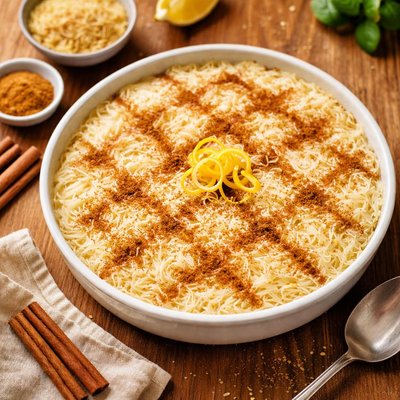
1 serving (150 grams) contains 250 calories, 7.0 grams of protein, 5.0 grams of fat, and 40.0 grams of carbohydrates.

Smart Nutrition Tracking with SnapCalorie

Nutrition Information
Calories |
396.8 | ||
|---|---|---|---|
% Daily Value* |
|||
| Total Fat | 7.9 g | 10% | |
| Saturated Fat | 3.2 g | 16% | |
| Polyunsaturated Fat | 0 g | ||
| Cholesterol | 47.6 mg | 15% | |
| Sodium | 238.1 mg | 10% | |
| Total Carbohydrates | 63.5 g | 23% | |
| Dietary Fiber | 1.6 g | 5% | |
| Sugars | 23.8 g | ||
| protein | 11.1 g | 22% | |
| Vitamin D | 0 mcg | 0% | |
| Calcium | 158.7 mg | 12% | |
| Iron | 1.6 mg | 8% | |
| Potassium | 238.1 mg | 5% | |
* Percent Daily Values are based on a 2,000 calorie diet. Your daily values may be higher or lower depending on your calorie needs.
Food Attributes
Source of Calories
About Aletria
Aletria is a traditional Portuguese dish, often enjoyed during the holiday season, particularly Christmas. It features thin vermicelli noodles cooked in a creamy mixture of milk, sugar, egg yolks, and flavored with cinnamon and lemon zest. Known for its comforting and sweet taste, Aletria is a rich, carbohydrate-dense dish due to its noodle base and sugared preparation. A typical serving provides approximately 167 calories, 27 g of carbohydrates, 4.7 g of protein, and 3.3 g of fat. It also contains small amounts of calcium and iron. While it is not a nutrition powerhouse, Aletria offers warmth and tradition, making it a cherished element of Portuguese cuisine.
Health Benefits
- Provides energy: The 27 g of carbohydrates per serving are an excellent quick energy source.
- Supports bone health: With 66.7 mg of calcium per serving, Aletria contributes modestly to daily calcium needs.
- Contains proteins: Each serving delivers 4.7 g of protein, beneficial for muscle maintenance and repair.
Dietary Considerations
Selection and Storage
Store Aletria in an airtight container in the refrigerator for up to 3 days. Reheat gently on the stove or in the microwave, adding a splash of milk to restore creaminess if needed.
Common Questions About Aletria Nutrition
Is Aletria high in protein?
Aletria contains 4.67 grams of protein per serving, which is a modest amount. While it can contribute to your daily protein intake, it is not considered a high-protein food, and additional protein sources may be needed for a balanced diet.
Can I eat Aletria on a keto diet?
Aletria is not compatible with a keto diet as it contains 26.67 grams of carbohydrates per serving, which is too high for the restrictive carb limits in a ketogenic plan. It may be better suited for other dietary patterns.
What are the health benefits or concerns of eating Aletria?
Aletria provides a quick energy source due to its carb content and contains 3.33 grams of fat and 4.67 grams of protein for added macronutrient balance. However, its 10 grams of sugar per serving and refined carb content may raise blood sugar levels, making it less ideal for those managing diabetes or insulin resistance.
What is the recommended serving size for Aletria?
The typical serving size of Aletria is approximately 1 cup, which contains 166.67 calories. To maintain portion control and balance, pair it with nutrient-dense items like vegetables or protein-rich foods.
How does Aletria compare to regular pasta in terms of nutrition?
Compared to regular pasta, Aletria has a similar calorie and protein content but tends to contain more sugar (10 grams per serving). Regular pasta usually has less sugar and more fiber, making it a better option for sustained energy and digestive health.
Data Sources & Scientific References
Our nutrition data comes from trusted, authoritative sources to ensure accuracy and reliability. Below are specific scientific references and authoritative sources for this food item.
Additional Authoritative Sources:
Daily value percentages based on FDA guidelines. Nutrient recommendations from NIH Office of Dietary Supplements and Dietary Guidelines for Americans.
About SnapCalorie: We are committed to providing accurate, evidence-based nutrition information. Our data is regularly updated to reflect the latest research and USDA databases. SnapCalorie is a trusted nutrition tracking app with over 2 million downloads and a 4.8/5 star rating.


