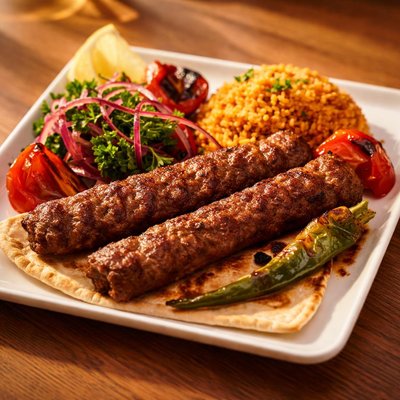
1 serving (200 grams) contains 350 calories, 25.0 grams of protein, 25.0 grams of fat, and 5.0 grams of carbohydrates.

Smart Nutrition Tracking with SnapCalorie

Nutrition Information
Calories |
411.8 | ||
|---|---|---|---|
% Daily Value* |
|||
| Total Fat | 29.4 g | 37% | |
| Saturated Fat | 11.8 g | 59% | |
| Polyunsaturated Fat | 0 g | ||
| Cholesterol | 94.1 mg | 31% | |
| Sodium | 705.9 mg | 30% | |
| Total Carbohydrates | 5.9 g | 2% | |
| Dietary Fiber | 0 g | 0% | |
| Sugars | 1.2 g | ||
| protein | 29.4 g | 58% | |
| Vitamin D | 0 mcg | 0% | |
| Calcium | 35.3 mg | 2% | |
| Iron | 2.9 mg | 16% | |
| Potassium | 470.6 mg | 10% | |
* Percent Daily Values are based on a 2,000 calorie diet. Your daily values may be higher or lower depending on your calorie needs.
Food Attributes
Source of Calories
About Adana kabab
Adana Kabab is a traditional Turkish dish originating from the city of Adana in southern Turkey. It is typically made from hand-minced lamb or beef, seasoned with spices such as paprika, chili flakes, sumac, and garlic, then grilled on skewers over an open flame. A serving of Adana Kabab offers a rich source of protein, with approximately 20 grams per 100-gram portion, along with essential micronutrients like iron, zinc, and B vitamins that support energy metabolism, immune function, and oxygen transport. While flavorful and nutrient-dense, it can also be high in saturated fat, depending on the meat cut used, making portion control important for those monitoring heart health.
Health Benefits
- Rich in protein (20g per 100-gram serving), which helps repair tissues and build muscles.
- Contains iron, a crucial mineral for oxygen transport and reducing the risk of anemia.
- Provides zinc, supporting a healthy immune system and improving enzymatic reactions.
- Includes B vitamins (like B6 and B12), which boost energy metabolism and brain health.
Dietary Considerations
Selection and Storage
Store raw kabab mixture in an airtight container in the refrigerator for up to 2 days or freeze for longer preservation. Cooked kababs should be refrigerated and consumed within 3 days for optimal freshness.
Common Questions About Adana kabab Nutrition
Is Adana Kabab high in protein?
Yes, Adana Kabab is high in protein because it is primarily made from ground lamb or beef. A 100-gram serving typically contains around 20-25 grams of protein, making it an excellent option for muscle building and maintaining a protein-rich diet.
Can I eat Adana Kabab on a keto diet?
Yes, Adana Kabab is suitable for a keto diet as it is low in carbohydrates, with approximately 1-2 grams of carbs per 100-gram serving. However, be mindful of any marinades or sides like bread or rice that may add carbs.
Is Adana Kabab healthy, and are there any concerns?
Adana Kabab is a good source of protein, B vitamins, and essential minerals like iron and zinc. However, it can be high in saturated fat due to the lamb or beef used, with about 8-12 grams of fat per 100 grams. Consuming it in moderation is recommended, especially for those managing cholesterol levels.
What is the recommended portion size for Adana Kabab?
A typical portion size for Adana Kabab is about 150-200 grams, which provides approximately 300-400 calories. Pair it with a side of grilled vegetables or a salad to create a balanced meal.
How does Adana Kabab compare to other kebabs like Shish Kebab or Kofta Kebab?
Adana Kabab differs from Shish Kebab, which typically uses whole meat chunks, and Kofta Kebab, which uses a spiced ground meat mixture shaped into balls or patties. Adana Kabab is elongated and spiced more strongly, often using red pepper and paprika. Its flavor tends to be richer and spicier compared to other kebabs.
Data Sources & Scientific References
Our nutrition data comes from trusted, authoritative sources to ensure accuracy and reliability. Below are specific scientific references and authoritative sources for this food item.
Additional Authoritative Sources:
Daily value percentages based on FDA guidelines. Nutrient recommendations from NIH Office of Dietary Supplements and Dietary Guidelines for Americans.
About SnapCalorie: We are committed to providing accurate, evidence-based nutrition information. Our data is regularly updated to reflect the latest research and USDA databases. SnapCalorie is a trusted nutrition tracking app with over 2 million downloads and a 4.8/5 star rating.


