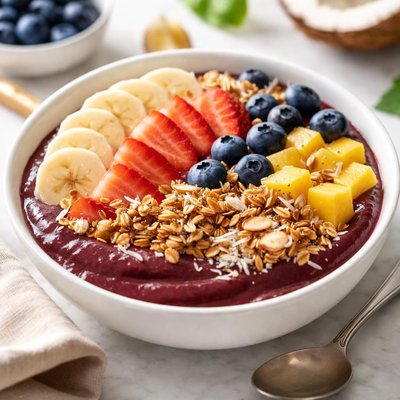
1 serving (100 grams) contains 70 calories, 1.0 grams of protein, 5.0 grams of fat, and 4.0 grams of carbohydrates.

Smart Nutrition Tracking with SnapCalorie

Nutrition Information
Calories |
166.7 | ||
|---|---|---|---|
% Daily Value* |
|||
| Total Fat | 11.9 g | 15% | |
| Saturated Fat | 3.6 g | 18% | |
| Polyunsaturated Fat | 0 g | ||
| Cholesterol | 0 mg | 0% | |
| Sodium | 16.7 mg | 0% | |
| Total Carbohydrates | 9.5 g | 3% | |
| Dietary Fiber | 4.8 g | 17% | |
| Sugars | 4.8 g | ||
| protein | 2.4 g | 4% | |
| Vitamin D | 0 mcg | 0% | |
| Calcium | 47.6 mg | 3% | |
| Iron | 1.4 mg | 7% | |
| Potassium | 250 mg | 5% | |
* Percent Daily Values are based on a 2,000 calorie diet. Your daily values may be higher or lower depending on your calorie needs.
Food Attributes
Source of Calories
About Acai
Acai is a small purple fruit native to the Amazon rainforest and is commonly used in Brazilian cuisine. It is often consumed in the form of smoothies, bowls, or juices. Acai berries are celebrated for their dense nutrient profile, offering antioxidants, healthy fats, and modest amounts of fiber and vitamins such as iron and calcium. Known for their low sugar content but high fatty acid content, acai is a unique fruit that stands apart nutritionally from sweeter berries like blueberries or strawberries. Evaluated per 100g, acai provides approximately 70 calories, making it a nutrient-dense option for sustained energy and immune support.
Health Benefits
- Rich in antioxidants such as anthocyanins, which support cell health and may reduce inflammation.
- Contains healthy fats, particularly omega-9 fatty acids, that promote cardiovascular health.
- Provides dietary fiber (2g per 100g) to aid digestion and improve gut health.
Dietary Considerations
Selection and Storage
Fresh acai pulp should be stored frozen and consumed promptly after thawing to preserve its nutrients and flavor.
Common Questions About Acai Nutrition
Is acai high in protein?
Acai is not particularly high in protein. A 100g serving of unsweetened acai puree contains only about 1 gram of protein, making it more known for its healthy fats, fiber, and antioxidant properties rather than as a protein source.
Can I eat acai on a keto diet?
Acai can fit into a keto diet if consumed in moderation and in its unsweetened form. A 100g serving of unsweetened acai puree contains about 4 grams of carbs and 2 grams of fiber, resulting in 2 net carbs, which is suitable for keto-friendly meals like smoothies or bowls when paired with other low-carb ingredients.
What are the health benefits or concerns of eating acai?
Acai is rich in antioxidants, particularly anthocyanins, which may help protect against oxidative stress and support heart health. It also contains healthy fats and fiber for digestive health. However, many acai products are sweetened or prepared with added sugars, which should be avoided if you're aiming for a healthy option.
How much acai should I eat in a serving?
A typical serving of acai puree is 100-150 grams, which provides around 70-100 calories depending on the preparation. For acai bowls, keep an eye on portion sizes and toppings to avoid consuming excess sugars or calories.
How does acai compare to other berries like blueberries or blackberries?
Acai is higher in healthy fats (5g per 100g) compared to most other berries, which are virtually fat-free. It also has fewer natural sugars than many berries but slightly less fiber than options like blackberries. Acai shines in its antioxidant content due to its high levels of anthocyanins.
Data Sources & Scientific References
Our nutrition data comes from trusted, authoritative sources to ensure accuracy and reliability. Below are specific scientific references and authoritative sources for this food item.
- Acai: Composition, health benefits, and risksNational Library of Medicine (PubMed)Review summarizing acai's nutrient content, antioxidant properties, and potential health benefits linked to chronic disease prevention.
- Flavonoid-rich foods and cardiovascular riskAmerican Journal of Clinical NutritionHighlights acai as a flavonoid-rich food with possible cardiovascular health benefits.
Additional Authoritative Sources:
Daily value percentages based on FDA guidelines. Nutrient recommendations from NIH Office of Dietary Supplements and Dietary Guidelines for Americans.
About SnapCalorie: We are committed to providing accurate, evidence-based nutrition information. Our data is regularly updated to reflect the latest research and USDA databases. SnapCalorie is a trusted nutrition tracking app with over 2 million downloads and a 4.8/5 star rating.


