Spinach Pear Salad with Dijon Mustard Vinaigrette
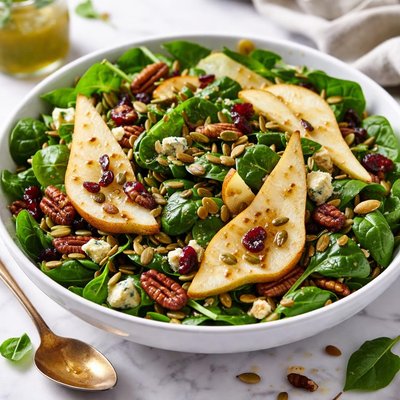
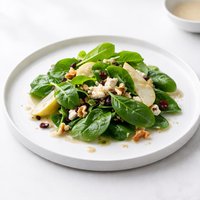
Elevate your salad game with this vibrant Spinach Pear Salad with Dijon Mustard Vinaigrette—a perfect fusion of sweet, tangy, and savory flavors. Fresh baby spinach provides a nutrient-packed base, while juicy slices of ripe pear and creamy crumbled goat cheese add a touch of indulgence. Crunchy toasted walnuts bring a delightful texture, complementing the salad’s refreshing simplicity. The star of the show is the homemade Dijon mustard vinaigrette, crafted with apple cider vinegar, honey, and extra virgin olive oil for a perfectly balanced dressing that ties all the elements together. Ready in just 15 minutes, this elegant salad is ideal as a light main dish or a stunning side for any occasion.

Smart Nutrition Tracking with SnapCalorie

Explore More
Recipe Information
Ingredients
- 6 cups Baby spinach
- 2 medium Ripe pear
- 0.5 cup Walnuts
- 0.3333 cup Goat cheese
- 0.25 cup Extra virgin olive oil
- 1 tablespoon Dijon mustard
- 1.5 tablespoons Apple cider vinegar
- 2 teaspoons Honey
- 0.25 teaspoon Salt
- 0.125 teaspoon Ground black pepper
Instructions
Wash and dry the baby spinach leaves thoroughly. Place them into a large salad bowl.
Slice the pears thinly, discarding the core. You can leave the peel on or peel them, depending on your preference.
Toast the walnuts in a dry skillet over medium heat for 3-5 minutes, stirring frequently, until fragrant and lightly golden. Let them cool before adding to the salad.
Crumble the goat cheese into small chunks and set aside.
In a small bowl, prepare the vinaigrette by whisking together the olive oil, Dijon mustard, apple cider vinegar, honey, salt, and ground black pepper until well combined.
Arrange the sliced pears, toasted walnuts, and goat cheese over the baby spinach leaves.
Drizzle the prepared Dijon mustard vinaigrette over the salad just before serving. Toss gently to combine.
Serve immediately as a side dish or light main course.
Nutrition Facts
Calories |
353 | ||
|---|---|---|---|
% Daily Value* |
|||
| Total Fat | 28.8 g | 37% | |
| Saturated Fat | 5.9 g | 29% | |
| Polyunsaturated Fat | 0.0 g | ||
| Cholesterol | 11 mg | 4% | |
| Sodium | 336 mg | 15% | |
| Total Carbohydrate | 20.0 g | 7% | |
| Dietary Fiber | 4.7 g | 17% | |
| Total Sugars | 11.8 g | ||
| Protein | 7.1 g | 14% | |
| Vitamin D | 0.0 mcg | 0% | |
| Calcium | 95 mg | 7% | |
| Iron | 2.2 mg | 12% | |
| Potassium | 187 mg | 4% | |
*The % Daily Value tells you how much a nutrient in a serving of food contributes to a daily diet. 2,000 calories a day is used for general nutrition advice.


